
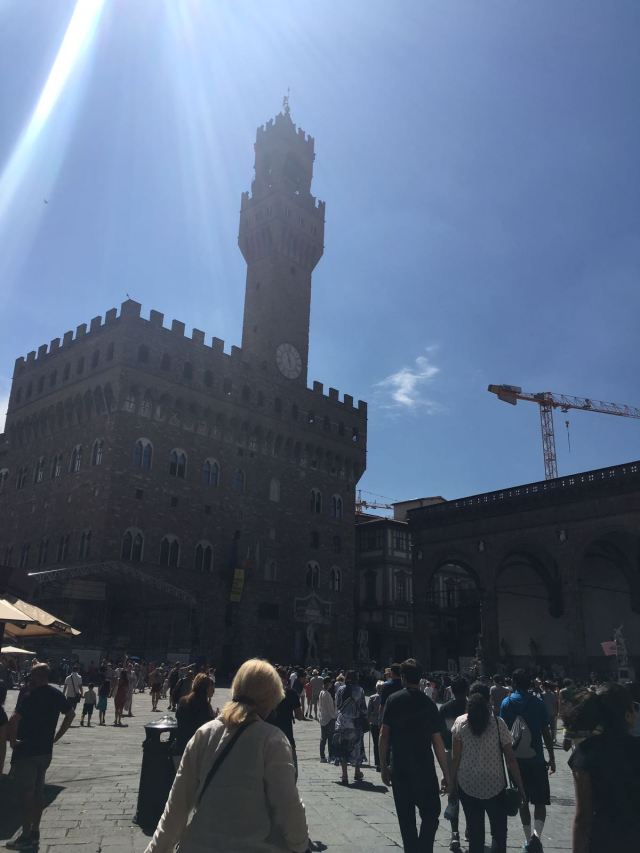
You would think that getting away from the crowded cosmopolitan capital of Rome would have calmed down my sweat glands but I made the same mistake. Florence (or Firenze as it’s called in the vernacular) was just as bad or even worse as every architectural or cultural masterpiece was squished together to compensate for our sore legs. But who cares about tanning and oily faces when there’s so much to see and explore?
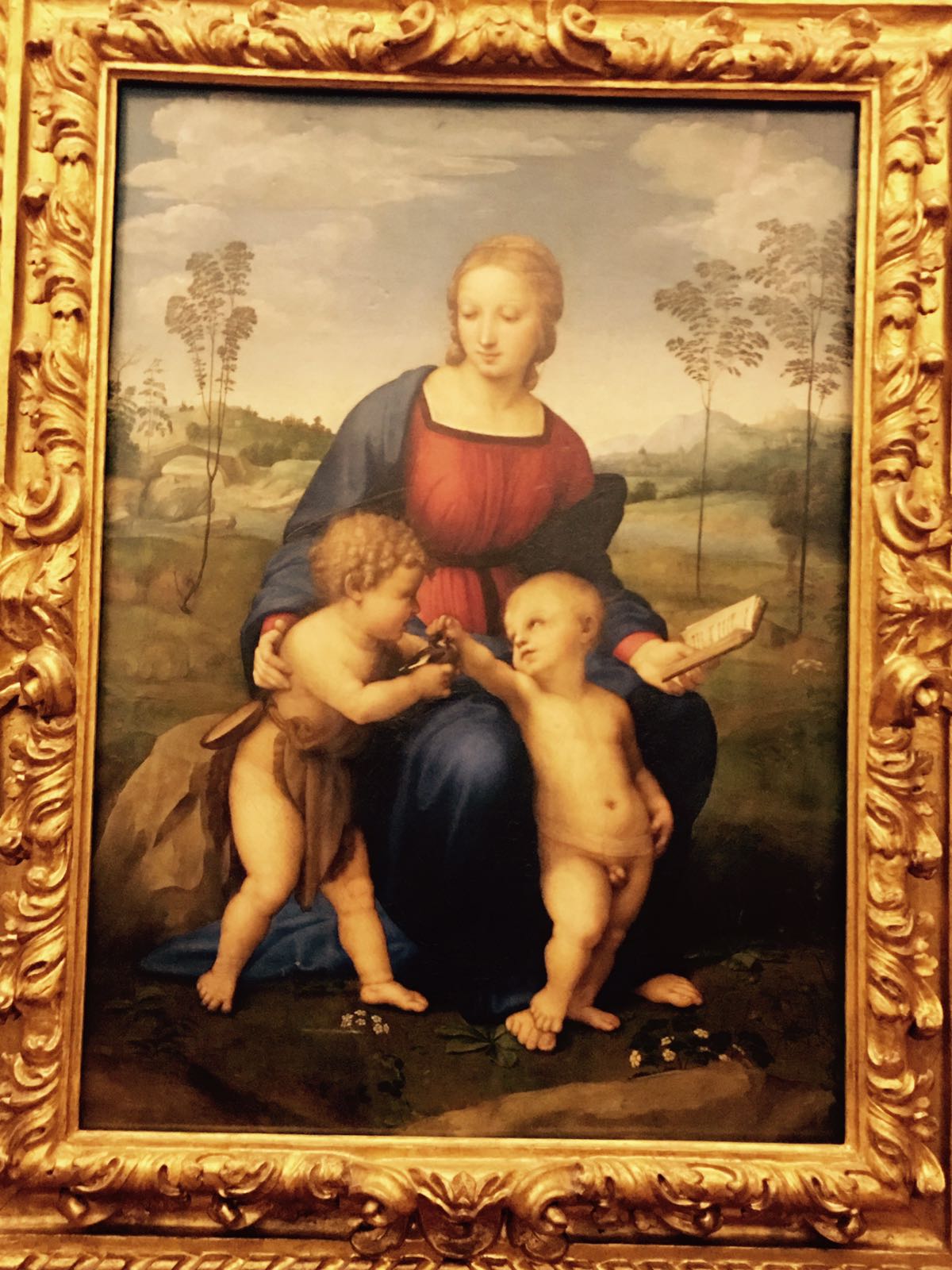
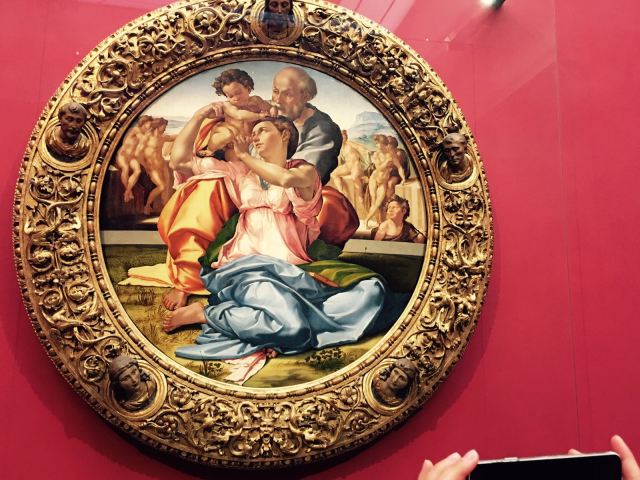
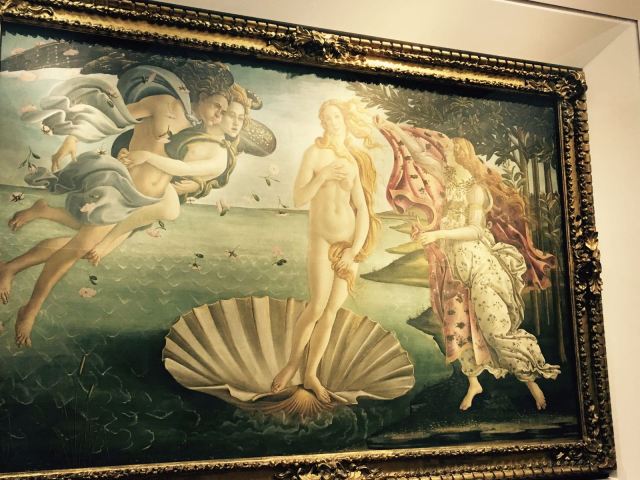
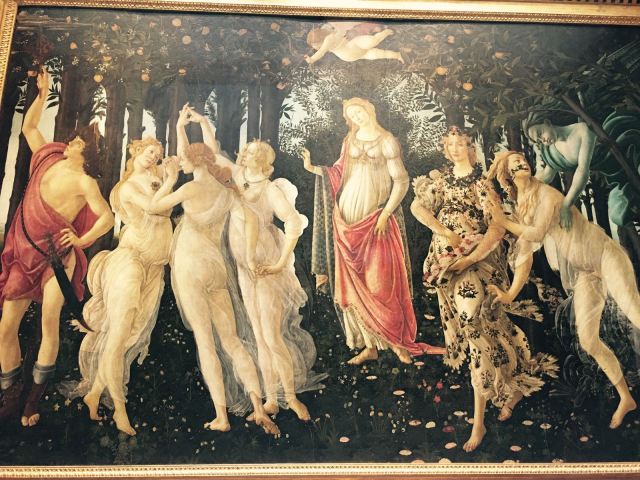
Florence might be way smaller than Rome and only have one train station but no one can ignore the plethora of artwork left here by the three great maestros – Leonardo da Vinci, Michelangelo and Raffaello Sanzio – all housed in the remarkable Uffizi Gallery.
However, the building of this famous art museum started off with a completely different purpose. It was supposed to accommodate all the offices of the Florentine magistrates, under the command of Cosimo I de’ Medici, a member of one of the most influential and politically convoluted families in Italian history. The top floor was reserved for the family and guests as a gallery, including a prized collection of Roman sculptures.
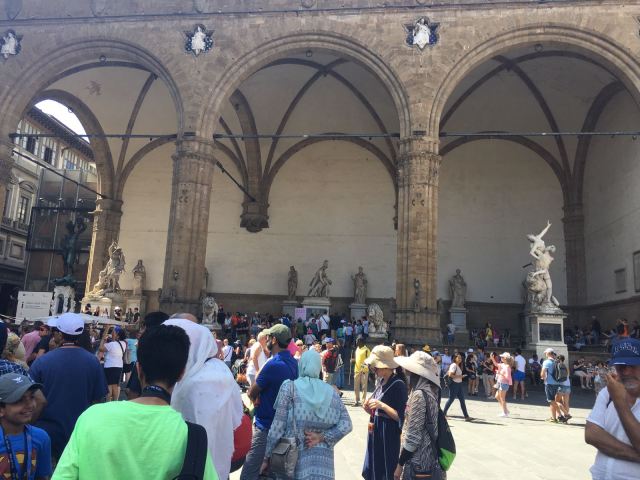
In the guise of bringing the administrative offices under one roof, Cosimo intended to show off the most important artworks from the Medici collection. Over the years, so many more sculptures, tapestries and paintings filled up the walls and corridors that it became the prime attraction of a Grand Tour.
This newfound fame brought two of the great maestros to convene here to steep themselves in the “beauty, for work and for recreation” as quoted by Varsari the architect who built the gallery. So it is not surprising that their work is also proudly exhibited alongside the other noteworthy pieces.
Unexpectedly, the Uffizi Gallery is not located on a lone, high Tuscan hill, guarded ferociously from prying eyes and groping hands. It is very much in the centre of Firenze, surrounded by throngs of people, slathered in sunscreen and holding onto their valuables for dear life under the glaring midday sun.
With a pleasing view of the Ponte Vecchio, the oldest bridge built across the river Arno, it is a major tourist attraction. Adjacent to the gallery is a square filled with statues of important Italian historical figures such as Amerigo and Petrarch.
These mustn’t be confused with the infamously skilfull street artists though and every accidental photo of them will result in lighter pockets. After all, the phrase is ‘travel light’, not travel loaded. Then there are the illegal street dealers enticing amateur art critics with pretty landscapes of Tuscany lain out artfully, only to flee at the sound of a siren.
Outside the lovely shade is Piazza della Signoria, one of the many squares of Firenze (squares because the Romans who built them were geometric fanatics), showcasing even more statues that are replicas of the marble originals which are situated in the Galleria dell’ Academia, including Michelangelo’s David and Giambologna’s Rape of the Sabine Women.
The only odd one out here is a bronze statue of a triumphant Perseus holding up Medusa’s head by the snakes. This sculpture by Cellini represents Florence at its Golden Age, a small city packed with such a rich cultural heritage that it could overpower the encompassing cities challenging its influence and strength, much like the vanilla, dime-a-dozen guy, Perseus, who used his brain and the little brawn he had to defeat the supposedly invincible monster.
If that’s not enough to make you forget about reapplying your sunscreen and gladly get pickpocketed, then the Renaissance cultural movement isn’t really your cup of tea – or more rightly said, the pot of paint.
 simplyroam