
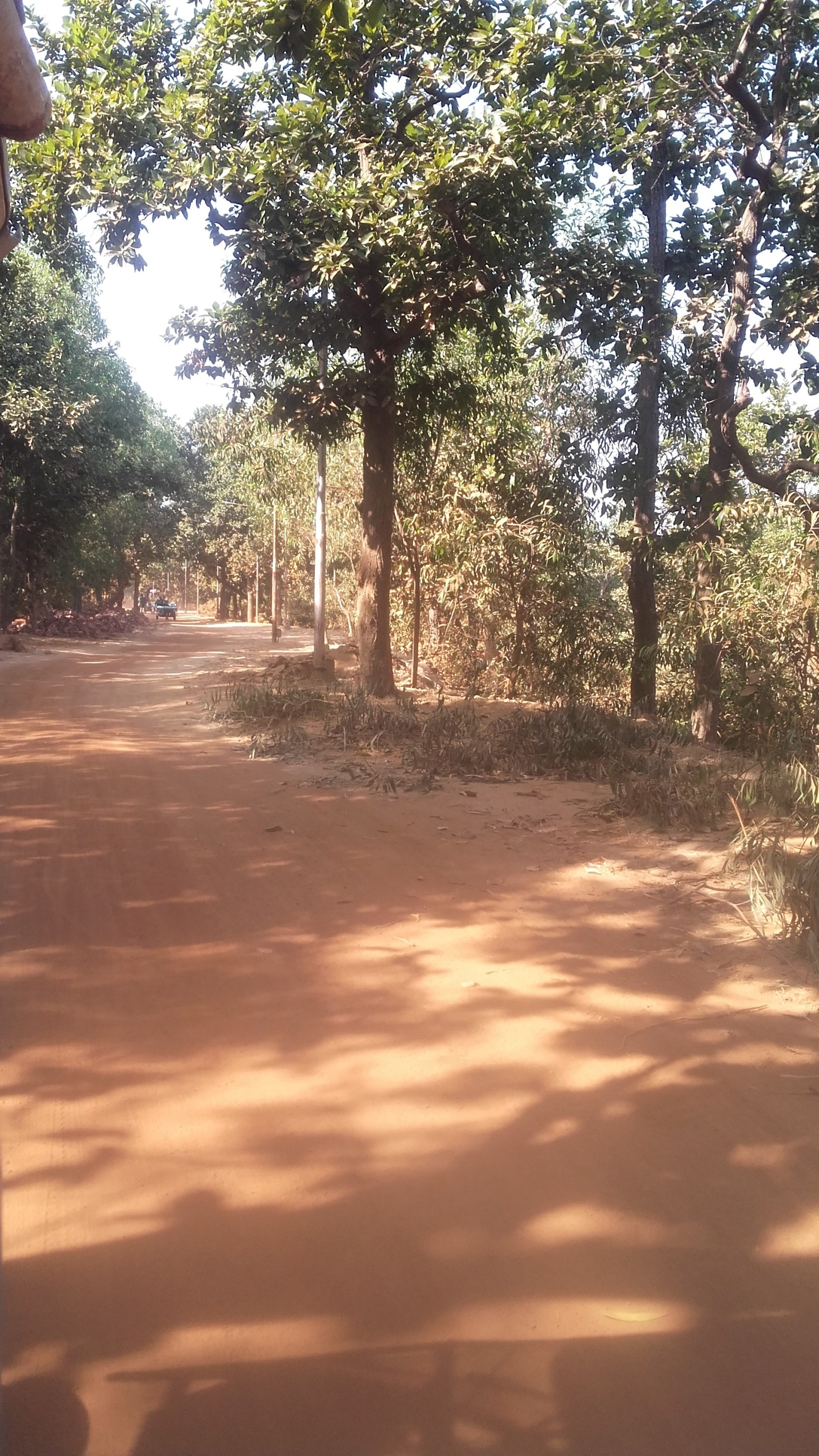
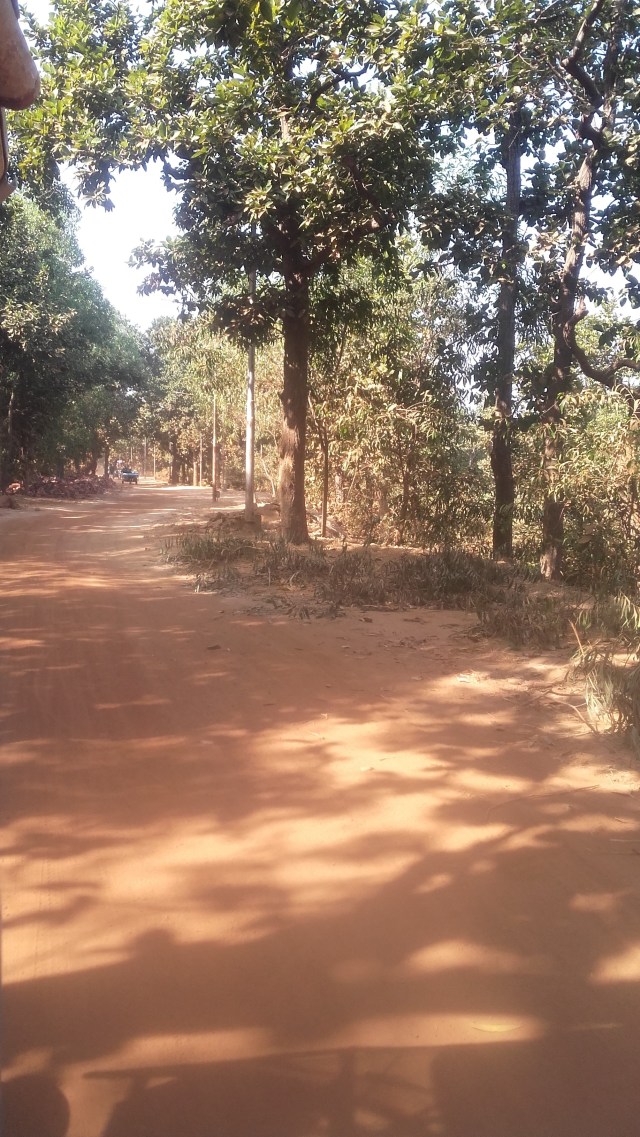
A weak net connection was disrupting my focus. Several attempts to book a reservation from Bolpur to Howrah failed. I had asked my Toto ( Tuktuk, the battery operated three wheeler ) driver to take a break. Fingers failed to connect the right buttons as the ride along dusty trail was far from uniform.
The vehicle was parked beside a shade of Sal grove. Sweet melody poured out from a mud house amidst the grove. Visit to Shantiniketan (The Abode of Peace), Bolpur had been in my mind and this morning I could make it!
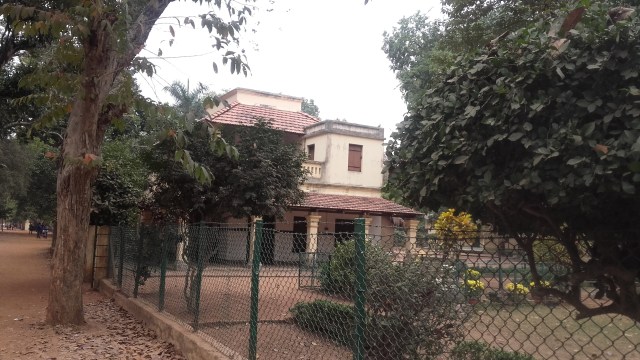
Shantiniketan – The Abode of Peace:
Peace and tranquility reign in Bolpur. Once an unknown part of rural Bengal in East India caught fancy of Maharshi Debendranath Tagore, father of Rabindranath Tagore. Densely surrounded by huge Chatim trees and Sal groves, he discovered this place appropriate for reconnecting one’s own self with the surroundings and thus the name Shantiniketan, meaning the Abode of Peace was rightly suggested.
The kaleidoscope of Bolpur got set in Tagore’s dream of raising a culture of broad based expression of mind and thoughts. Embracing diverse cultural landscape scattered across the globe was core of the equation.
Literally, an abode of peace, here every support is available for shaping impressionable minds and sharpening intellect . What is so special about the place making it a global cultural hot spot acted as a motivator.
Tagore’s Shantiniketan – Evolution of Indian philosophy, art and culture:
Shantiniketan and Tagore are inseparable in Bengali culture. While the world gets acquainted with Tagore through his words, one feels fortunate to explore a place where a personality of this stature had once made priceless contributions.
The Kanchenjunga express left Sealdah station sharp at 6-35 in the morning and was scheduled to reach Bolpur around 9-15. It was a little foggy. December had started its bite of chill.
Checking into the hotel wasn’t possible before noon but the reception offered a piece of valuable advice. That we book a Toto, start right away, wander along the enchanting landscapes of Bolpur all day exploring Khowai, Kankalitala, Kopai river bed and sections of greenery that would come in our way. The journey would take a rough 8 hours after which we would rest in the hotel.
Apart from Shantiniketan, this rural area has other interesting aspects of cultural and tribal tourism rich in vibrant folklore, folk music and traditional art that is no less interesting. The place has the right kind of fodder for the culture-craving souls.
The next day, we can do Uttarayan, the cultural hub of Tagore estates covering the art galleries, museums and exhibits of priceless artifacts and Visva Bharati University Campus.
Kankalitala – The revered Shaktipith (Shrines based on Shaktism reflecting the power of Goddess):
Mythology associated with Gods and goddesses forms the pillar of rural Bengal culture and Bolpur is no exception. Kankalitala was about 8 kilometers from our hotel. A temple by the banks of Kopai river is a seat of pilgrimage.
Legend has it in the event of Tandava Dance by Lord Shiva, Lord Krishna intervened and stopped the universe from facing destruction cutting off Sati’s corpse by the Sudarshana Chakra. Body parts flew in different parts of the country and the waist bone (Kankal) fell right here in Bolpur, Sriniketan. Thus, the name Kankalitala, a sacred site with a temple erected for worshiping Shakti.
The sky was bright. As the Toto sped along red dusty trail, cold wind struck us on the face. It was pleasant and relaxing. As usual, the temple was crowded with pilgrims. Hawkers peddled their trade of handicrafts and heaps of sweets stacked inside glass. Business was smooth keeping efforts of vendors well sustained with cash flowing in from the tourists.
Sun rays threw a comfortable warm shaft on the temple frontage that felt good in the cold morning. As always, the entrance to the temple was crowded with derelicts. Plea for aid made strong by display of whatever skills left – playing the ‘Ektara’ (one-string musical instrument largely used by folksingers of Bengal) and worn out harmonium. An effort to survive the curse of penury is a matter of compulsion. Choice has no place in their lives.
The charm of picturesque terrain of Birbhum (red-soiled district of which Bolpur is a subdivision) unfolded as we raced along open plains. Bright yellow mustard fields ended in rugged plateaus of brown and green meeting the sky in the horizon.
By the side of our travel route, we spotted occasional homesteads enclosing groves. Almost every house here has a patch of green in the yard. Some belonged to locals and some owned by people from far-off places like Kolkata.
They spend here a relaxing weekend away from the rumpus. Even putting their own properties up for vacation rentals is in trend. It is an excellent way to experience vacation as a local, staying in a residential area instead of one catering to typical touristy environment with a lot of hotels around.
Moving past a wintry rural setting I was fascinated by fields that lay in rustic beauty where crops have just been harvested. Trail of bullock carts looked like formless long lines punched in red mud. We rode past bards, threadbare and wretched who played string instruments under tree shades in run down humor that didn’t apparently betray any troubled thought about spending the next day. Poverty existed and possibly it did not make a dent in their elevated spirits.
Prakriti Bhavan – Nature art display:


We reached Prakriti Bhavan after half an hour. Nature artists have identified special features in natural formation of wood, tree trunks, branches, stones or metal parts. No additional sculpting or chiseling was needed to achieve a definite shape or form.
It is the artist’s keen eye by which he could identify a bull head, bird, serpent or a cow from the naturally-shaped wood, stone and metal parts. An inexperienced eye is likely to miss these hidden objects. An official guide was doing his best to explain subtle nuances between one model and the other.


But his narratives soon lost audience to more visually pleasing open air garden with natural rock sculptures evincing effort to connect man with nature through music, art and poetry.
Reasons for this displacement might have been either the guide’s sermon wasn’t very compelling or audience might have suspected paying too much attention to all what he said would end in a commitment for payment. It is wiser not to wait for the moment of embarrassment.
Srijani Shilpgram – Eastern Zonal Cultural Center:


Srijani appeared soon after, a melting pot of culture of eastern states of India with beautiful carvings and clay models. The expansive space dotted with intricately-chiseled models, rock art and artifacts is simply mind blowing. An ideal place for art lovers and shutterbugs where one won’t mind spending an hour or two admiring art intermingled with natural beauty.


The artwork on the walls of small rural huts, each representing 8 eastern states of India was a feast to the senses. A stage has been set up giving an opportunity to folk-artists display their culture through lively music and dance.
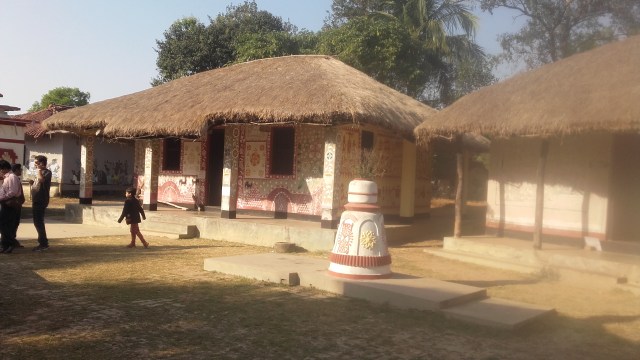
A well-appreciated government supported platform to sustain the dying regional folk art.
A dance troop from Chattisgarh performed on open air stage. Pleasing music, vibrantly colored attire and the rural musical accompaniment treated us to a different world . Body movement and rendition are powerful enough to hold us spellbound even if the lyrics are beyond grasp. Tune was drops of honey to the ear.
Rangabitan Tourist Complex:
We crossed Rangabitan, a West Bengal government tourism department lodge complex, set amid Birbhum red mud magic, quaint woods and a mango garden. The accommodation is reasonably priced answering the needs of tourists well.
Amar Kutir (My Home):
Amar Kutir is where a large handicrafts center is set up. This is a time honored institute featuring endeavors of Tagore inspiring the lives of locals, nurturing and molding their innate talents. A great example of sustainable tourism supported by the government.
Producing handicrafts and farming is not just an end in itself. Follow ups for locating a demand for niche skills to market the produce completed the cycle. The handicrafts center was a razzmatazz of delicate artwork.
A little expensive with an amazing finish, the wares stood in racks. Brittle clay pots and glassware were way too enticing. “Once broken considered sold” was a standard tag that did not deter us from close exploration of the genius the terracotta held.
The restaurant in Amar Kutir offered a gratifying lunch. One cannot but help admiring food being served in brass cutlery, an honest effort to keep up with the long lost Bengali culture. Coupon system of buying food was in vogue. A long wait between buying the coupon and receiving the plate made us somewhat grumpy.
The wait was at last rewarded with awesome food served hot! Spoons and forks hung on the stands. Piping hot Bengali lunch is not a ritual of knife and fork. It wouldn’t taste the same eating with fingers adds to its sumptuous voyage.
Sriniketan:
Visit to Sriniketan was a journey along a desolate road lined with trees on either side. A deserving enterprise by Tagore for agricultural promotional efforts who strongly believed uplifting Indian agriculture is important for the sustained growth of our nation.
A school imparting knowledge in skills and tricks on farming was meant for children from local hamlets who would learn and implement tricks of the trade for well-being of rural colonies. Irregular twitter of birds subscribed to unspoiled pastoral vibes.
Not very far was a Kali temple on the banks of lake Krishnashayar. Mood was held in an awe-inspiring silence. In the temple yard stood a sacrificial altar. A somber note hung in the air no matter whatever might have been the number of innocent animals butchered here, the haloed ground will continue to be sanctified.
Ballabhpur Wildlife Sanctuary:
Ballabhpur deer park came in our route. The forest has a large herd of naturally bred deer. Existence of nature so close to Visva Bharati campus life opened up a man – nature interface that is necessary for much needed respite.
Established in 1977, it is one of the most successful deer conservation center. Large water bodies shelter a host of birds welcoming seasonal migratory species as well. A diversion from art and cultural exploration to observation of Cheethals and Blackbucks from close quarters is a desirable break.
Shonajhuri Haat – A signature blend of cultural and tribal tourism:
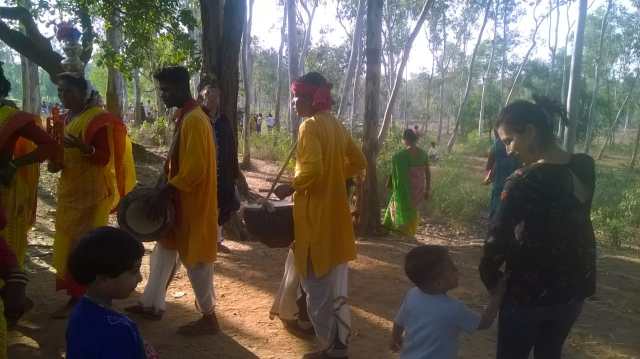
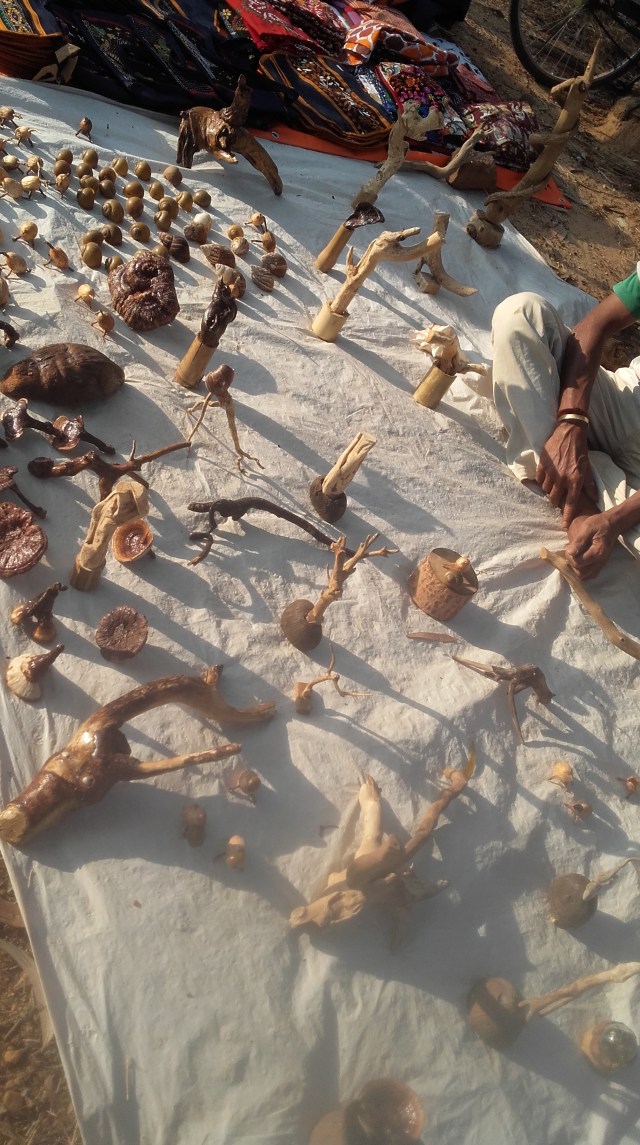
It was a Saturday and Sonajhuri Haat ( rural market ) was as usual in roaring trade. A mela on the banks of Shyambati irrigation canal offered locally handcrafted jewelry, decorative pieces, cotton clothing and delicately chipped statuettes.
The Haat is laid out along one of the tidiest forests I have ever seen with its floor carpeted with flaxen Sonajhuri flowers. The atmosphere was pollution free and vehicles not permitted inside the forest. Swarm of handicrafts men collect from villages near and far vending produce from morning till sun down.
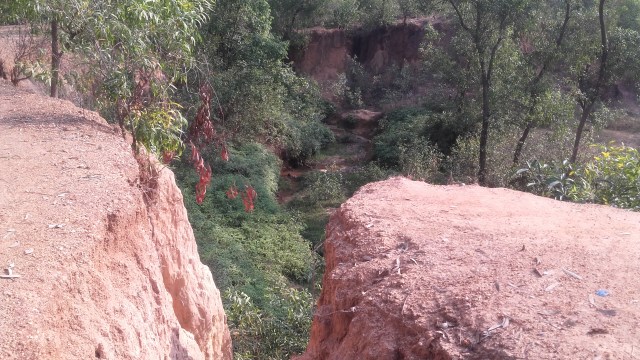
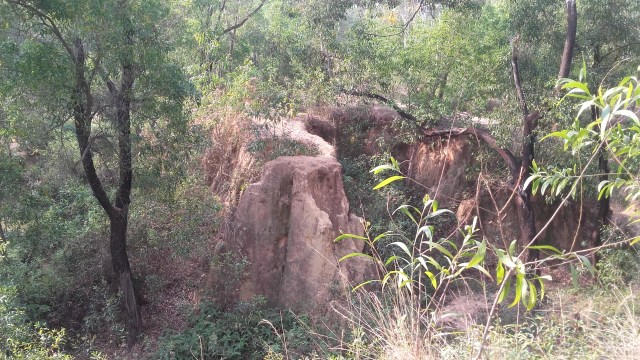
Local folk dance and Bauls (folksingers) playing ektara had an offbeat charm. Presence of natural formation of Khowai (a local term for soil erosion) in which Sonajhuri Haat is set added to its landscape beauty. Evolutionary development of small canyons from erosion by wind and river had wonderfully fused with the extreme eastern tail end of Chotanagpur plateaus.
Haggle for prices is common and we bought some embroidery and craft work and ate pot full of Raabri( milk condensed on low heat and flavored with cardamom) that the vendors carried on bamboo poles rested on shoulder.
It was around 5 in the evening and our shadows were cast long by sun that would be in the sky for a short while. We headed towards Kopai river bank. Our route was along a labyrinth of mud strip winding past a tribal village.
This tributary of Mayurakshi river runs dry in summer and winter but spills over its banks in wet monsoon. Soil is purple featuring ravines on the banks that had run for miles melting into wilderness in far off fringes. Decades ago, packs of wolves roamed the grounds, they had been a part of local fauna now extinct.
Inspired by the pristine beauty of the region the Nobel laureate had composed immortal lines themed around Kopai river. A choir of singers were rehearsing passionate numbers in the backdrop of red sun in its fading blaze that was about to sink. Our shadows seemed elastic they grew in length. A cold breeze blew in from the North. We boarded Toto and moved in the direction of our hotel.
Visva Bharati Campus & Museum:


Started around 9 the next morning. First stop was Rabindra Bhavan. Viswabharati University building premises darted back as we moved ahead. Hostel buildings , Ananda Pathshala ( elementary school for kids established by Mrinalini Devi, Tagore’s wife), the iconic Taal gaach (palm tree) shooting out through the thatched roof, the sprawling Amrakunja (The Mango garden) ending in majestic edifices and abstract artwork came in a row.
Tagore’s presence was felt everywhere. A tight security was in vigil. Vehicles were not allowed to stop save a few selected spots. We kept moving, awaiting a chance to stop and click the camera was hard though I had some success in my attempts.
Statues created by the renowned Ramkinkar Baij assumed an assortment of shapes. They are not chiseled with hand. Mounds of soft mud stand as a target and you got to chuck stones in soft mud until your dream is realized. It is far easier said than done but conveys a message if you are strongly driven success cannot be far away.
Rabindra Bhavan – The heart of attraction:
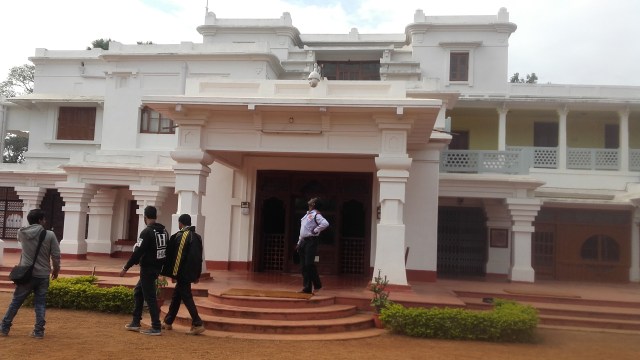
Rabindra Bhavan housed a museum and that is fabled. Here 5 homes where Tagore stayed in a cluster known as Uttarayan complex draws tourists from home and abroad. Pieces of antique furniture and decor is a reflection into a bygone era Tagore spent here in quaint peace spinning his gossamer dreams that would have a profound impact on the society .
It archives 1580 original paintings by the laureate himself and 554 done by others. Besides 11380 priceless photographs, 3855 curios and 52 statues and certificates , mementos and memorabilia connected to signally fascinating aspects of the Poet’s life are all set in an absorbing presentation. Events from the past fascinate.
At times it becomes hard to reconcile the modernized thoughts and global quest for knowledge and information that boiled inside the poet in a timeline more than a century old.
Heirlooms were numerous and enchanting , like coffee pots presented to Tagore by tribal chief of some obscure African nation or a watch case set in ivory awarded by king of Siam truly attest to the fact that the man had an astounding global influence. Photography was strictly prohibited.
An international acclaim was bestowed when media of communication and logistics was way too primitive. He had succeeded immensely to put across his thoughts and tabled his hopes and fears on a global platform and that too in a regional language. Well that is another story my thoughts and words are too weak for an analysis.
Continue reading “A cultural pilgrimage to Shantiniketan (The Abode of Peace)”
 simplyroam