Fascinating facts on Grand Canyon, Arizona, US

If you are looking for the cleanest air in the US, you can take a trip to Grand Canyon Arizona but promise yourself not to get scared if you spot Pink Rattle Snakes. This is not all. Tourist footfalls to this magnificent creation of nature are almost a century old. In the year 1893, this wonder of nature was protected as a reserve and later was elevated to the status of the national monument. It had to wait until February 26th in the year 1919 when it was granted the prestigious status of a National Park. 

We have crossed into another century now from the time this amazing landscape has received serious national attention for conservation. But little did we know about some of the unique features and the fascinating facts about the Grand Canyon that make it so compelling. Here we go : 
 How old it is? Nobody is sure!

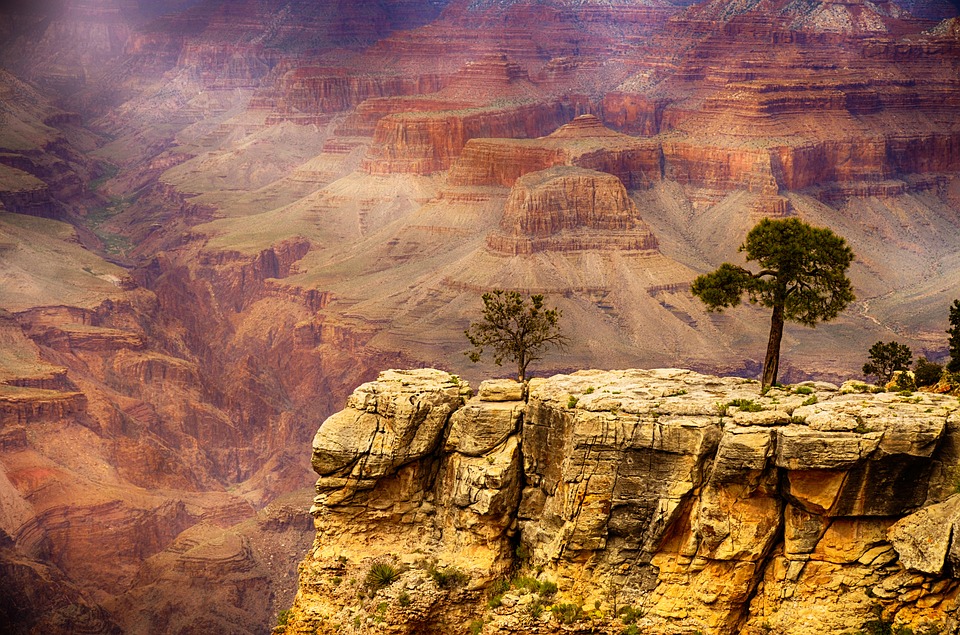
This natural landscape is an accident of nature that has given it its current shape. It has been literally carved out of the earth by the action of air and water. The river Colorado takes most of the credit to make this amazing place look so mesmerizing. Although a prime tourist attraction today drawing the global crowd, we aren’t really aware of the age of this incredible formation. Its dateless origin is certainly one of the most fascinating facts about the Grand Canyon. For a long period, a notion ruled that the Canyon is six million years old, which puts it much before the advent of humanity in the world. However, this belief was challenged by a body of geological scientists.

A study conducted in 2012 puts its age to more than seventy million years and that is a whopping number indeed! A way too big in comparison with the previous estimates. Not only when it came into existence the study throws light on how it came. There is a strong possibility of a number of small Canyons pressed together into one by the action of a river which is definitely one of the interesting Grand Canyon marvels. 
The menacing rock squirrels

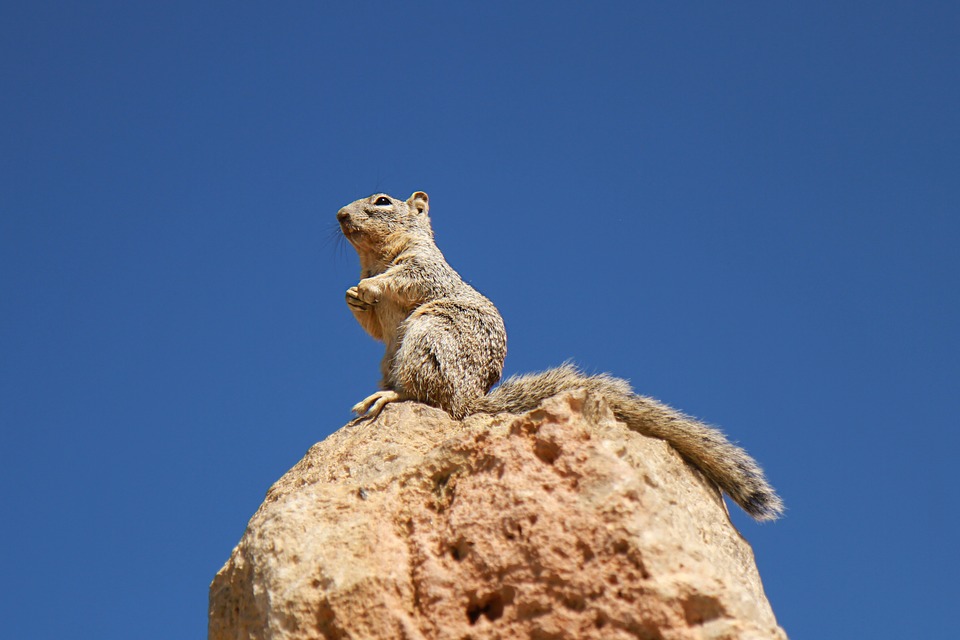
A fascinating fact about the Grand Canyon is that the funny squirrels aren’t that funny among the chiseled rockscapes. The rock squirrels here are as cute as any of their species elsewhere. Among other species of animals inhabiting the Grand Canyon, the rock squirrels abound in large numbers.  But when you get too close to them to feed, the funny dentition can be a weapon to harm the feeders. Annually around a dozen tourists to the Grand Canyon get bitten by the rock squirrels. You will find signages put up on the roads warning you about these little rodents. They say leave nature as it is. So take heed of the warnings. They are not the regular squirrels from your backyard that scurry and play harmlessly. 
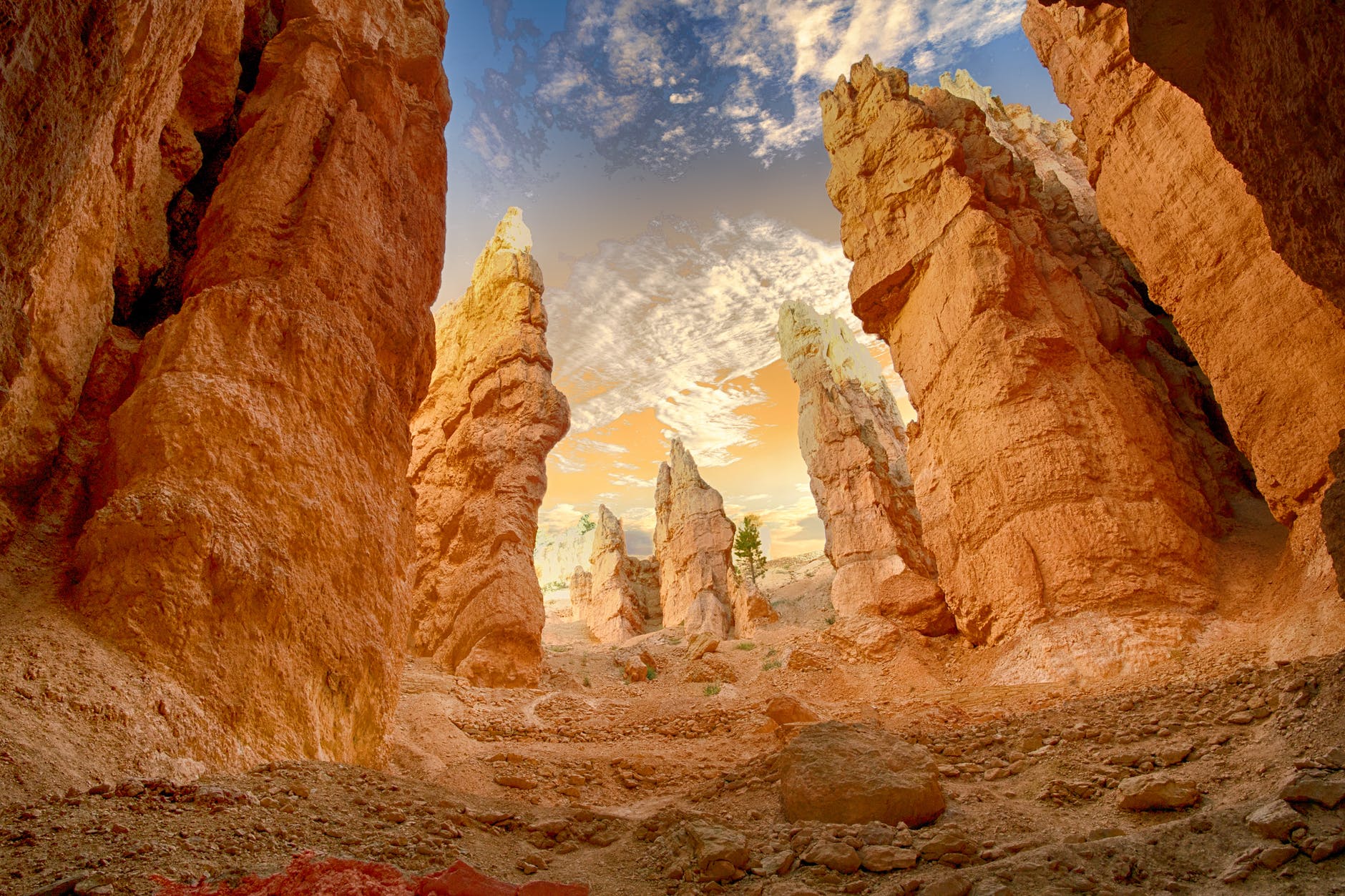
Photo by Pixabay on Pexels.com

A place for journey afterlife

The local Hopi tribes have a special spiritual connection with the Grand Canyon. This belief is certainly to score a significant status for the connotation held down the generations of these indigenous people. This is a place beyond mortal life, it is a landmark for a journey into eternity.

The traditional notion goes like this that when you have completed your lease of life on earth your spiritual journey begins. You travel across the entire Grand Canyon and head west until you are at the confluence of the rivers Colorado and Little Colorado. At this confluence, the gateway to the beyond stands. This important place occupies a critical position in the belief system of these tribes in matters of life and death and someplace that is above all worldly matters. 

The park that sees 6 million tourists every year!

Only second to the Smokey mountain park in North Tennessee and North Carolina, the Grand Canyon marvels and its fascinating landscape makes it one of the most popular parks in the US. The annual tourist visit touches six million people and that is an astronomical number!

But in the year 1919 when the park ran its inauguration for a tourist visit, the number was nowhere near the present crowd. The annual visit was only around nineteen thousand people.

The reason is indeed traced to its inaccessibility for inadequate transportation and other infrastructures. With the upgradation of roads over the years, tourists started pouring in large numbers. 

Grand Canyon fishes

A surprising feature of the river Colorado flowing through the Grand Canyon is its fish population. If you thought that Grand Canyon fishes swam in large shoals you are mistaken. Only eight species of fishes are found in the rivers out of which only six are traced in the waters of the Colorado River, the reason being the river waters have extreme salinity. Other possible causes for a low Grand Canyon fish population is the rivers often experience flooding and temperature fluctuations from one section to the other. These natural factors make only the toughest of the Grand Canyon fish species to survive.
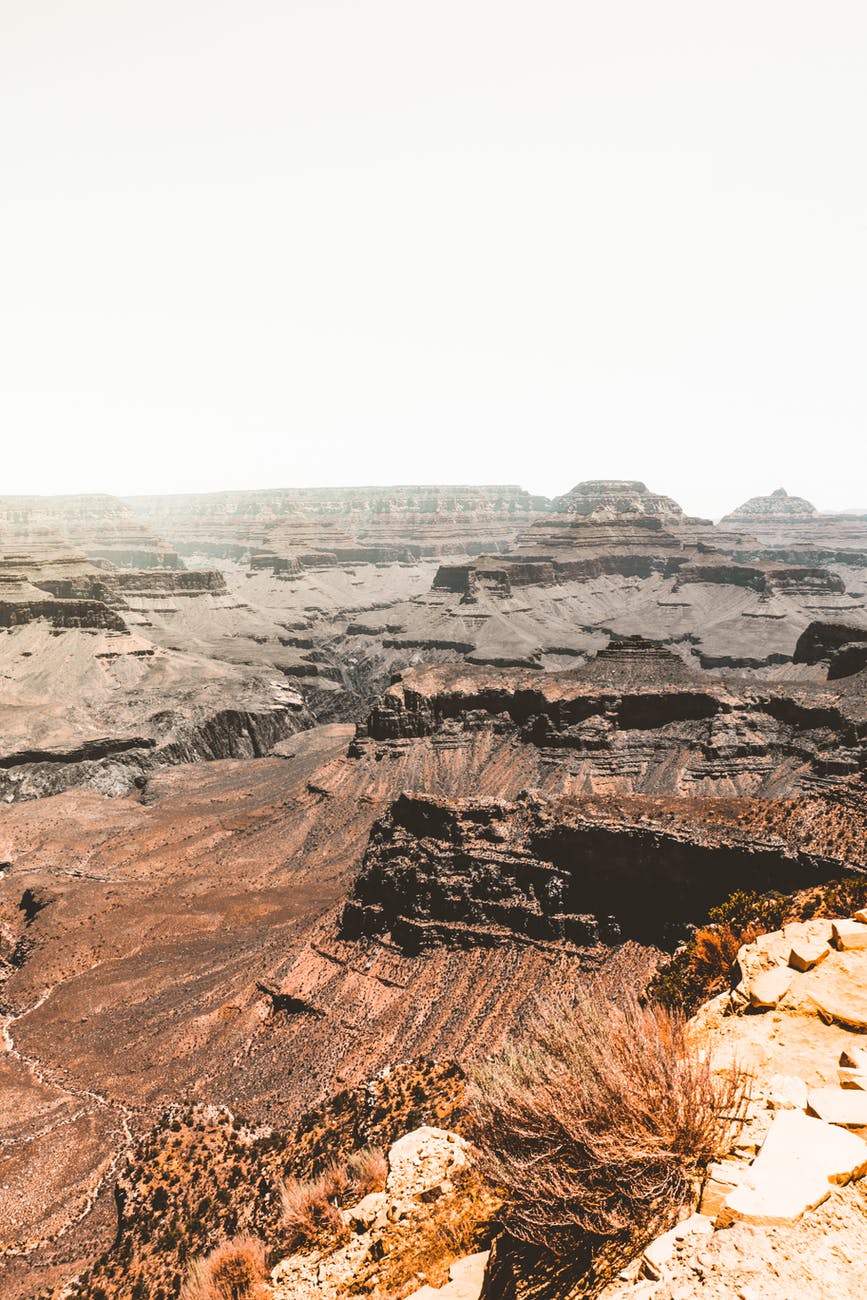
Photo by Juan N. Gomez on Pexels.com

Absence of Grand Canyon dinosaur fossils 

It is rather incredible that this ancient landmark doesn’t contain dinosaur fossils. The paleontologists have worked out possible reasons for a complete absence of dinosaur fossils where there should have been the skeletons of these giants embedded in the ancient rock formations and rift valleys. Dinosaur fossils are almost found all over the planet. Even places not very far from the Grand Canyon have them preserved in the earth. Grand Canyons have fossilized ice age plant remains and hence the absence of dinosaur fossils over here sounds a little strange. Even the rocks and minerals present in the Grand Canyon have the typical character that helps the preservation of the bones. The plausible explanation to this is that the Grand Canyon rock formations and the rule of dinosaurs weren’t in the same period. A second possibility was the climate and conditions here weren’t right for the dinosaurs to last. So there aren’t any Grand Canyon dinosaur fossils. 

The sheer size

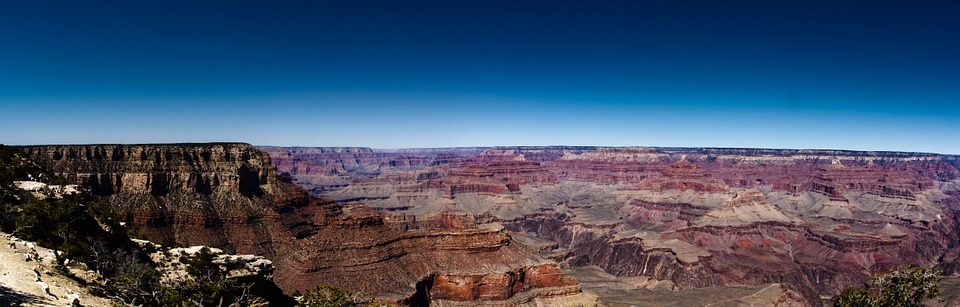
The Grand Canyon is an enormous geological feature to reckon with. The gigantic size of the Grand Canyon beats one of the states of the US. In comparison, Rhode Island, the tiniest state by size, is only 1212 square miles dwarfed by the sheer size of the Canyon which is 1904 square miles. 

The Gigantic size of the Grand Canyon is revealed by its dimensions that run 277 miles in length, 18 miles across with an average depth of one mile. The park however does not cover the entire Canyon that is an incredible gift from nature left to its own artistic whims.
One thousand caves 

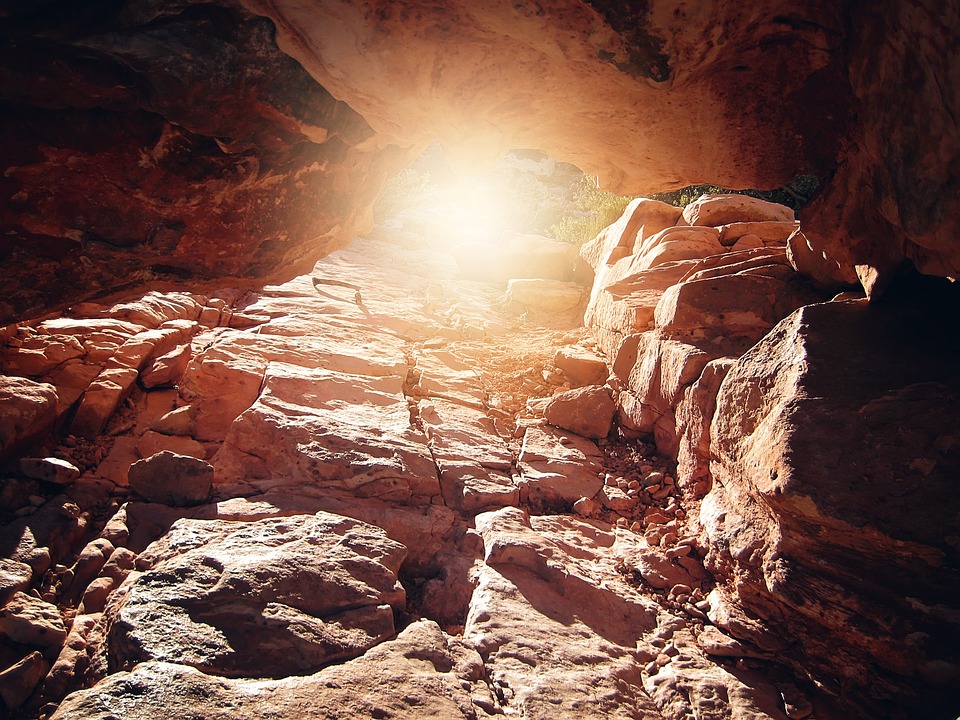
That caves are a natural feature in an amazing landmark like the Grand Canyon is normal, but surprises us is the number! About one thousand caves are found in the Grand Canyon of which only 335 have been put in books. There exist many caves that aren’t mapped yet. The one cave that is open to the public is the Domes on Horseshoe Mesa. These are the limestone caves cut into the red walls. Still partly explored some of these caves are known to contain fossils of plants and animals from the ice age. Some shelter animals. The unexplored caves once brought under investigation may reveal more information on the life they may have inside them. 

Its influence on the weather 

The Grand Canyon can itself influence the weather because this amazing landmark touches different altitudes at different points. With an elevation ranging between 2000 feet and 8000 feet, there is always some very hot, some cold and some places midway in altitude have a moderate temperature. Whether it is heavily pouring or bright sunshine or a cold and misty climate will depend on where you are in the canyon. The varied weather conditions within the same landmass spreading over a given area are certainly something unique and beautiful. 
The splendid skywalk  

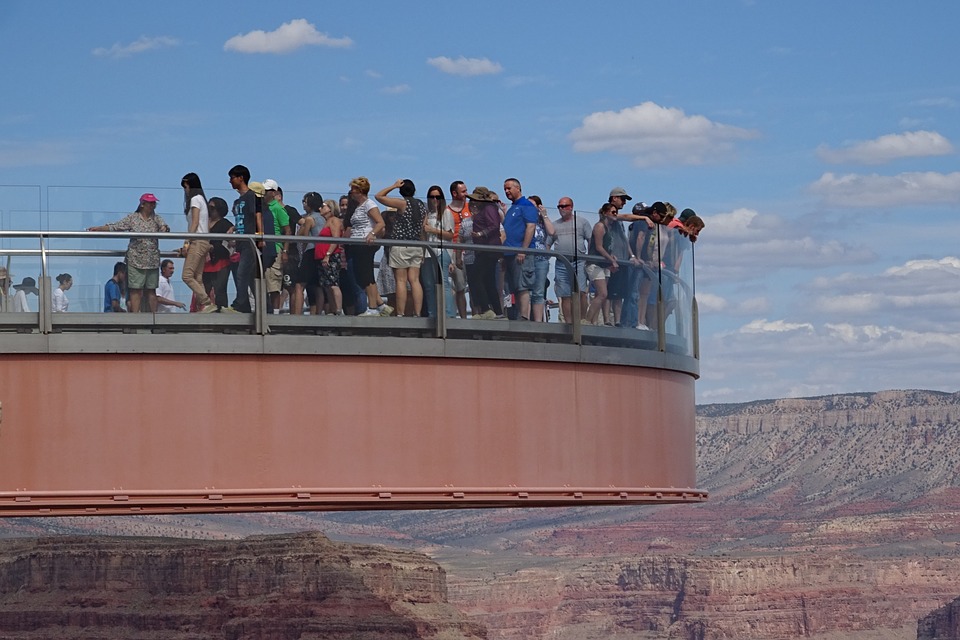
You can have a bird’s eye view of the Grand Canyon without having to go up in the sky. Horseshoe-shaped steel construction with railings and a view-through glass floor extends 70 feet into the open air beyond the outer edge of the Canyon. This is a fascinating and famous attraction for the visitors and handled by the Hualapai tribesmen.
Shifting sands of Jodhpur

The sands of Rajasthan  must have something special, the rugged countryside and hostile climate in some way have a role in toughening up  Rajput mettle.

No other Indian state features a desert, the eastern most extension of the world’s largest arid region stops here. No- where else palaces are so elegant, a lot of them have been turned into star hotels though. Contacted a travel agent and planned a trip to Jodhpur

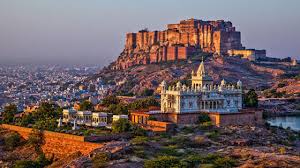
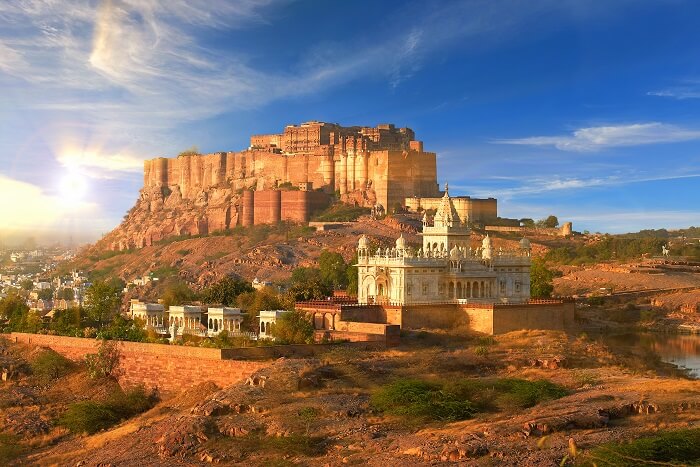
The impressive Mehrangarh , its towers looming over the Blue City of Jodhpur offered a fine view . Around Mehrangarh’s   base , the old city a clutter of  blue cubes , extends  to 10 km . It is the 16th century city wall. The name Blue city looks appropriate ! Most of the buildings here are painted blue. The city has a web of winding old streets.

They are the most mysterious walkways ever and beat your wit so much as to put you at places you have never imagined to be. Drift of aromas good and bad included fresh flowers, burning incense sticks and stopped up drains. Shops sell everything from trumpets and temple decorations to snuff and brocade.

Antiques are in plenty, the range of smoking hookas alone would leave you agape. The modern part of Jodhpur is just a fraction of a medieval city where high walled forts echo life connected with valor and legends born to be remembered by generations. 

The city is a blend of history , art and cultural milestones impressing the visiting tourists. A popular hub,vibrant with life that would continue to be a source of making a living out of tourism for some .And a place of cultural passage for many . The western part of the city like Navchokiya, is more scenic . Rubble-strewn  landscape seamlessly meeting limits of vision and relatively scanty crowd set you in a detachment from the mundane world.

We traveled through the Jodhpur city over a 4 day vacation covering the following:

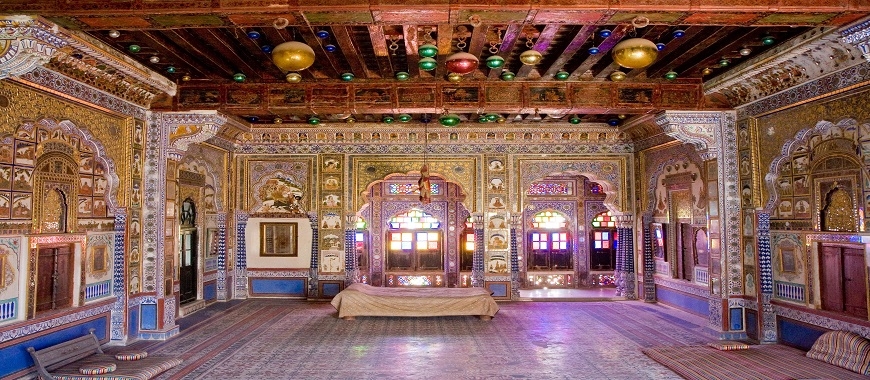
Mehrangarh 

PC: travelogyindia

The construction materials were mined from the rock quarries close by. Administration of Mehrangarh is with the Royal family and the fort is rich in history. We entered the fort , spellbound by its sheer size and splendor. Very few trips can be as informative probing into the lives of Rajput kings.

Our guide spoke with authority and held us in rapt attention. From the Fort itself, the Blue City was clearly visible, a vista unparalleled and enchanting .Moving sea of tourists moved in and out. Plainly amazed at the architectural excellence echoed off every pillar and stone their cameras clicked non stop . 


Mehrangarh  Museum 

PC indianholidaypvtltd

Moving on, I stopped at the Fort museum enclosed within the palace. The muddle of courtyards and halls had delicately carved stone work with stunning symmetry ending at sharp edges.The artwork was more like done in soft wood  than in sandstone.

The exhibition centers at Srinagar Chowk (Anointment Courtyard) offered exquisite collection of ” Howdahs”(the seat on an elephant’s back ) and Jodhpur’s royal palanquin collection. The mode of transport was in tune with the status of people they carried. Those with blue blood lineage  enjoyed luxury rides.

 
Mandore   Gardens:

PC transindiatravels


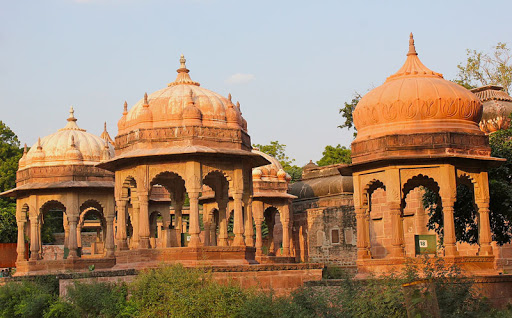
Mandore, located 10 km north was the capital of Marwar before its strategic importance shifted to Jodhpur.  Rock terraces and sacred edifices added to the beauty of  the garden where troops of langurs went monkeying around. The garden is a graceful combination of patches of green and temples were chiseled with intricate design.

Dark red monoliths of Jodhpur rulers were installed. They watch in silence, their glance held the posterity who stared back at the statues with awe. Sometimes words aimed at statues come with a hint of ridicule as it was a mixed crowd of tourists with diverse taste and humor.  A rickshaw ride to the Mandore gardens from Jodhpur center takes around ₹ 300.  The ornate temples carry statues of human and animals in congress. What is obscene could be interpreted as a valuable piece of art. Strange are the ways the human mind works and stranger are the benchmark for a fair evaluation. The garden features a museum too; it is unique in its own way so far Rajput cultural sides are in spotlight.

Guides explained heirlooms and images in a non stop litany, keeping the visitors engrossed. It is a habit, turned resident in their streak,they can recite it anytime anywhere blindfolded.Continuous rehearsals never fail them in their profession.

Waterways along parts of the garden have been turned into morass of synthetic reeds making them favorite haunt of water birds, glowing bee eaters and buzzing dragon flies.


Umaid Bhawan  Palace 

PC tajhotels.com
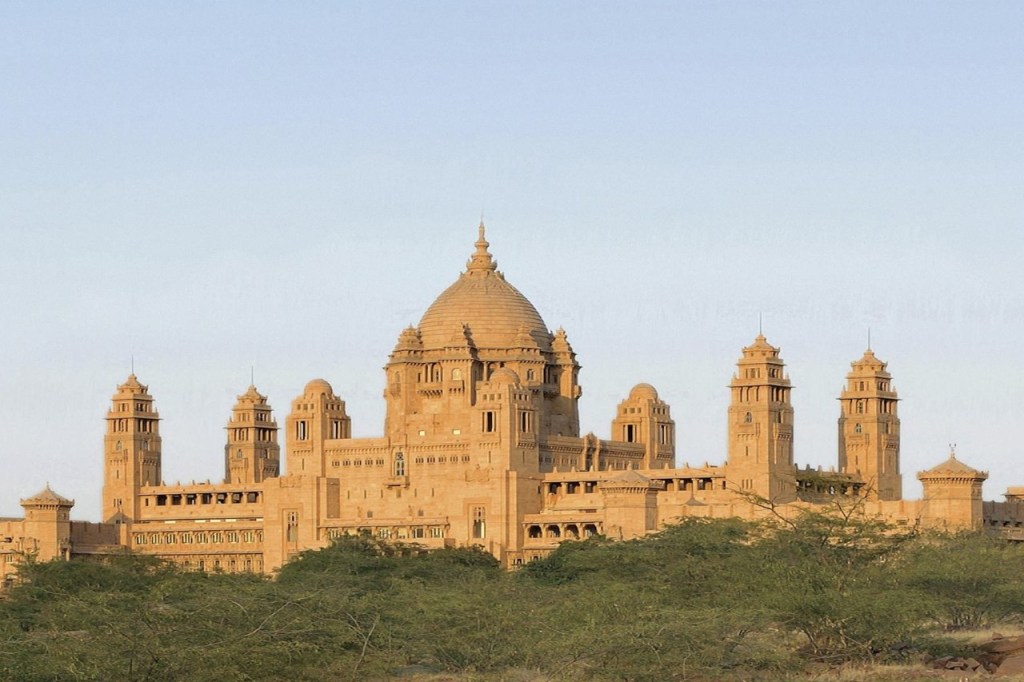
Umaid Bhawan palace had received a major coverage in my travel agents recommendation, so it is not to be missed. But the tourist’s access is restricted to only a part of the palace, a portion of it is the residence of the Royal family. A part has been converted into a hotel. We visited the palace and were bemused by its  luxury.Fleet of vintage cars used by the Royal family was nice to watch. Machines from yesteryear’s stood in silence only to roar and take off at the turn of an ignition key.


Gaj Singh II resides in part of the hilltop palace, erected in 1929 for Maharaja Umaid Singh. Designed by the British architect Henry Lanchester, 3000 workers toiled for 15 years to finish the project. Project cost ran into  ₹11 million. This magnificent edifice has more than 300 living rooms. A museum adjacent to the site looked interesting. It was an elucidating trip around a photo and artwork gallery.

What fascinated me most was an amazing collection of antique clocks. They have stopped breathing but continue to enchant the visitors with precision design details. 

Rao Jodha Desert Rock Park:

PC inspirocks

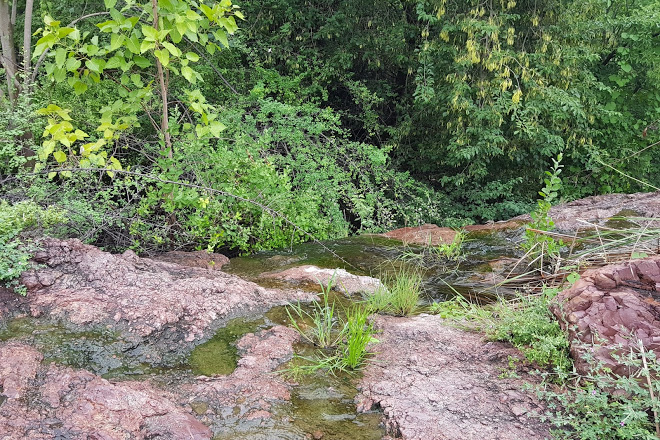
This 72 hectare open land, ideal for ecotourism and perched in the slope of Mehrangarh is a nice example of conservation of flora and fauna. Rich in biodiversity, the park carries numerous trails made by travelers and animals. Devkund Lake, a prime spot in the park is very popular, crowded with tourists for bird watching.

Besides migratory birds, a variety of reptiles and butterflies keep wildlife buffs occupied. We made it to the park when the sunlight was still soft. Our local guide was resourceful with good credentials. But we could not spot any animal. Otherwise, the park safari was exciting.

Absence of animal encounter was not frustrating at all as the guide kept us occupied with equally riveting eerie tales bordering on the supernatural. His stories were real  and in desolate sands of Jodha Desert Rock as was claimed by him, you face strange incidents that do not offer an explanation.

Here stones whisper and winds throw up fire, air turns thick and uncanny feelings take over. To an atheist, the validity of such stories is open to question. But his tone of delivery at the fall of dusk,separated the spectral and the natural world by only a weak barrier.  The region is a bed of 600 million years old volcanic rocks; it is all barren although not entirely void of life. 


Jaswant Thada :
Overlooking a lake stands a marble tomb in tribute to Maharaja Jaswant Singh II. Just 1 km northeast of Mehrangarh, it is a showy masterpiece.  A peaceful deviation from the bustling city rush that offered a fabulous glimpse of Rajput art.  The monument was built back in 1899 featuring sculpted marble fretwork. The interior displays a row of oil on canvas. Portraits of Rathore Kings stare at you whatever angle you stand. You cannot escape their gaze.

This feeling mounts whenever you are alone in a one to one eye lock. The inside is immaculately conserved as you probe deeper into design, the magic turns more fascinating. It was unfolding slowly. The building is complete with antiquity and allows a breathtaking vista of the city through arched windows.

    But something was amiss I could not figure out what it was. Then it popped in a wink. It was the portrait of Queens. There wasn’t a single female portrait. Was the route to Sati pyre easier than making it to the photo frame through a bureaucracy of male approvals?

Clock Tower
The famous Clock Tower had come a long way  over a century since it was built. It is a unique location and talked about so often by pedestrians, cab drivers and two wheeler riders making it an important reference point in the city’s map.

Located close to the Sardar Market, the Clock Tower is a meeting place, its air a mixture of whiff, sound and glimpses of life pouring in and out of the market itself. On the way to clock tower, a line of sweet shops drew men and animals. While men paid, the cows were fed free as a token of charity.

Milk, the main ingredient can turn so tasty you won’t believe. Churned for hours in large cauldrons sitting on low fire frothy hot milk turns light saffron giving off sweetened rich flavor. Milk and sweets were sold on a frenetic pace. Sellers were happy with cash flow and buyers were  happy as if they have just had ambrosia straight from heaven. 

The market had   gateways forming an arch, another signature design motif of Rajput architecture. From here, the twisty and broken roads radiate out in all directions reaching most of the landmarks of the Blue City. We moved west and reached a trading hub featuring separate sections for vegetables, spices, tobacco, utensils, wood , brass crafts and jewelry.

People young and old were busy in a potpourri of engagements. Some were too young, toddlers on an apprenticeship to the skills of walking. Some were way too old, wrinkles around eyebrows marking the number of years they have lived past. Strange flavor of water filtered tobacco smoke from hookkas filled the air. Long leisurely pull on the pipe and the facial wrinkles folded deeper into flesh !

Toorji Ka Jhalra
Located within a walking distance from the Clock Tower lies an ancient step well locally known as Baori or Jalra. Communal bathing formed a part of social custom as revealed by archaeological digs in many ancient civilizations.  

Toorji Ka Jhalra however met irrigation needs here, fed by water aided by gravity along stone launders. Legend goes the ruler had decided to move the capital to higher altitude on hills fearing enemy attack. A curse fell warning famine, following shifting of capital. The need for a water reservoir to water the crops seemed necessary.

This architectural wonder had been a site of sheer neglect and used as a garbage disposal yard for years. Only recently it has received attention, renovated and turned into a tourist attraction. Toor ji ki Jalra is a visual treat today, we spent long hours in a cafe here gaping at the geometry. What a gifted mind can think of such a design and what hard toil can execute the physical part with meticulous wrap ! The coordination within the team must be perfect. 

Fateh Pol
This super  gate stands south-western side of Mehrangar Fort. It was erected by Maharaja Ajit Singh to celebrate victory over the Mughals. We approached Fateh Pol from Navchokiya side to avoid crowd. Once elephants stood  guard at the gate.

They were the trusted giants who you cannot bribe to make an entry. Fateh Pol gate is impregnable, a reliable protection to residents inside. Here we had delicious paranthas and saabzi to sustain further travel for the day. 

Chamundaji Temple

 PC Google (tourmyindia)


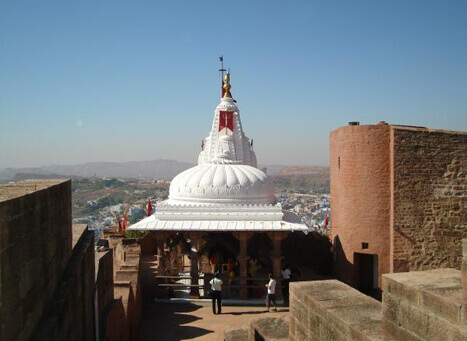
 A temple of goddess Durga Maa enclosed Her idol, the image is in all wrath , here the feminine force of shakti is immensely revered . It becomes a little hard to accept the same cult promoting burning of sati with her dead man on pyre. May be there are higher truths in life that make physical pain look insignificant ! However, life is more complex and its equations often contradict with what is apparently logical.

The temple yard was thick with tourists, Indians and foreigners enchanted by sublime overtones. Participation in chants obsessed the enthusiastic foreign tourists and entrance to the temple had a male – female divide for darshan.


Jodhpur camp sites


PC Google

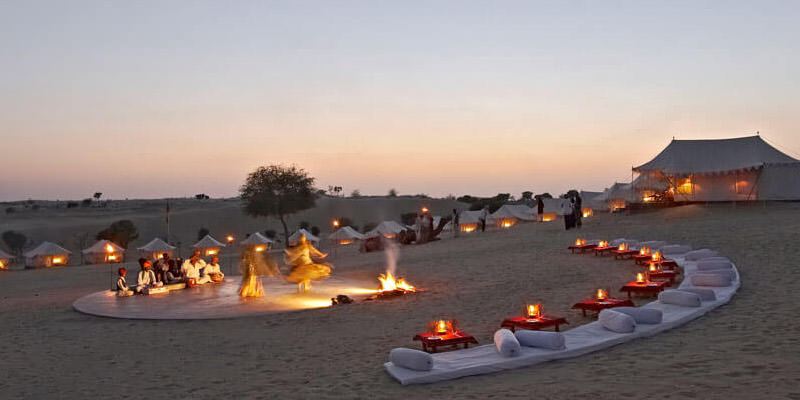
 The best part was the last part and it was the popular Jodpur desert safari. We did it in Osian desert campsite, a night spent in a tent. It was a different kind of feeling in general and calling it just amazing won’t be a fair description.

Call it touching a congruence where exploring self finds an extension into wandering the vast ocean of barren nature. It is so vast that you and your pad are only a small micron of existence.

The evening camel ride in the dunes added to  a new kind of feel. Had no previous experience of riding humped transporters fueled by super endurance. Unfortunately most of the dunes were gone, still whatever remained could hold you back for eternity. 

Camps were complete with communal kitchen, toilet and a reception desk, tourist’s needs were  answered well. Cabins and caravans were other staying options. Facilities included wifi connection too.

 Sunset was spectacular and even stronger was the spell of folk music played under a starry night. Traditional musical instruments and the passion-driven high pitched tune  were a source of bread in the  backdrop of terrain, challenging and sterile.

Ambiance somewhat resembled a stage set from the Thuggee days except for the horrible curtain drop. It was just a thought in a flash. Nothing serious and nothing  threatening. Folk singers performed late into night followed by candlelight sumptuous Rajasthani dinner .

The thrilling trek to Borra Caves, Araku

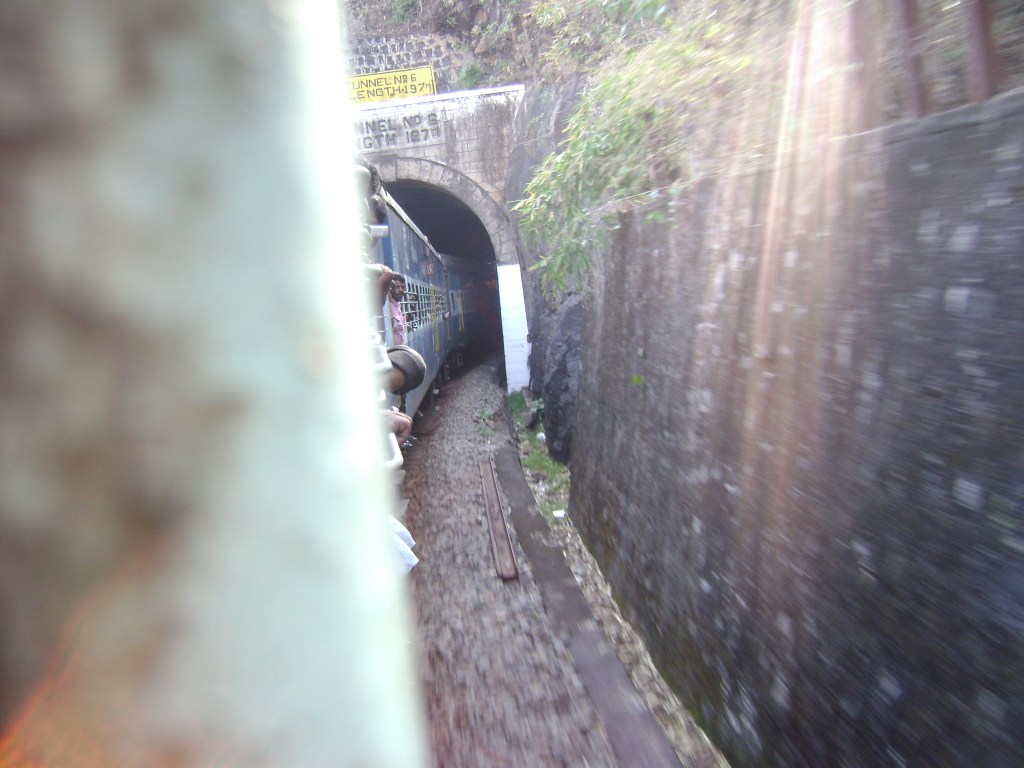
The mouth of Borra Caves was as awe-inspiring as was the element of dismay following events from entry to exit. The size of the cave is a feature to reckon with, being the largest of its kind in the subcontinent! One route is from Vizag. Kirandul express, starts early morning and reaches Araku around noon. Borra caves come half an hour before. The trip by Kirandul Express was zero cool, the train crashing through countless tunnels of the Valley in the Eastern Ghat mountain range.


One moment we were in darkness and the next surrounded by lush meadows, spectacular valleys and distant hills. It was in March with heady vibes afloat in the air. Our mood soared riding an amazing spring carrying fragrance of nature.  As expected, the train was packed, perhaps the imminent festival of Holi held an added charm. 

Delving into the Borra Caves:

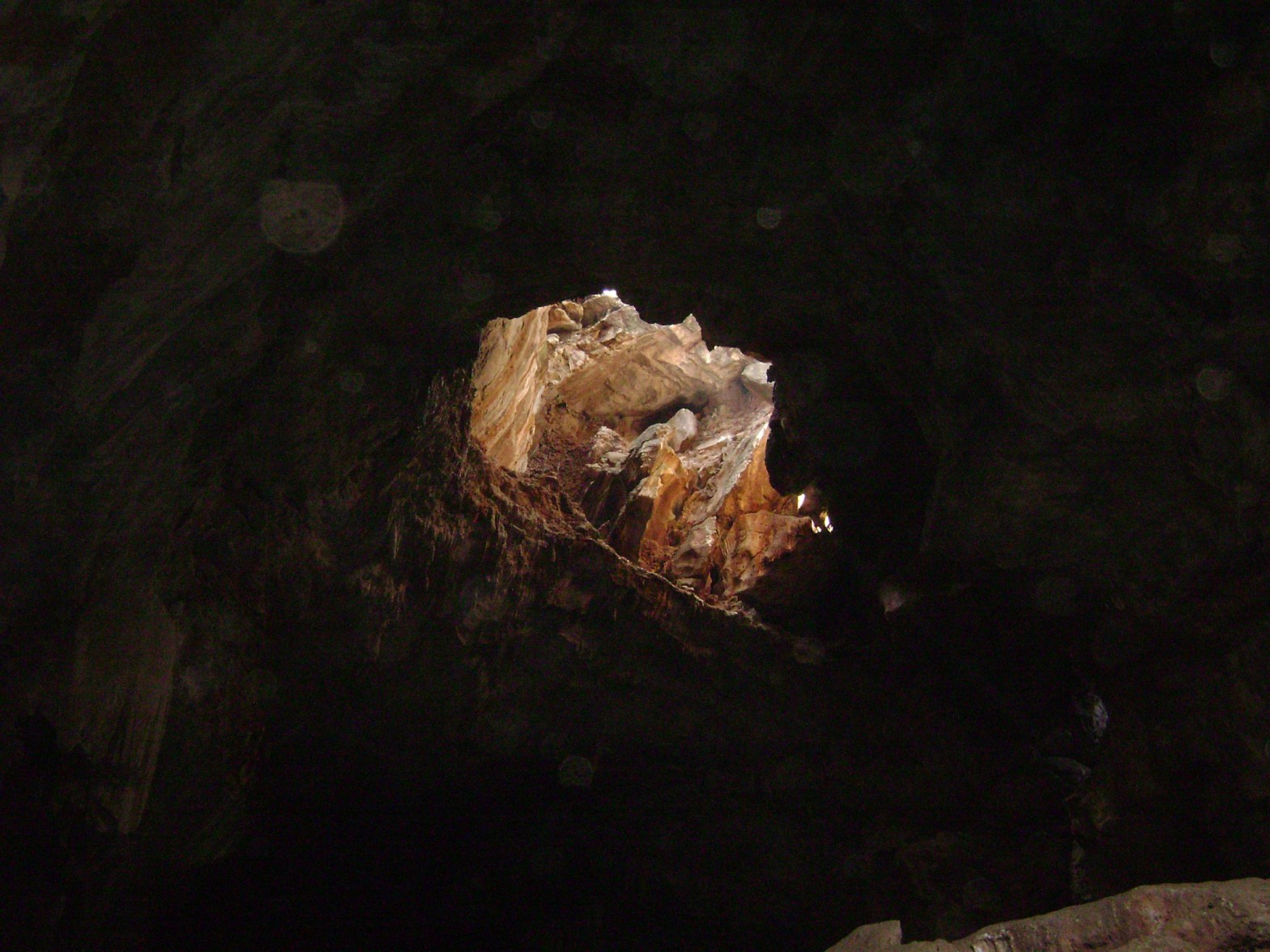
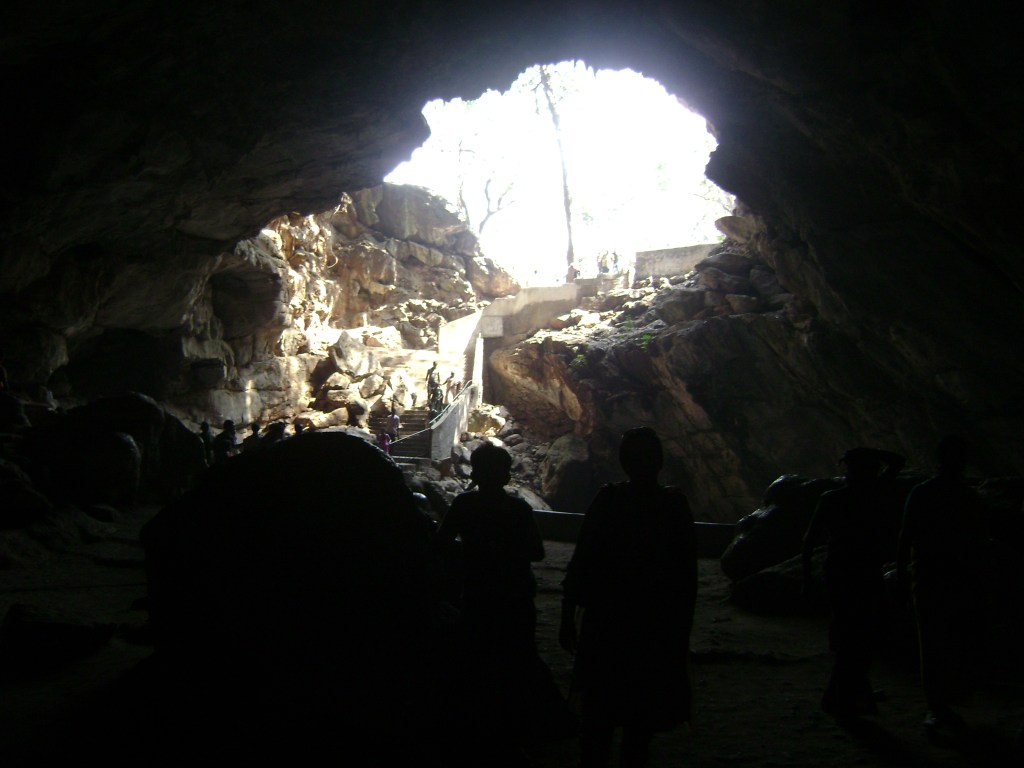
Close by the cave flew a spinning creek with an awesome view.  Borra Caves, locally known as Borra Guhalu, comes from two words, Borra meaning ‘ Hole’ in Odiya and Guhalu stands for ‘cave’ in Telugu. Located in Vishakhapatnam district of Andhra Pradesh close to Odisha border, the region brings in a wonderful cultural fusion pronounced in language, culinary influence and demography. The deeper we went inside, the weaker the beam of light from mouth grew.

Stalactites and stalagmites figured from top and bottom. Some rose from the cave floor and some dropped from ceiling. They made a raft of baffling but picturesque geological layout. The temperature was a little low inside and the precipices along the wall at different altitudes were connected by stairwells. After traveling for some length it was completely desolate. Absence of tourists had made the already creepy feel stronger and I had it in my bones some alarm coming up fast. A few light bulbs flickered to make a frail halo.

We made a scrutiny of the wall up close in the hope of finding some primal mural but were disappointed. Artwork across the wall was indeed present. But these were baffling squiggles, occasional English letters displaying love lines and promises.  Doodles faded out in places, that did not carry much information and nothing from the Stone Age that’s for sure. The artists were none other than modern love birds.

A rain of fine- grained rubble drew my attention up at the corner of the ceiling where a colony of bats had built their nesting bed. A few crawled along the moist cave wall. These were fruit bats sometimes feeding on insects.  Bats couldn’t hold my attention for long. Soon after my gaze fell on a small group of tourists looking very tense.

They had lost one of their team mates who they searched with distraught.  Sign of fear blanched their faces. In a cave so dark and menacing, what would be the fate of this lost soul?  And what can cause a man to go trace less in a blind cave? There was no other way out. The whole group had their knickers in a twist.

Even in near darkness, the group confirmed he did not cross them the other way towards cave mouth. Mindless thoughts bred precarious possibilities. Presence of cenotes in Borra is very unlikely. If cenotes existed, accidental slippage into one of these could get him sucked in an undercurrent of whirlpool ! There was a chance he may have been hiding somewhere with mind-load of dark humor to scare his mates. Presence of carnivores? This would be the extreme of imagination, I have been reading too much these days and woke up to reality as wings fluttered around, bats were out on a flight for prey, guided by sound echolocation.

 Was not in a mind to explore any further the incident had a spell of bad presage thrown in. I asked the tourists to contact cave authority immediately instead of launching a panicked hunt ending in confusion. Having had enough of Borra Cave, I groped my way and made it to the cave mouth; being directly under the sky once again was a step closer to relief!

Not far from the entry point stood a restaurant nice and cozy. The cave nightmare kept haunting, the missing tourist incident not well digested and I did not have an appetite. Turned my back on the restaurant and set off for the Araku Valley in a cab that took almost an hour. The jitters evaporated as the cab sped through coffee plantations, dense forests and scenic landscape.

Chaparai, Araku:

Our hotel was close to the railway station with dedicated staffs and good food. We were lucky to get a room with a breathtaking vista in front. A line of casuarina trees offered a view before being lost in an abrupt turn. Beyond that, dense Eastern Ghats vegetation grew in a tight cluster. Our first destination was Chaparai waterfalls and it was about 10 minutes by car. 

We started early morning to capture nature at its best. The sound of flowing water was amplified as we approached Chaparai.  Chance of getting our feet deep in water was irresistible against a backdrop with stealing beauty. Yes, Rocks were slippery and in places they were in dangerous incline. When you look up at the source, million crystal blasts in a medley of glittery color. Water droplets were set in a dance of blinding white made intense by the midday sun. Yet it was a great feel to enjoy water splash with other tourists clicking for great photo opportunities.

Padmapuram Gardens:

 Picture courtesy: Tripadvisor

Padmapuram Gardens was not very far from hotel. A 5-minute drive could reach us there but we decided otherwise, could not defy the lure of making it on foot. It widened our travel horizons practically keeping us in livewire contact with the surroundings that sparked more zest.  A solitary walk in peaceful morning with color of spots here and there was a desirable pursuit. If it was a hovering butterfly now it was bush of bright yellow flowers the next moment.

A rolling fruit struck my foot. Looked up and spotted a monkey, the act fits him. Must have thought what is distasteful to him must be delicious to me or perhaps it was a welcome gesture in his own way. Sensing my indifference he stealthily moved on. Must have found some other engagement.

A couple walked in front a few meters ahead munching on cookies and stopped by a local vendor who offered fried cashews.Half eaten cookies disappeared in travel bags. Cashews looked more engaging to the palate and seller and the buyer swapped smiles. The monkey had finally caught a lizard that it may have been trying to stalk. Traveling by the car would reach us to destination no sooner we would board. But we would miss these simple charms of life within the confinement of comfort designed in metal and chic upholstery.

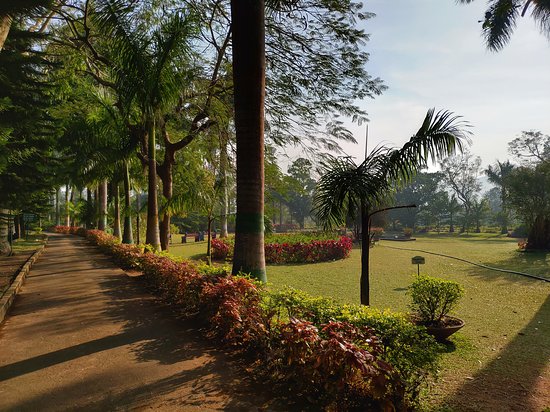
The garden was neatly groomed. Diverse flora ranging from known species to exotic kinds kept me occupied. It may be a haven for botanists but no less enchanting for nature lovers.  Rare breeds, ornamental flora, shrubs and tall hundred footers coexisted in an amazing habitat. Plant feed and water were well taken care of by the Araku botanical garden authority. Landscaping was beautiful and life-sized models of prehistoric reptiles kept the kids running around, beaming with vigor.

A lot of thought goes into sculpting these giant dinosaurs. The impact on tourists’ psyche, the effect of possible fun and fear on kids’ minds in particular is a significant factor. A well maintained nursery was a stunning show stealer that demanded around an hour of intense study. Saplings in tubs were nursed with affection before making them ready for journey through adulthood. Padmapuram garden is a laudable endeavor. It deserves a repeat visit!

Tribal Museum:

The tribal museum was about 10-minutes walk from our hotel, a nice place to explore the life of the Eastern Ghat tribes. There were separate sections for masks, game weapons, pottery, bird traps, indigenous jewelry and clothing. The stuff behind glass cases offered a vivid display of tribal lifestyle. Among museum visitors, a reasonable proportion belonged to local communities. It was an eye-opener that visitors showed such keen interest. The way the museum had portrayed their way of living is a reflection on the long journey from the days of hunting- gathering to spending time on social networking sites.

Have their lives been simplified by the advent of hypersonic tech world? The bait of gimmicks and its visible impact was what was expected from ethnic races amid new found globalization. For a frank opinion I was a little surprised that they were here instead of browsing net in a cyber café.

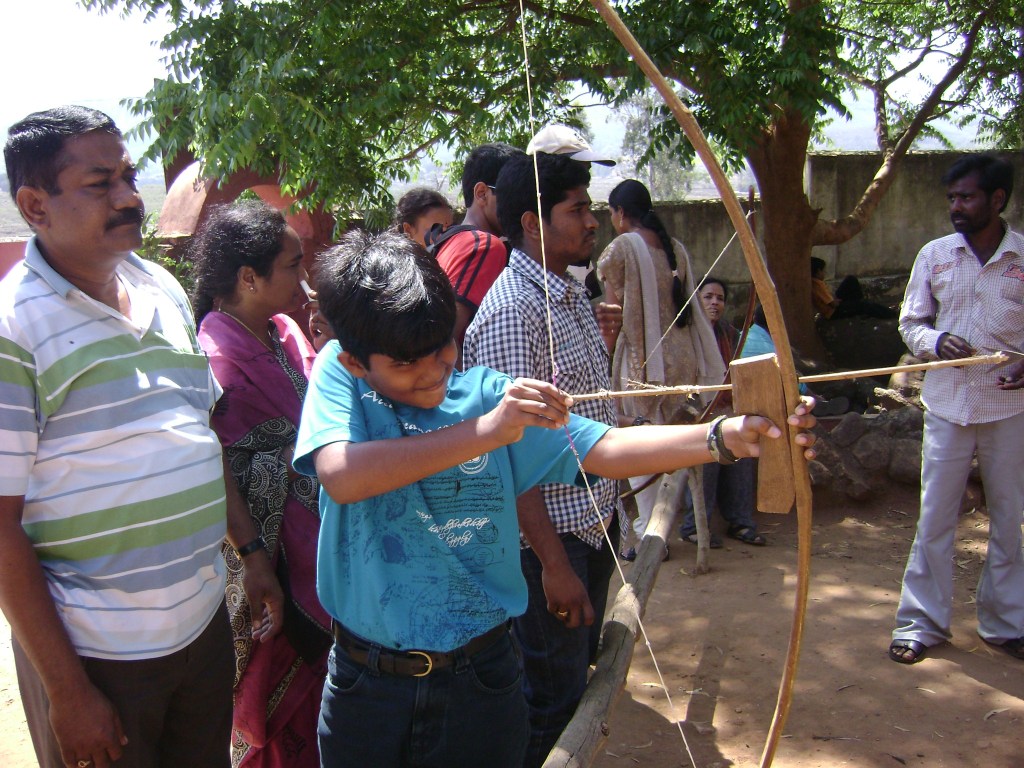
Walked a few yards to watch a fun archery competition held in the museum premises. Not to celebrate the marksmanship of participants but to have clean fun and skip where participation was more important than how one performed. My kid joined in the fun and later declined to continue after missing the target by clear half a meter! 

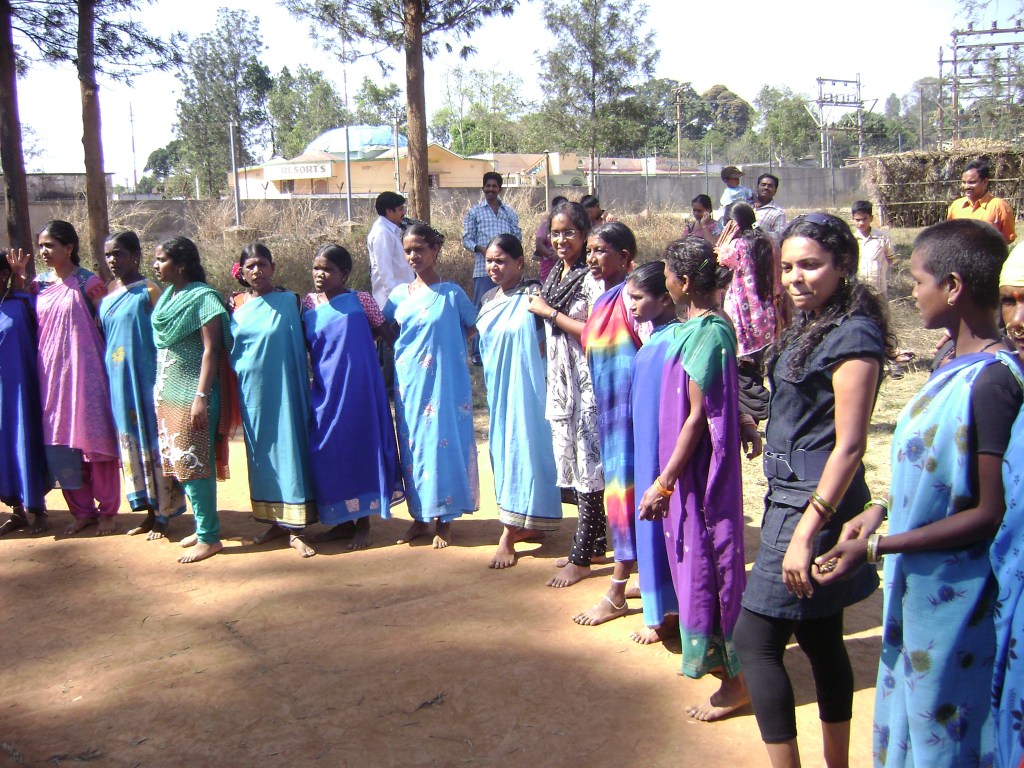
There was something more to keep us absorbed. It was the Dhimsa tribal women who danced to the tune of a flute player and a drummer performing in concert. It was a wonderful combination of grace and class reinforced by an arresting springtime flavor.  Appreciated the purpose of Museum Authority to showcase the cultural essence in all possible ways and what can be a better place than the museum premises? You get a glimpse of the culture and contribute to the sustainability of locals.

 We were back by sundown. The night was almost as transparent as daylight. The full moon night will follow through to the festival of Holi next morning. Hotel staffs had organized a bonfire, a familiar ritual prior to holi. Makeshift structure of twigs and dry leaves get set on fire. Significance of this bonfire and its connection with the festival of color had never struck my mind. The only link lay in the soot left behind after the structure burnt down.

I recall collecting and rubbing soot across known faces I could lay my hands on. Instant gratification cared a fig for consequences of damaged relationships later. It was a lazy morning. As I was sipping coffee, my glance set on what all lay in front of me from hotel balcony. A black heap lay in a mass of charred ashes. This could have been a source of fun on the day of festival. But no one ran around with color. We finished a quick breakfast and set for coffee museum near Araku bus terminal. 

The museum elaborated on history of coffee cultivation and farming methods. The guide spoke about ideal weather and temperature conditions, methods of farming, harvest and drying the pods and processing into powder. It broadened my knowledge with some insight. A strong aroma wafted from every corner of the room. It was quite crowded. We sampled the brew, it was strong.

Tyda Nature Camp:

Araku valley trip is incomplete without Tyda nature camp in the itinerary, located about 35 kms from hotel. I was in two minds whether Tyda would be a worthwhile trip, wasting a precious day in jungle instead of planning something sensible is not a viable option. It would have been a mistake not to give it a try as it turned out very soon. A human settlement at the foot of wooded Eastern Ghats is the landmark.

As usual we started early; the cab drove along a sliver of road that was in bad shape.  The possibility of an accident cannot be ruled out. Thought of the missing tourist in Borra caves snaked across my mind adding to uneasiness that was still roiled in my core. I hastily cautioned the driver to get a hold on car speed. Going full steam is fun but certainly fatal once you lose control on grip.

The net connection was going erratic and trying to get hold of it was becoming a task. Tyda nature camp was terrific. It was a wet Tyda a half an hour’s rain came in light showers that was improbable in this season, Araku doesn’t get a downpour until late June. The forest woke up to our footfalls, a variety of bird calls responded to our presence. It didn’t sound like a warning against an unauthorized entry. It was green with dense bushes and trees shooting well over hundred feet into the sky.

The need for sunlight was a strong stimulus in response to which they grew in contest. Tree top foliage blocked out the sun casting a patch of gloom at the base. We stopped our car and relaxed outside pacing the ground back and forth with a hope to see our winged hosts. A luxury resort called Haritha Jungle Bells stood in tranquil forest.

It offered a splendid staying arrangement. Haritha is itself an attraction in Tyda Nature Park. Located at a height of 1000 meters, the resort promised luxury. The interior with tasteful decor was apparent from its up- market exterior. A nice and secluded nook to spend a few days shut out from the bustling city. It was a little out of the ordinary to find a modern structure in timber and concrete amid a vibe where harsh nature rules.

We stopped only for a few minutes here, we are to move on. Staying at Haritha was not our plan partly because it was expensive and partly for our tight time schedule. For those who can swing it financially, it is a fabulous stay. We drove straight ahead and so far field of vision could take us it was all green. Wildlife included rabbits, lizards, blackbucks, macaques and a number of bird species.

But luck wasn’t on our side we could see only a couple of rabbits scuttling in fright when our car almost ran into them. We parked car and went on foot to get some jungle trek. A hanging rope bridge was quite a dare to call up all courage and make it to the other end. Jungle safari and struggle to move through jagged ground was a big time amusement.

No transmission towers.  No mobile alerts, we were disconnected from the civilization.  Being off the grid poured on us blessings of digital detox ! The surrounding was absorbing. You won’t feel an impulse to sneak at your digital apps even if it was working. On our way back, we had bamboo chicken in Haritha. It was yummy! Thank God the restaurant is open to outsiders. Else finding a suitable eating place to refuel after a long trek would have been an ordeal.

Tyda nature camp is a torch bearer of sustainable tourism. Coffee, grain and veggies are all sourced from local farms. It is easy to mislead tourists mixing lie with traces of truth unless you are an expert at identifying cues of false claims of sustainable tourism. But Haritha’s efforts looked honest and not hyped by greenwash sewing up deals with professional marketing agencies.  Neither was there any environmental abuse by way of dumping garbage by resort housekeeping nor did the tourists litter the ground with plastics and non biodegradable refuse. 

After gathering a pleasant experience of Araku valley over a span of three days we started back for Vizag on APSTRC Bus. The valley is a hidden jewel in the crown of Eastern Ghats. This underrated destination should do better in terms of promotional exercise to achieve a bigger volume of tourist draw. Then again, the larger the numbers of tourists, more deeply pushed in would our carbon footprints be. A vicious cycle will fall in with head chasing the tail unless tourists themselves turn a little more responsible towards environment. Well, we hope for a sunrise someday!

Sacred stones of Angkor Wat– Cambodia

IMG-20180812-WA0012

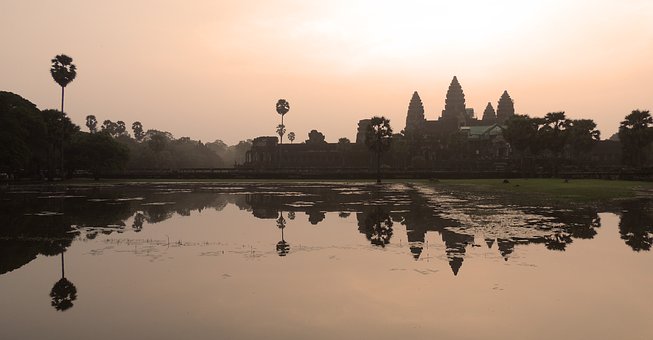
The imposing temple of Angkor Wat had always been a magnet for tourists. The beckon was irresistible to me as well. My dream turned up in 2001. Made travel arrangements and packed my luggage boarding a flight bound for Cambodia.

Angkor Wat 6 Banyan roots

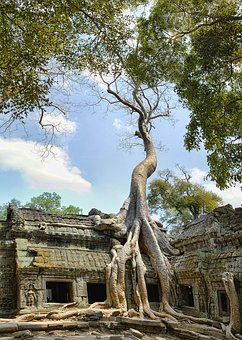
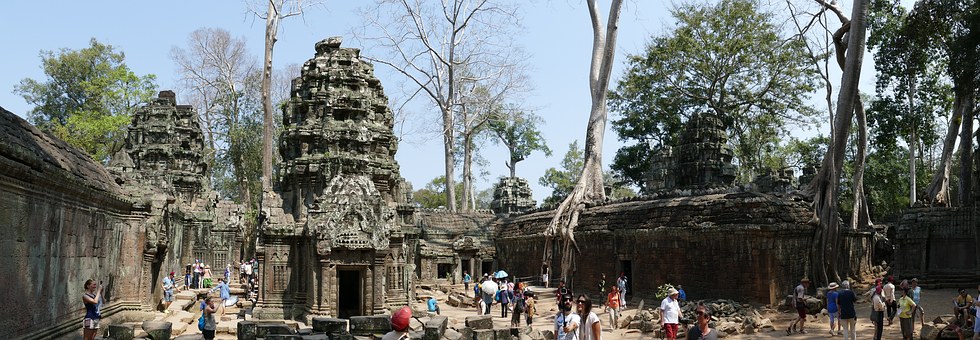
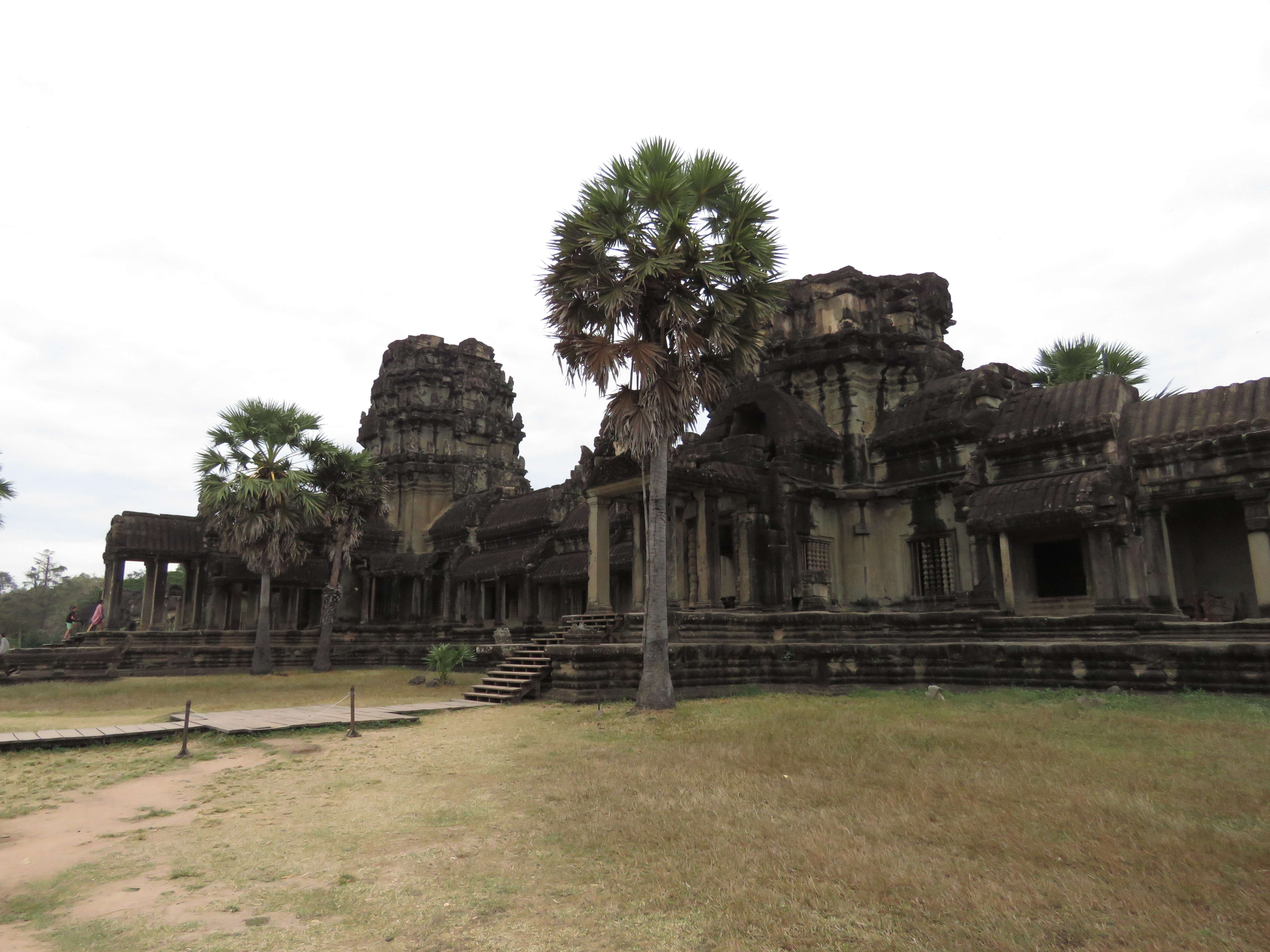
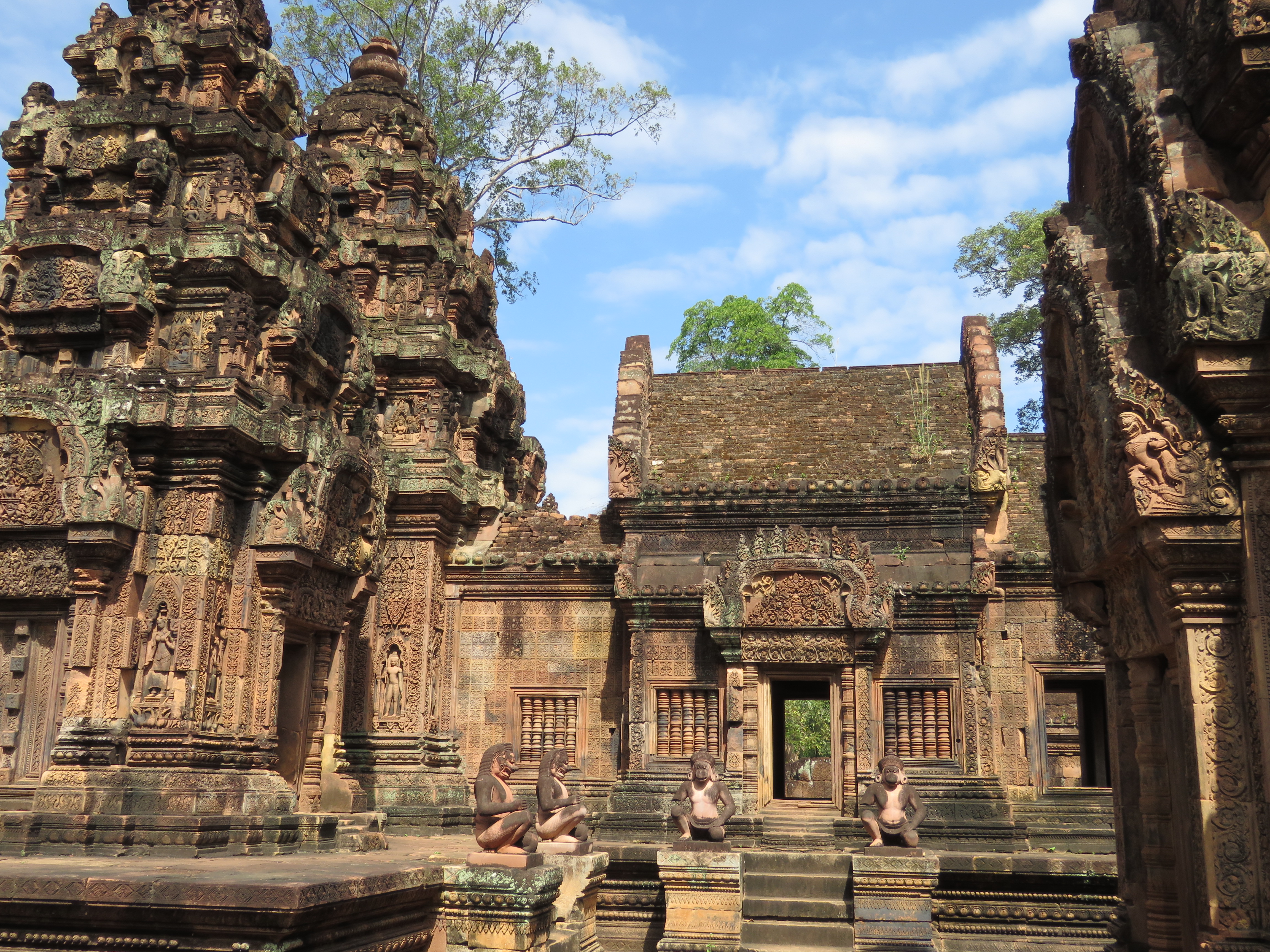
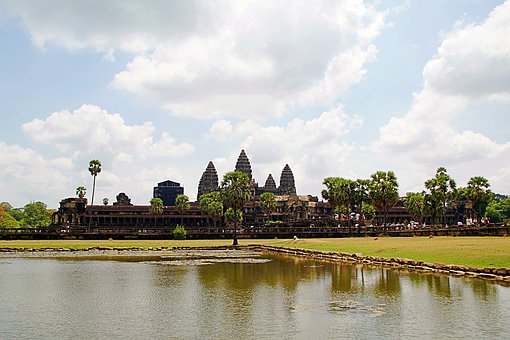
AngkorWat – a way out attachment to a culture extinct and buried! Sheer size is awe-inspiring, the rich interior tempting and so are the crumbling structures. They stand scattered with a crown of Banyan roots sunk deep down to the temple floor. Rustic vista of Cambodia is fabulous and a short sojourn into the pastoral landscape before getting to the temple site will not be a bad idea.

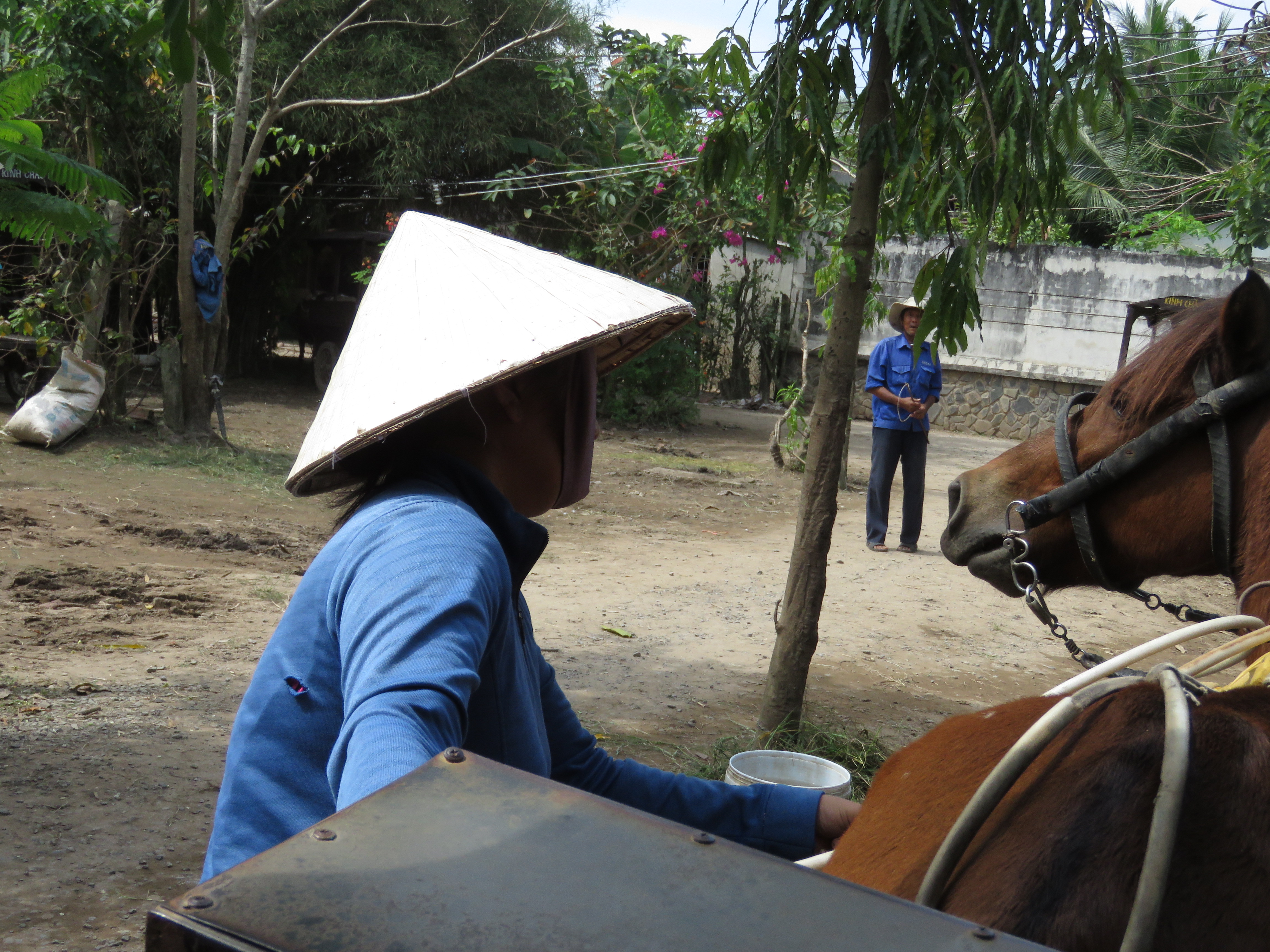
The drive along the countryside was a beaut. An easy going feel held.  No sick hurry and I was far far away from the grind. The chaotic hustle and bustle was absent.  It was all green in the horizon. Lush paddy fields lay in silent calm where farmers pushed through knee deep water. Long- blade ploughs followed their water buffaloes and pointy headed rice hats looked iconic. An ancient method of farming indeed but the region is productive. An indispensable rice bowl to feed the country’s  entire population.

Having said that, once I set foot in rural Cambodia I was admiring the landscape moments later. Tall palm trees stood across paddy fields and occasional kingfishers dropped from sky for fishes. Storks and Pelicans moved gracefully across swampy marshlands. Their way of walking wary and heads bent towards water that offered promises. Fish and shrimps, crabs and snails, snakes and frogs are profuse in shallow waters.

Angkor: 

angkor-wat-3

It is a story of hard earned peace, the country has witnessed strife and human sufferings  decades back.  It has also seen expansion of art and sculpture long long back making it to pinnacle of repute.  A rich culture thrived turning South East Asia a glowing spot in the history of civilization.

Dark clouds gathered overhead in late 70’s. The autocratic Khmer Rouge  had put a stooge for mass genocide wiping out a quarter of Cambodia’s population. The motive was complete elimination of political rivals. And the deputed General precisely willed to do that. Civil war broke out, death and panic ruled.  Grief tourism takes you to exhibits of death and pain, silent wail rising from remains of mass annihilation lost in limbo. This is now history that we do not like to recall. What we desire is to go back further into  first half of the twelfth century. This period Cambodia had given the world its mind-blowing  gift : The Temple of Angkor Wat.

The legend of Angkor starts in ninth century when the juvenile king Jayavarman II ascended the throne. He had set up his capital near Kulien mountains. Showing potential from an early age he unified small independent warring states.  Seeds of power were planted and followed through .  Hopes of a distinct civilization bloomed. Growth and prosperity transpired. A smiling Sun shown over Cambodian sky and the moon cast its grace with angelic glory.  One of the most formidable and authoritative empires in South East Asia was thus  born .

Check the video link for more intricate details:

The ride along the rustic road was a little bumpy. My taxi driver pulled up in front of a thatched house. An old man around 80s handed him a pack. In youth, the man  had well defined features. Now his flesh hung  loose and  temple stood deeply furrowed. Whites of his eyes had reddish stain mirroring trauma of civil war he had seen. The cabbie quickly finished a meal of rice and possibly some dried fish nuggets.

His English was broken. Apologized for eating and admitted having missed breakfast that made him hungry. He spoke while eating. This place has seen a lot of slaughter and distress. Blots of civil war and bomb craters do exist though most of them have been turned into fish ponds. Un-exploded landmines lie beneath the earth and chance of losing life or at least limbs cannot be staved off tripping over   them.  We need to be careful while making trip…. Wished we could move faster, away from here to the site of ruins and temples.

We rode past familiar scenery. Leisurely bullock carts rolled by and country kids had a ball in mud. Women folk with haystacks on head moved in an unhurried pace. Peals of laughter could be heard from a distance and all this painted a picture  simple yet highly treasured.

IMG_1084

At the archaeological site I left the taxi and went looking for a tuk tuk. Got one after a stressful deal and agreed upon for an all day ride. Exploring the site on foot is impossible. Tuktuk owner would take me in , leave me at a location and collect me from another landmark. Had to write down his number plate or else there is a chance of losing him in crowd. For late arrival, I missed the million dollar sunrise. But sunset had washed all the regrets of a missed sunrise! It was plainly amazing. The sandstone structures shone bright golden in the backdrop of a setting sun.

Angkor Wat has a Great Lake Tonle Sap close by. Supply of water and fish formed the backbone of a thriving economy. The fertile terrain supported agricultural abundance. Human settlement in this region had been since Neolithic age as evident from stone tools and potteries restored from archaeological digs.

Inviting Prosperity:

Angkor wat 4

Gods and deities that trading Indians had brought with them in South East Asia had a strong appeal for  local populace. India was a picture of affluence. Prosperity   and  secrets of their wealth was imputed to divine protection ensured by  religious belief system.

This left  Khmers and Chams enticed. They started erecting temples and sheltered  idols and images of avatars imported from India. Vishnu, Shiva , Garuda , Krishna, Rama  and Makara are household names  in Khmer culture. Discrete devoutness was shown towards Lord Shiva, Vishnu and Buddha. Shiva was the dominant power and considered saviour of the Khmer empire. Gradually emphasis on religious sway shifted from Hinduism towards Buddhism.

Khmer edifices were built from laterite, brick and sand stone ground in a mix. Timber too was in fashion but wooden structures failed to survive through  time and eroding effects of sun , rain and termite assault.

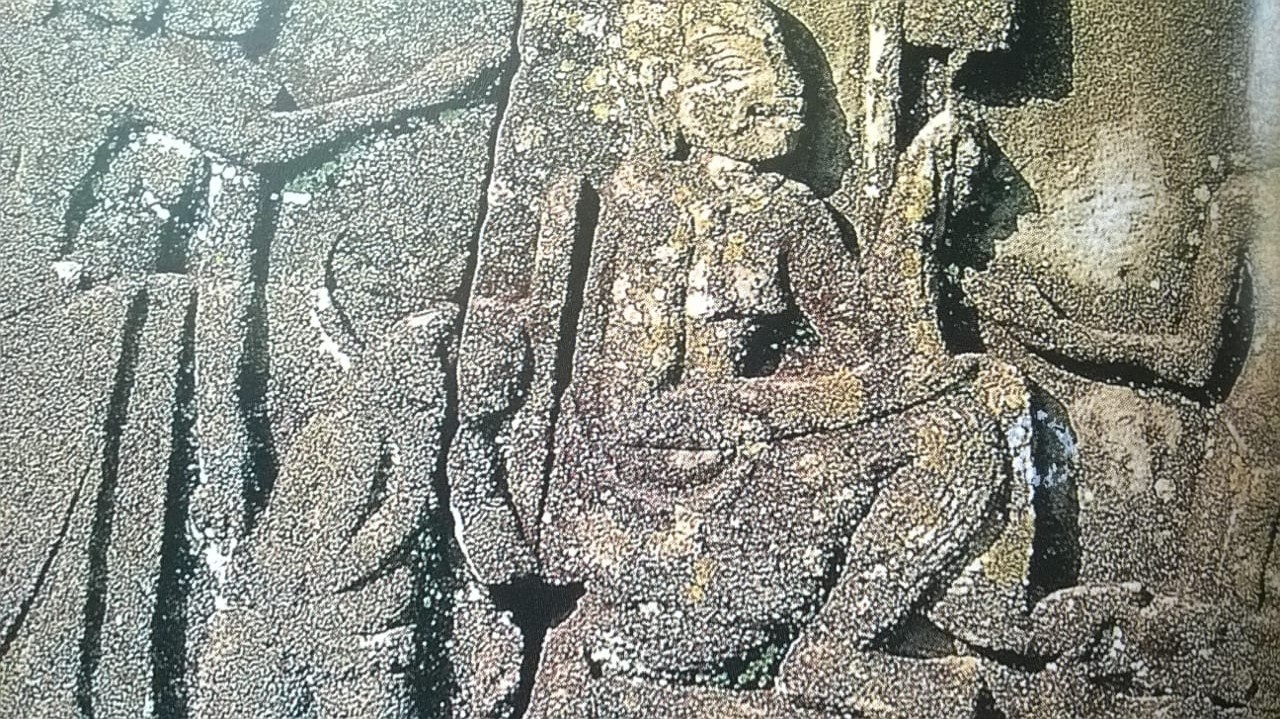
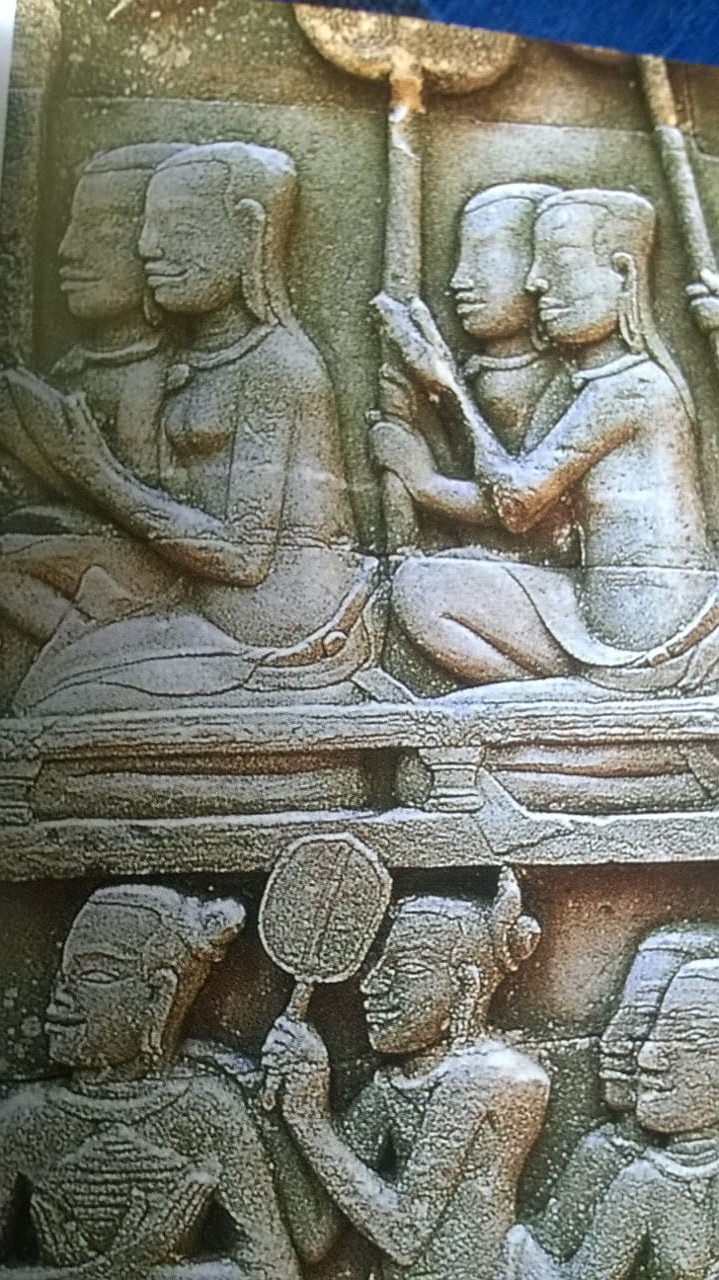
Sandstone offered a perfect canvas for chipping fine details. Running anecdotes from epics and mythologies, from Ramayana and Mahabharata, from heroic feats of lord Krishna to tug of war between Devas and Asuras in quest for Amrita ( the elixir of life) from ocean floor are brilliantly displayed in murals and bas reliefs. What fascinated me was the wonderful combination of painstaking labour and artistic vividness. They gave an immortal dimension to work of art in Angkor premises.

IMG_1158

The day was sultry. Tourists gathered and shutterbugs had a great time before sandstone carvings. Portraits of daily life was beautifully delivered with a focus on custom and culture. It was women who controlled trade in local market. More information came from visuals cut in rock. They ate sticky rice with fingers rinsing  from water filled bowl as was illustrated in embossment.

IMG-20180812-WA0005

Side by side with incomparable artistry, specimen of crude vandalism show their ugly faces here and there. Heads hacked off and chipped off faces of brilliantly done figurines exist, exposing our  sadistic side.Drawing pleasure knocking down cherubic sculptures  was a shocking contrast to beauties in stone that were left untouched.Was it a vent for releasing fury directed at someone ?

IMG-20180812-WA0007

Sometimes it is driven by  criminally gainful motive.  Entire statues weigh too much to be carried away by plunderers. Heads are broken off instead and sold fetching a handsome price. Headless busts stare in mute protest with a ghost like look. Theft of artefacts are not uncommon and crackdown effort on art nappers  is rather slow.

IMG-20180812-WA0008

Rigorous punishments should be imposed when caught.  But damage caused to sacred sites during civil war under Pol Pot regime were minimal . The armed troops must have revered the holy Angkor temples! The fringes of Angkor Wat is marked by a wide trench paved with laterite and sandstone. I feel the plan of site  was modeled  on Vaastu.
Subtle hints at every detail of exterior and interior decor is a study of imagery giving full expression to religious beliefs held.

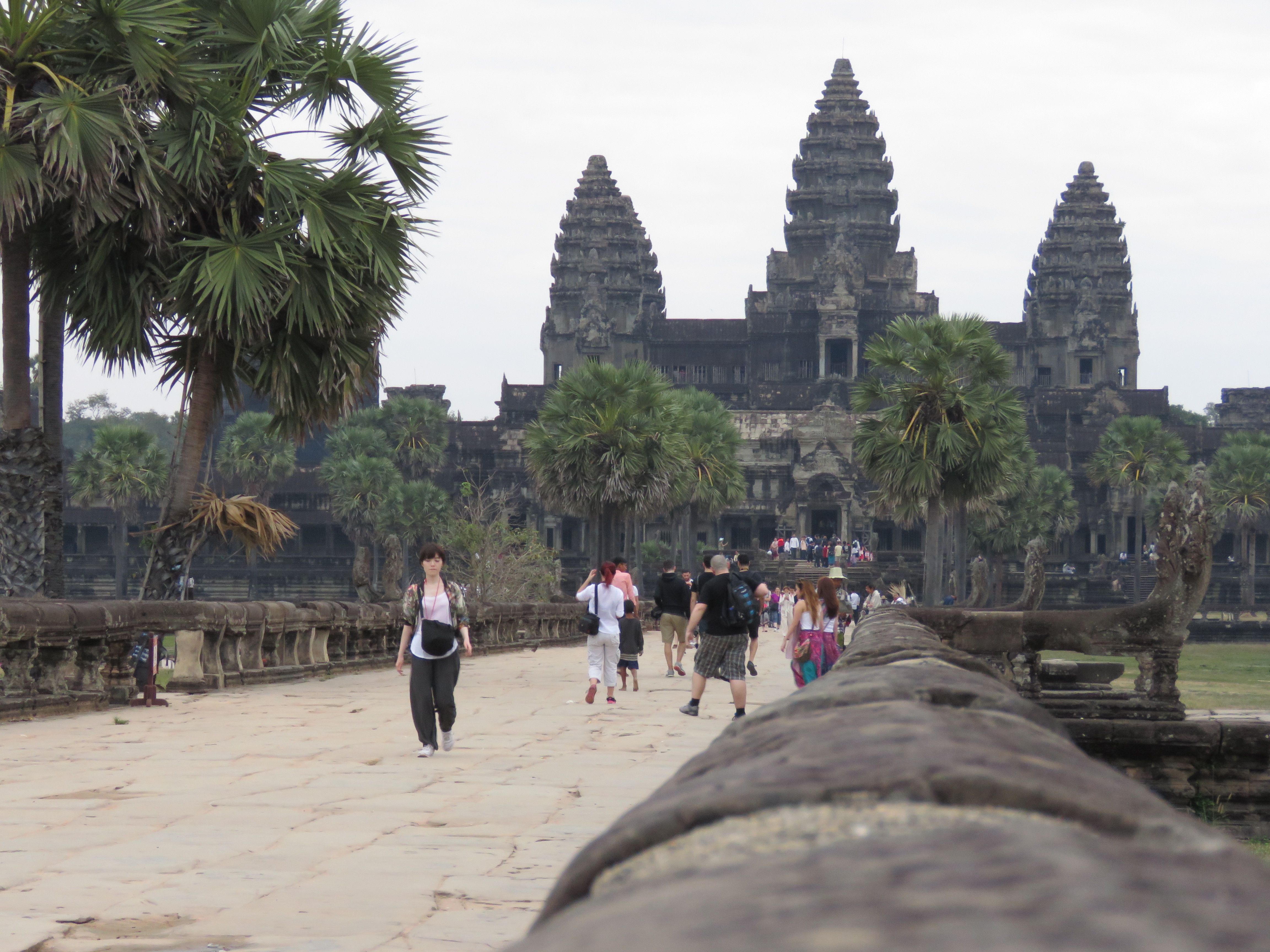
I entered  Angkor Wat city from West crossing the causeway over  moat. The chief temple and the causeway were not from the same period. The latter was built more than a century later. Entrances are large enough to accommodate passage of elephants and chariots that had once crossed the moat over wooden bridges.  Structures were robust  enough to take on heavy traffic.

Towers of the temples offered majestic view. At sun set they glowed  a fiery red.
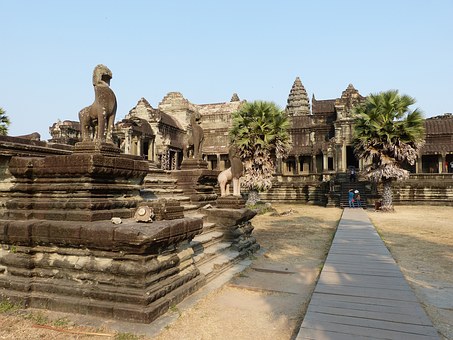
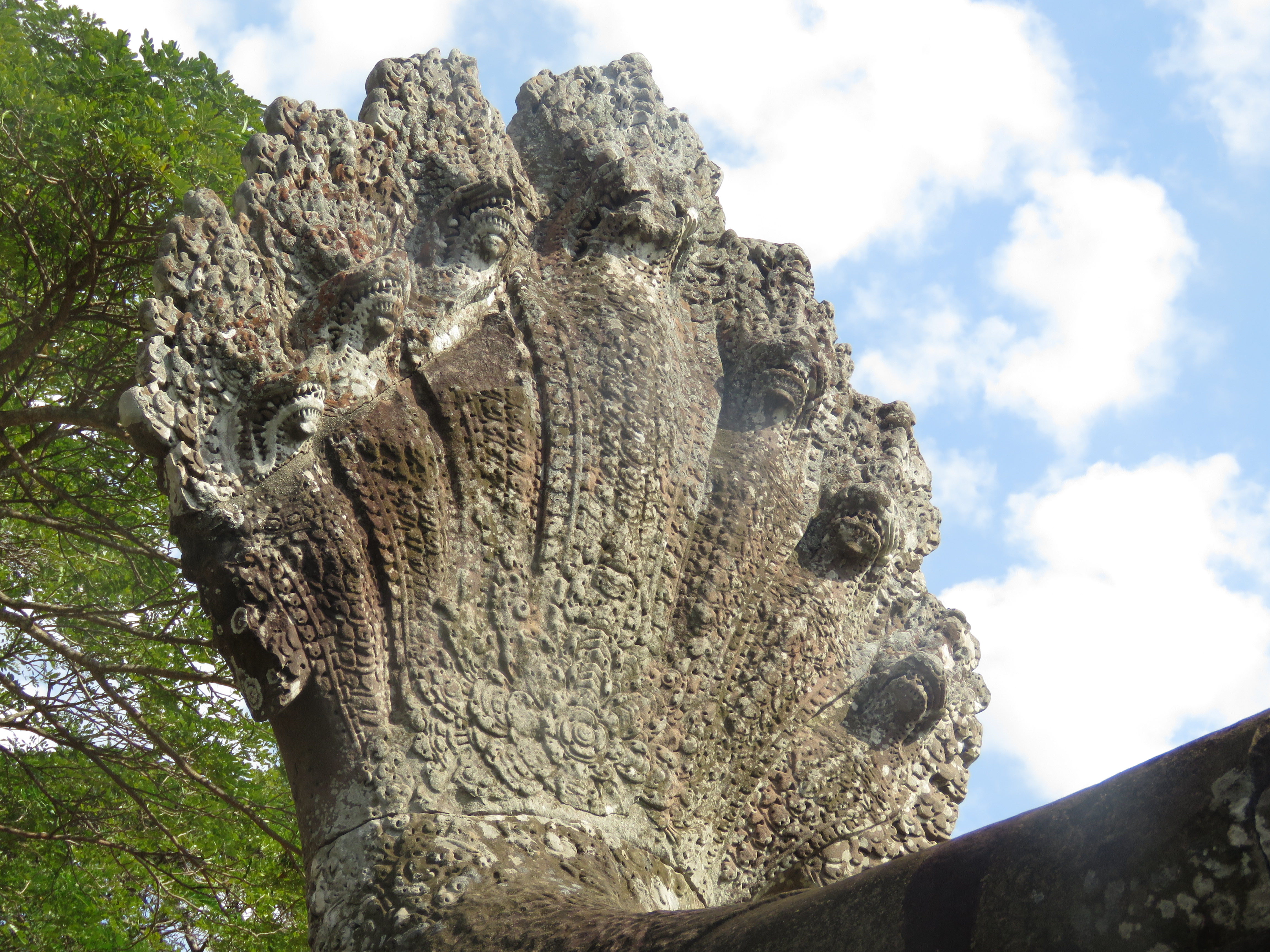
The handrails of the sidetrack were in the shape of Naga serpents. Lions and Nagas skirt the steps down from the sidetrack. These creatures must have been drawn from Hindu myths. Myths or no myths it is evident that forests close to Angkor sheltered large snakes as does the Lake Tonle Sap, a home to water snakes.

Primitive Cambodia must have been heavily forested even in the vicinity of temple premises. Encounter with monster snakes is quite likely. Fear has generated reverence. Reverence had beaten a cult to laud and worship the snake god.  The bas reliefs are debatably one of the most popular products of Khmer art.

IMG_1121

It was a long walk along the ruins and  I came upon a large carved area  that featured a plethora of artwork. The subject again was drawn from Hindu sources, the grand fables of Ramayana and Mahabharata. A section of the Western Gallery depicts the battle of Kurukhetra in Northern India, describing in detail the violent and climatic clash between nemesis clans of Pandavas and Kauravas as was told in Mahabharata.

It is dynamic and lively displaying marching troop leaders, horse drawn chariots and elephants, bands and cavalrymen all set toward some kind of finality. At the hub of the battle up close hand to hand fight is set in a portrait of random bloodshed. Reading the description in  book is one thing and exploring it live is entirely a different experience. Bas reliefs successfully presented the theme set in a grisly tableau.

All you need is travel in time machine and the picture in front comes live in flesh and blood. Silent scream from wounded soldiers strike a chord deep inside .You hear it and here lies the mastery of the bas relief artist. It is not the tools and gear that is important. The keen inner sense and driving creativity is what made the work classic.

Scenes from the  creation myth, Bhagavata – Purana, the churning of the sea of milk where Gods and Asuras battle it out pulling by turns  the body of Vasuki , the sea serpent was slightly defaced. Nevertheless it was riveting. Multiheaded Ravana holding in grip five heads of the giant serpent Vasuki heightened its oomph. A horde of Asuras struggled in a row with horses and elephants just prior to churning starts.

Angkor Wat 5

As I walked along the ruins, statues of a multitude of wild life, some real and some mythical came into view. It included a variety of aquatic creatures. Tourists busy spotting prized statuettes and monks in robes feeding pigeons echoed peace. Interesting moments awaited us. Solitary alms man holding out  charity bowl is a regular sight. How about a cobra coiled round his neck as well to complete the dramatic effect ? It  brought mixed feelings.

The final bas relief is a sensationally compelling portrayal of the epic Ramayana, the battle of Lanka. Scenes displayed strike a lively semblance with all what we had read in text. Lord Rama shooting demon Maricha disguised as fake deer opening up chance of Ravana’s abduction of Sita. Standard of sculpting is splendid and in Lanka battle   details of hand to hand combat is closely laid out.

Bow wielding Rama stands on the shoulder of mighty Hanuman. Next to Hanuman stands Rama’s brother Lakhsmana. Together with the trio stands demon Vibhisana, brother to Ravana. The story of Vibhisana’s desertion of Ravana’s camp resonates with treason. Defection to lineage of demons and teaming up with Rama and his allies doesn’t sketch a very favourable image of the turn coat.

Series of depictions of Lanka battle and its fate throw a spellbinding montage! The carvings look real  as if cluster of statues would spring back to life any moment. The spectacle is rip roaring and carvings in stone throbbing.

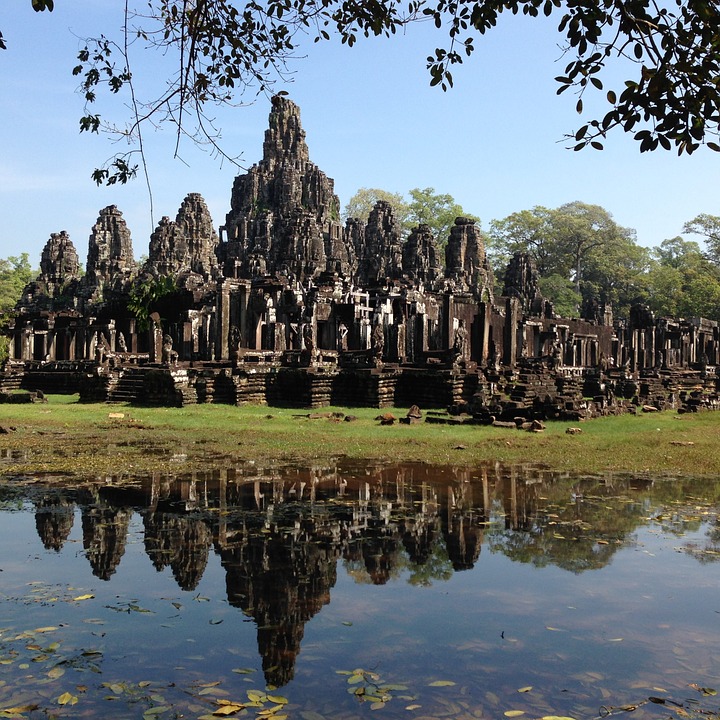
After Angkor Wat, I moved to Bayon temple or the temple of Buddha’s face. Temple architecture is complex and carvings on walls spectacular. Buddhist motifs featuring reclining Lord is terrific.  From Bayon went on foot to elephant terrace, taking leisurely stroll among trees planted along the bank of lake. Melodic twitter of birds and a mild breeze worked wonders to relax the mind. Except for a few aggressive monkeys busy with their business as usual, the place was otherwise restful.

IMG_1218

Lake Tonlesap seemed a coveted trip option. Took a cruise across the lake, sailing past the floating  village of Chong Kneas. This was a novel experience that ensures you can survive even without putting your foot on terra firma. A complete water world featuring everything from floating markets to floating   gas stations.  Vendors approached  with boatload of retail. Cigarettes,chocolates and flower bouquets all aligned in a neat stockpile.

Floating schools and paddocks from where fattened pigs peeped through a padding of blubber. Animals stared with a stoic indifference despite the irony that they would be served for dinner sooner or later. Floating bars , snack shops and memento corners  organized around a revenue earning drive. It was pure fun and the shinny spring sky added to the resplendence of the mood.

IMG_1152

Angkor Wat is a revelation. It is a perpetual study in marvel, something to ponder and much to wonder. It will take days and even months trying to understand the intricate designs and sculptures. And yet you feel you are back to square one. The shroud of enigma is too opaque to decode the secrets held.

The last bus to Siem Reap was scheduled to leave in an hour. The spires of the temple stood stark against a starry night sky. I bade farewell to this time honoured Hindu temple of UNESCO world heritage fame and occupied a window seat.

angkor-wat-1

The Uffizi Gallery – Renaissance revisited


IMG-20170810-WA0007


You would think that getting away from the crowded cosmopolitan capital of Rome would have calmed down my sweat glands but I made the same mistake. Florence (or Firenze as it’s called in the vernacular) was just as bad or even worse as every architectural or cultural masterpiece was squished together to compensate for our sore legs. But who cares about tanning and oily faces when there’s so much to see and explore?


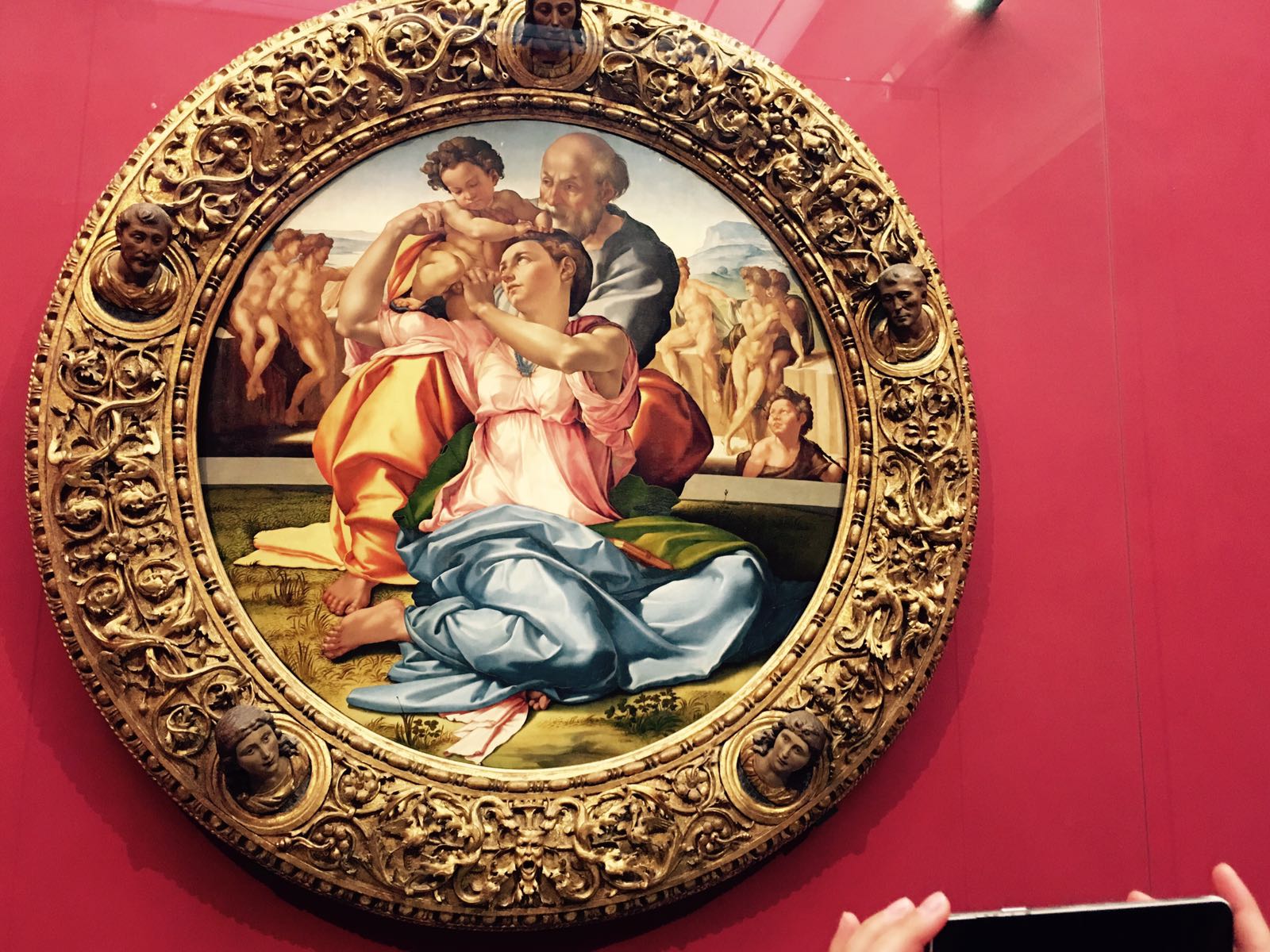
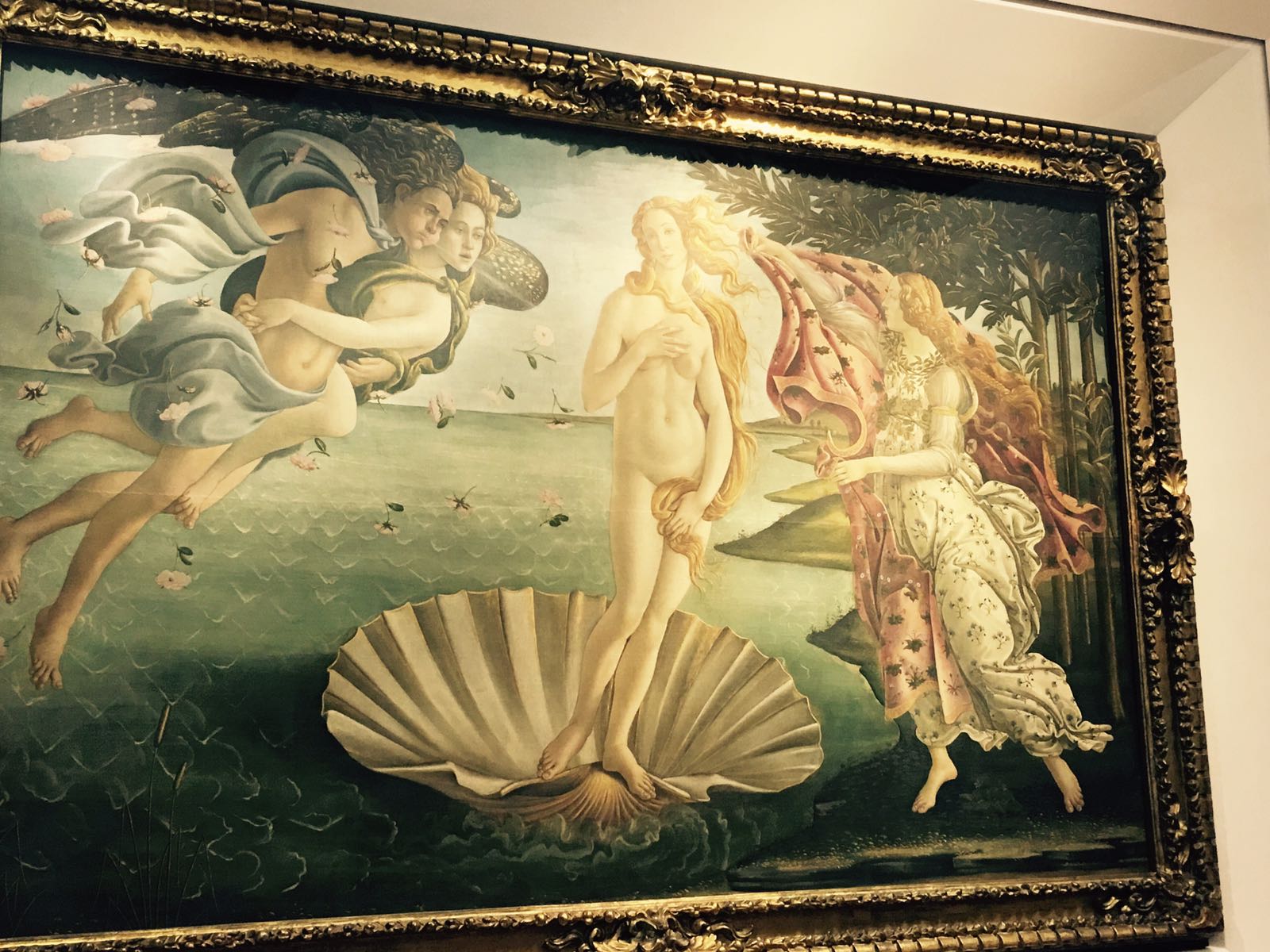
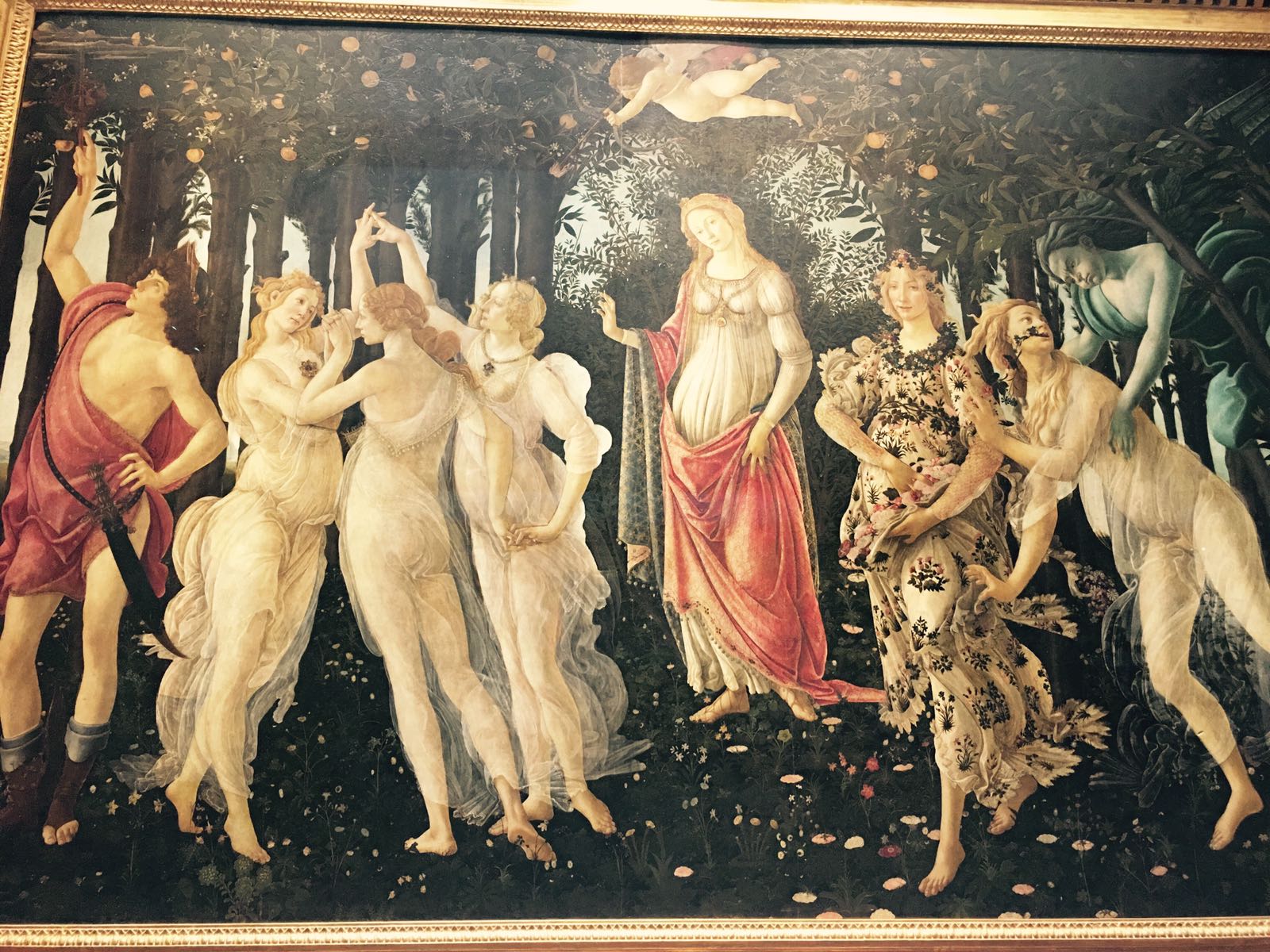
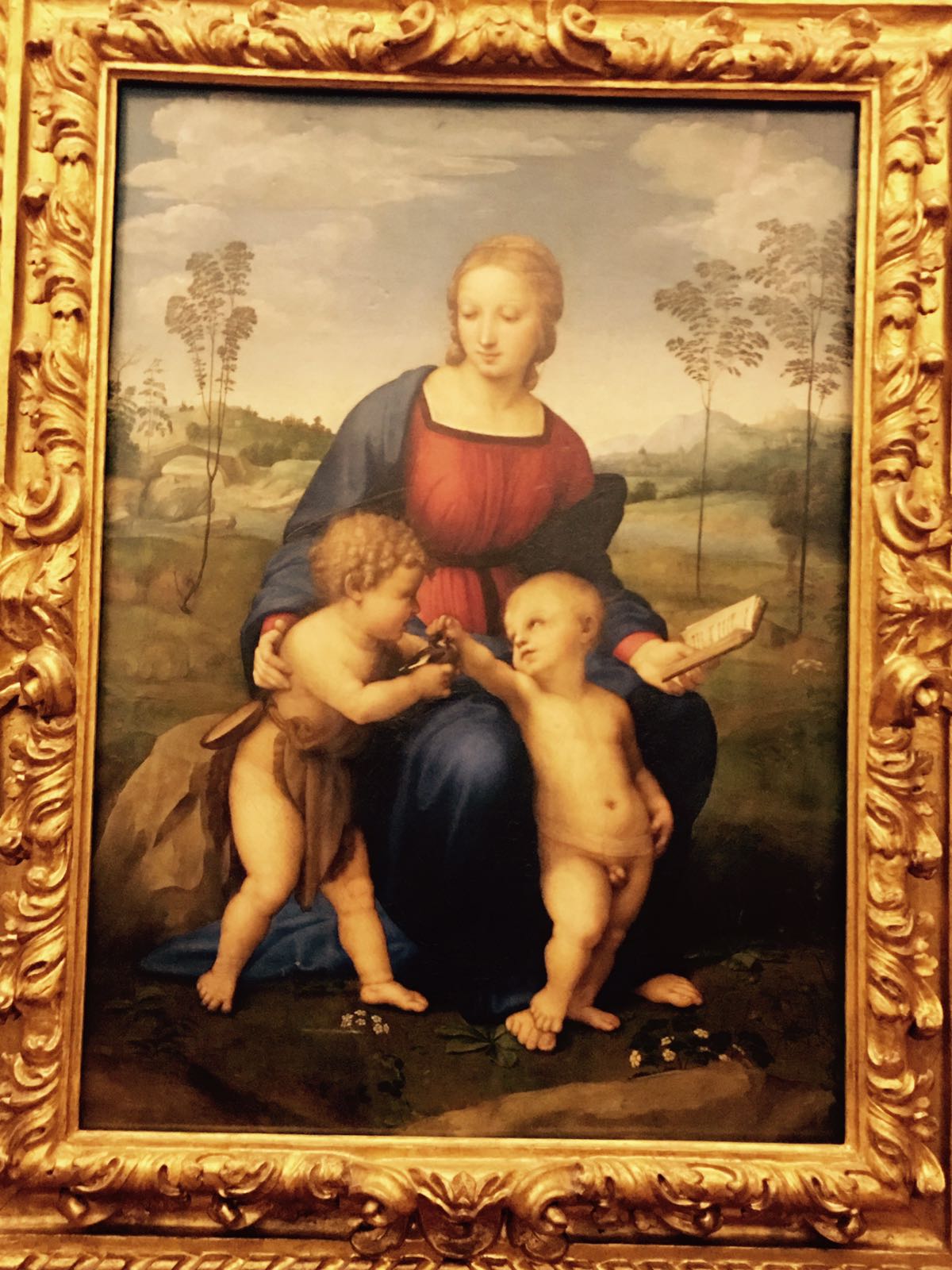
Florence might be way smaller than Rome and only have one train station but no one can ignore the plethora of artwork left here by the three great maestros – Leonardo da Vinci, Michelangelo and Raffaello Sanzio – all housed in the remarkable Uffizi Gallery.

However, the building of this famous art museum started off with a completely different purpose. It was supposed to accommodate all the offices of the Florentine magistrates, under the command of Cosimo I de’ Medici, a member of one of the most influential and politically convoluted families in Italian history. The top floor was reserved for the family and guests as a gallery, including a prized collection of Roman sculptures.

IMG-20170810-WA0008


In the guise of bringing the administrative offices under one roof, Cosimo intended to show off the most important artworks from the Medici collection. Over the years, so many more sculptures, tapestries and paintings filled up the walls and corridors that it became the prime attraction of a Grand Tour. 

This newfound fame brought two of the great maestros to convene here to steep themselves in the “beauty, for work and for recreation” as quoted by Varsari the architect who built the gallery. So it is not surprising that their work is also proudly exhibited alongside the other noteworthy pieces.

IMG-20170810-WA0003


Unexpectedly, the Uffizi Gallery is not located on a lone, high Tuscan hill, guarded ferociously from prying eyes and groping hands. It is very much in the centre of Firenze, surrounded by throngs of people, slathered in sunscreen and holding onto their valuables for dear life under the glaring midday sun.

With a pleasing view of the Ponte Vecchio, the oldest bridge built across the river Arno, it is a major tourist attraction. Adjacent to the gallery is a square filled with statues of important Italian historical figures such as Amerigo and Petrarch.

IMG-20170810-WA0004


These mustn’t be confused with the infamously skilfull street artists though and every accidental photo of them will result in lighter pockets. After all, the phrase is ‘travel light’, not travel loaded. Then there are the illegal street dealers enticing amateur art critics with pretty landscapes of Tuscany lain out artfully, only to flee at the sound of a siren.

IMG-20170810-WA0006


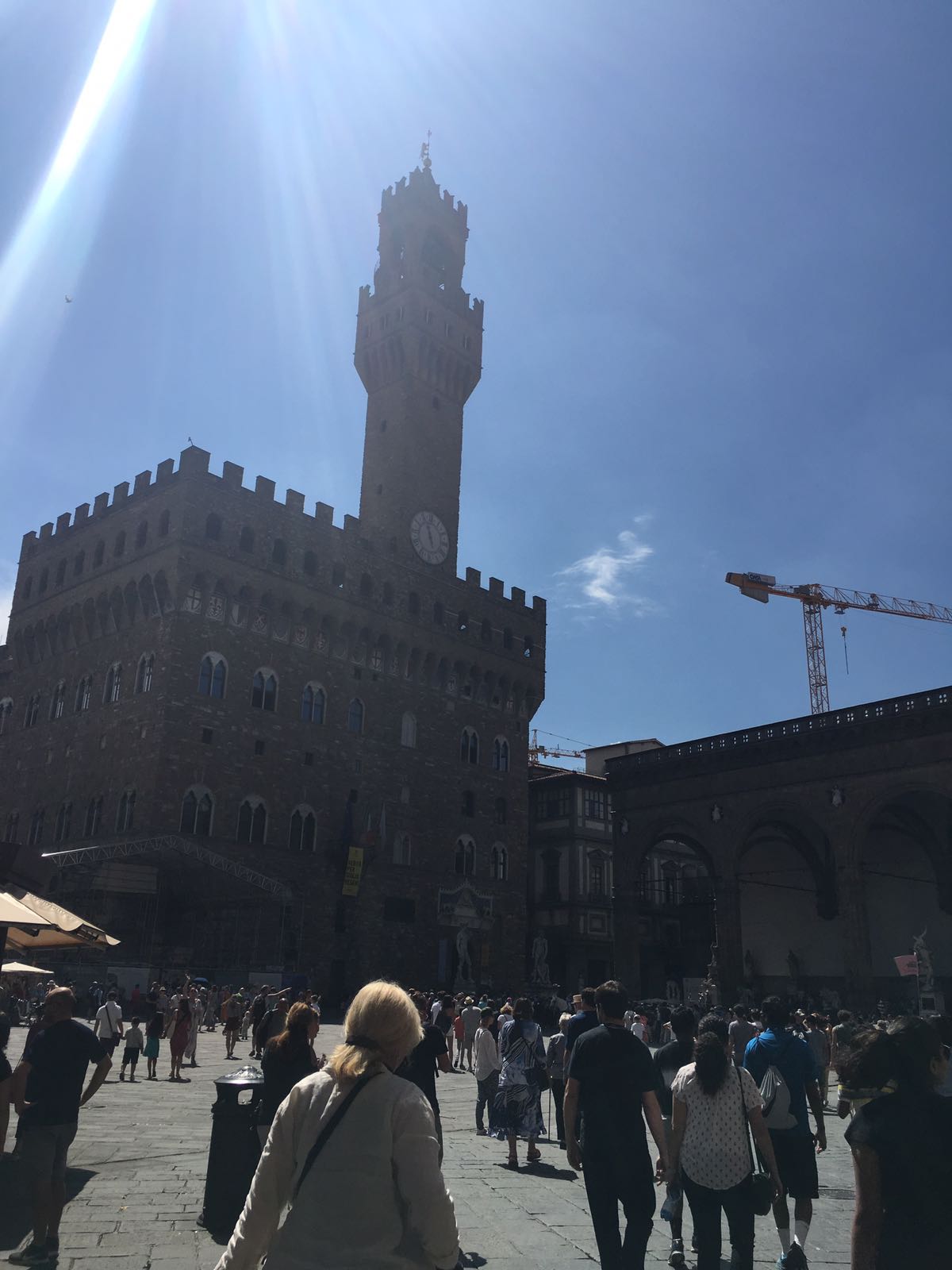
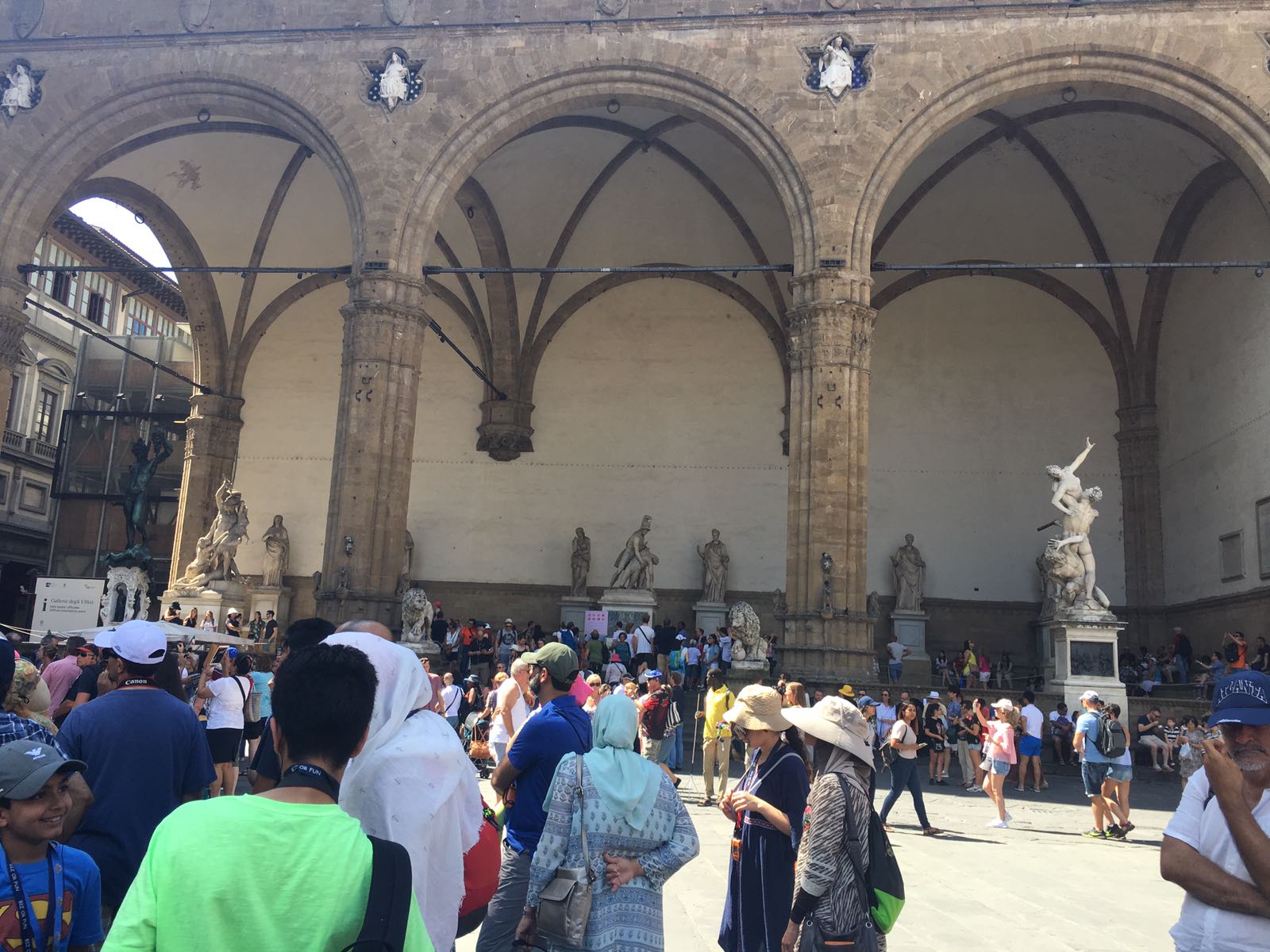
Outside the lovely shade is Piazza della Signoria, one of the many squares of Firenze (squares because the Romans who built them were geometric fanatics), showcasing even more statues that are replicas of the marble originals which are situated in the Galleria dell’ Academia, including Michelangelo’s David and Giambologna’s Rape of the Sabine Women.
The only odd one out here is a bronze statue of a triumphant Perseus holding up Medusa’s head by the snakes. This sculpture by Cellini represents Florence at its Golden Age, a small city packed with such a rich cultural heritage that it could overpower the encompassing cities challenging its influence and strength, much like the vanilla, dime-a-dozen guy, Perseus, who used his brain and the little brawn he had to defeat the supposedly invincible monster.

If that’s not enough to make you forget about reapplying your sunscreen and gladly get pickpocketed, then the Renaissance cultural movement isn’t really your cup of tea – or more rightly said, the pot of paint.

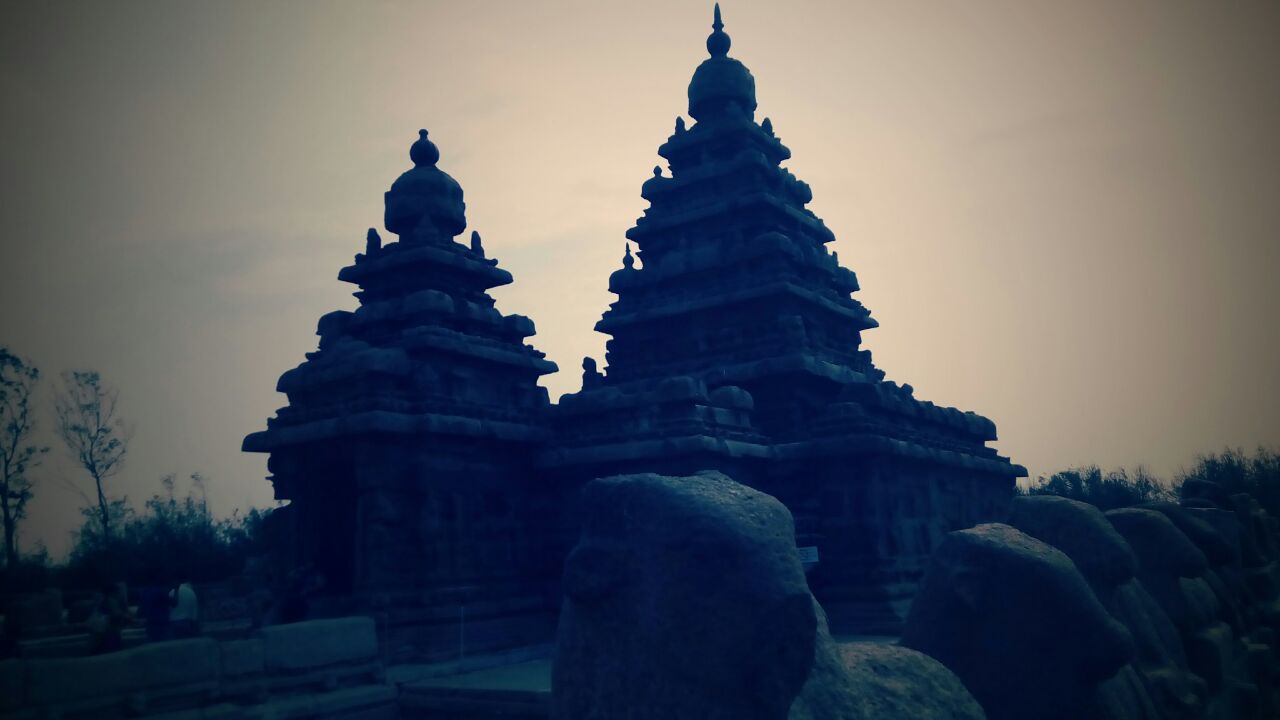
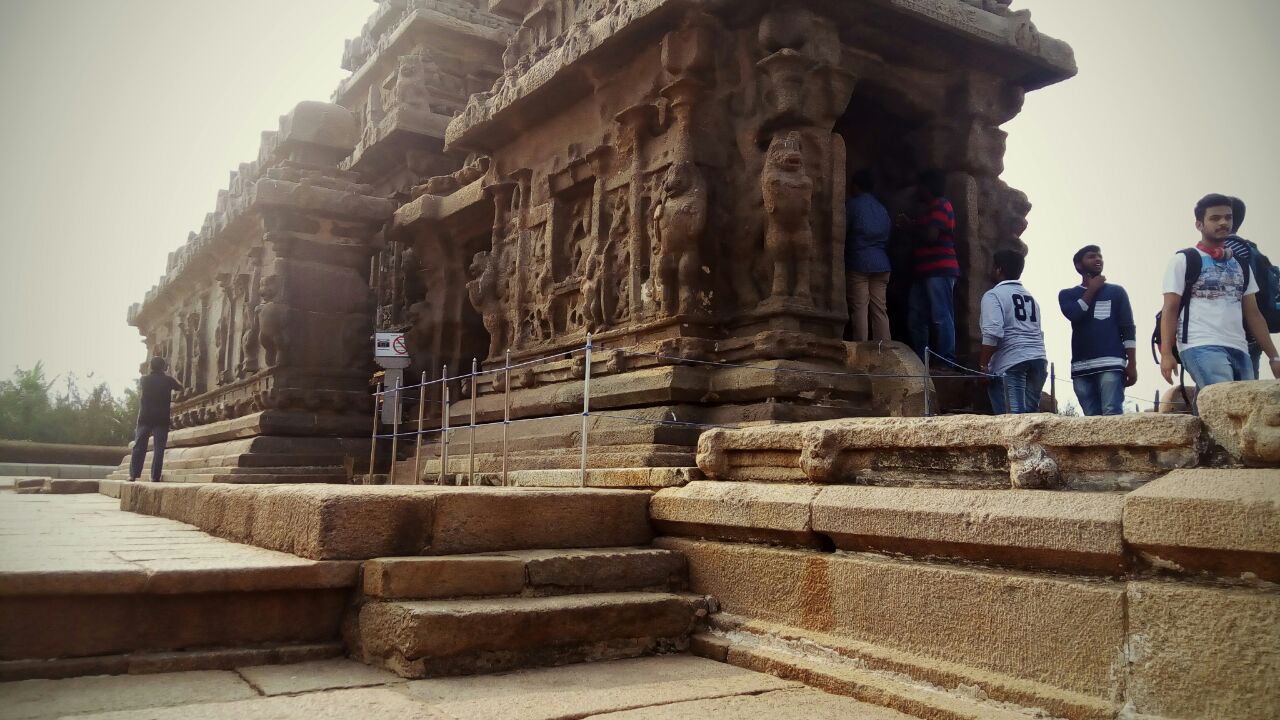
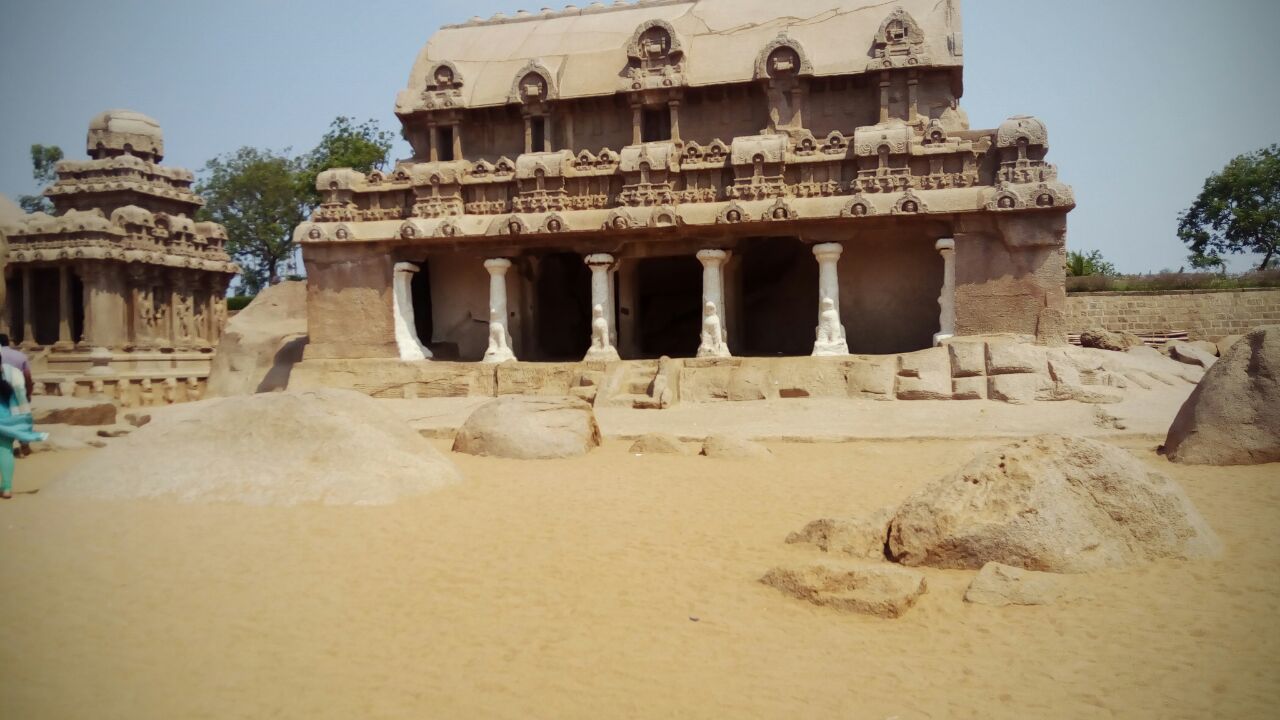
Mahabalipuram – Sonata of the shores


IMG-20170715-WA0007


I was staring at an artwork hung from polished timber walls of the Bureau of Tourism Department. It was a fresco of a temple done in oil on wood. The canvas looked arresting. The sacred structure stood in all grandeur against an azure sky and green sea offered a fitting background. The entire scene was captivating, temple sculptures intricately set and the artist had finished his work with masterstrokes that evoked pure magic.

Tablets of memory frisked through the pages of Indian history. The cluster of temples looked familiar. Which Indian temple could this be? I pressed hard on the fringes of memory. The name, at last, came up in a hazy flashback. The shore temples of Mahabalipuram on the tassel of the 17th-century port city of the Pallavas, a dynasty that once ruled the Deccan.
IMG-20170325-WA0020

Continue reading “Mahabalipuram – Sonata of the shores”

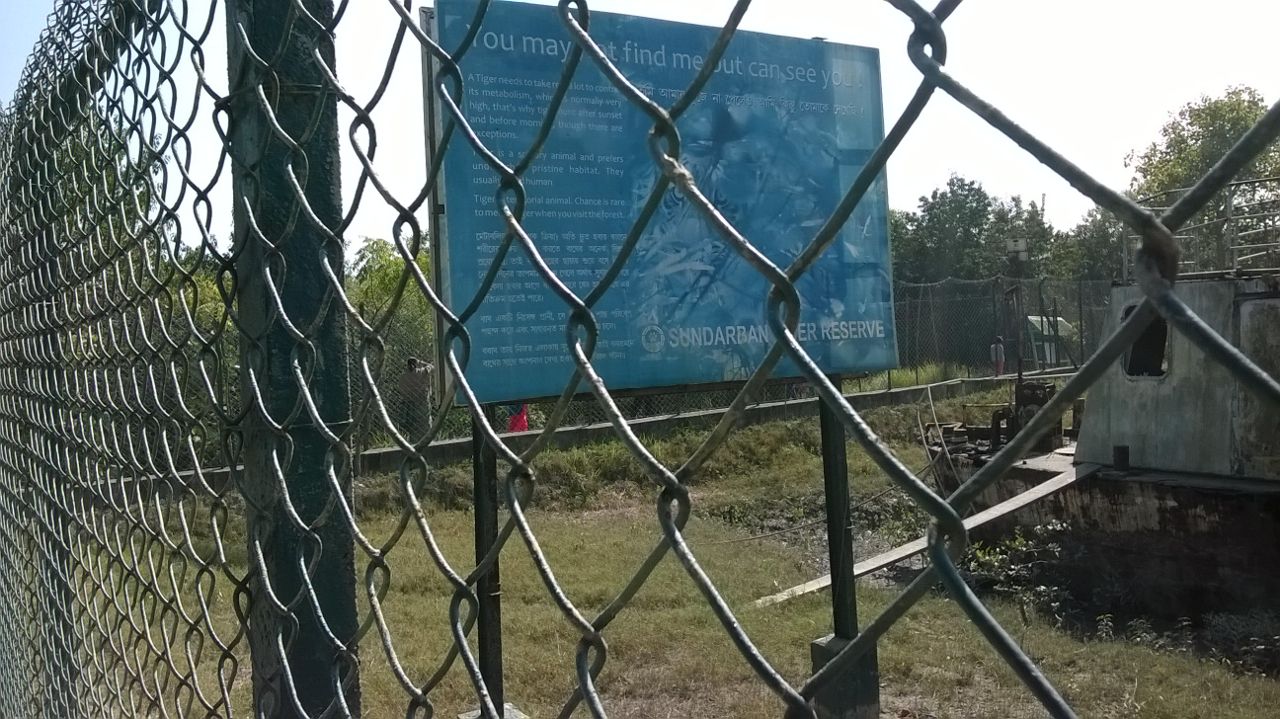
Exploring the wild in Sunderbans

World’s largest mangrove swamp fostering eco-tourism

IMG-20170108-WA0013

The early January morning threw a chilled blanket around us and the cab sped past towering skyscrapers along a maze of flyovers. We drove towards Kolkata Science City. The destination was the Sunderbans, a spread of mangrove jungle crisscrossed by a network of rivers and estuaries. Bidya, Sibsha, Matla , Koyra, Horinbhanga, there are several of them connected to nameless creeks and canals running deeper into wilderness. The names have a different kind of flavor, appealing and romantic yet menacing and deceptive.
Continue reading “Exploring the wild in Sunderbans”