Can ‘ My first trip 2021’ be a turnaround for Kerala tourism?

God’s own country has braced itself to shield us from pestilence. Now it is the social-media influencers’ campaign My First Trip 2021 to take Kerala Tourism out of troubled waters. If the land is graced with God’s presence, tourists are the pilgrims. Kerala’s tourism department is all bent on giving a hygienic refuge and selling its fascinating culture, cuisine, picturesque villages, and last but not least it’s a fabulous blend of the sun, surf, and magical sandy beaches. 

Kerala has reached out to the right people with a huge social media fan following hoping to pull the money-spinning Kerala tourism from its lows. With domestic tourism to rule for some time, this could be the opportune moment to lure tourists.
Pioneering steps showcase that a holiday in Kerala is unmatched

Holidays in Kerala are all roaring just as the rolling surf break against its shores. When the country has been banished with lockdown shackles, Kerala has opened its gates to travel enthusiasts and it is picking up steam for the past six months. 

Needless to say, from what I have seen of Kerala from different visual media,  I would love my first trip 2021 to start the process with Kerala topping the bucket list. 

The world awaits an amazing holiday in Kerala when the situation becomes more favorable, and much of the credit goes to an initial drive taken by ten Indians from different parts of the country. Influencers as these travel buffs are called have planned an itinerary over a span of five days and six nights. The idea is to showcase the magic of the “God’s own country” in a range of visual formats. Photos, video snippets, and highly illustrated and informative texts would be shared over various social networking sites.

COVID-19 had ruined tourism pushing it on the edge of a sunk industry. Kerala was no exception, but it bounced back with much of its original charm and promises that would hold a tourist spellbound. In fact, my first trip 2021 was a little surprising to see a start in the influx of tourists from November 2020- December’2020 onwards. It consolidated the faith in Kerala’s legendary tourist worth. 
Domestic bloggers do it in a great way :

The Kerala blog express has formally announced the Kerala tourism promotional campaign named ‘ My First Trip 2021’ that was programmed to wind up by the 29th of March’21. The uniqueness of this move lies in its ten flag bearers who are Indians from different states. In early campaigns, global bloggers were the show stealers, of course in their own rights and potentials. 

Our very own Indian influencers have done a great job. They have with their much-lauded efforts and innovations have spread the encouraging message that Kerala is a safe travel destination, post-COVID-19 pandemic. 

Having said all about Kerala tourism travel safety it comes as a natural sequence the state’s fame in matters of hospitality and customer service. Destinations are handpicked, and they will be covered by10 cars uniquely designed for the purpose. Proposed travel sites would include:

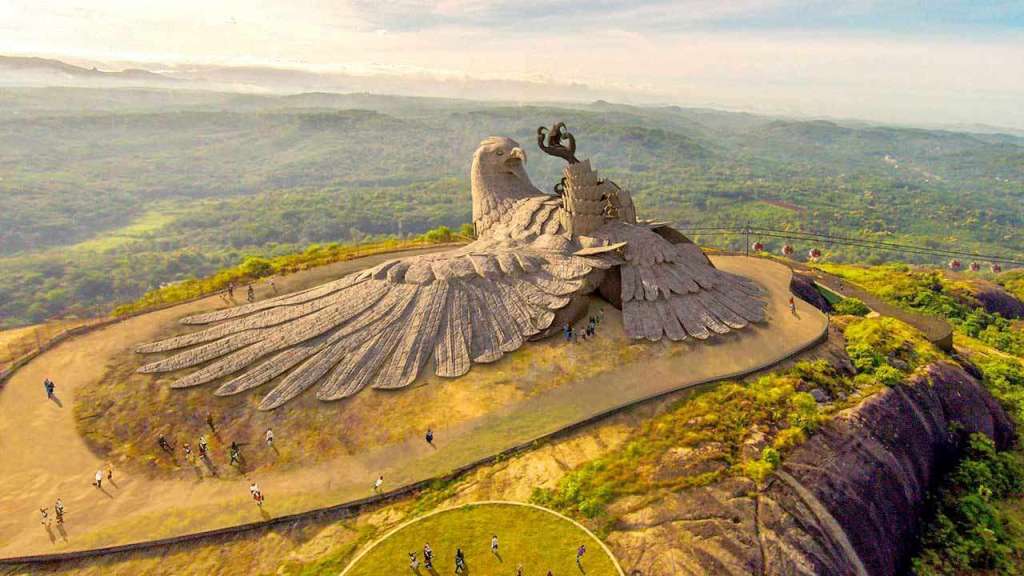
  • Jatayu Earth Center at Chadayamangalam in Kollam
P.C. DNAIndia

This is a sprawling piece of the breathtaking park extending over 65 acres. You get a wide panoramic view and the stone sculpture of the mythical bird Jatayu famed for its loyalty in the epic Ramayana would enchant you by its awe-inspiring size and sheer presence. Well managed and spotlessly clean, this is a must-see! 

  • Thumboormuzhi Garden in Chalakudy

P.C tripuntold

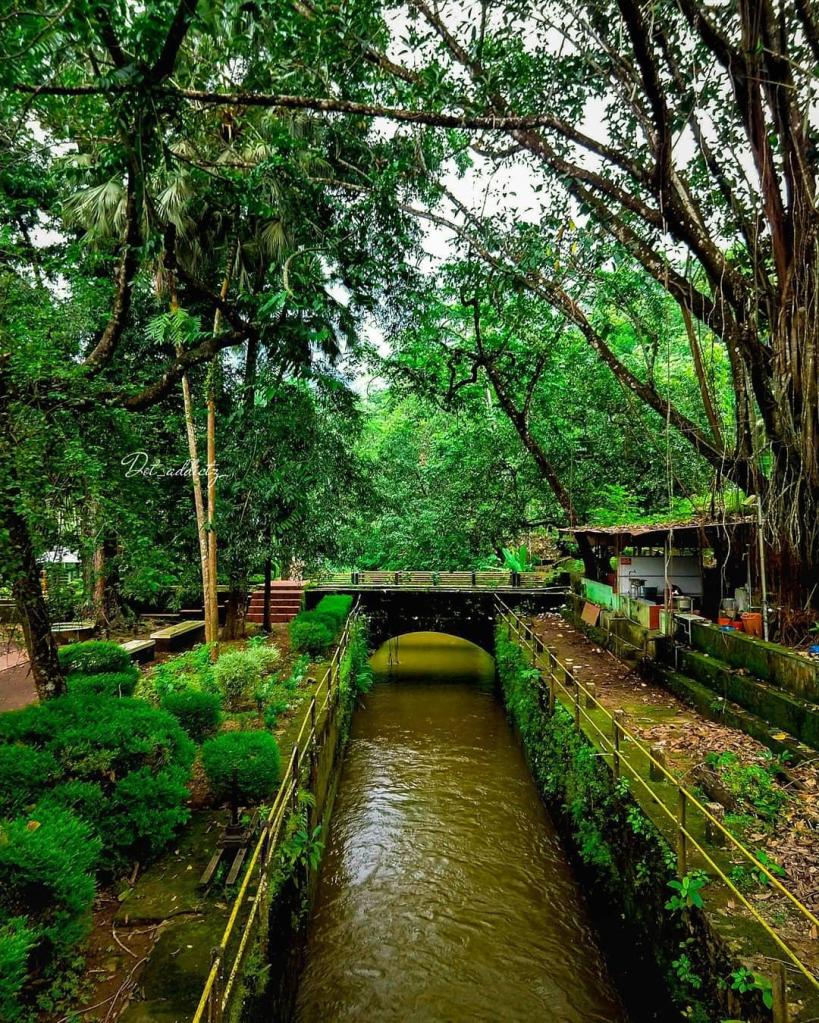
Thumboormuzhi garden and the Dam would come with stealing beauty. Although the water level in summer would be shallow, it will not rob the place of its pristine charm. Athirapally waterfalls is close by, the whole drenching sheet cascades with a massive splash! A place of excellent photo opportunities and hovering butterflies that come in myriad colors. A hanging bridge adds to the overall natural aesthetics. 

  • Guruvayur Temple, Thrissur

P.C. Indian Express

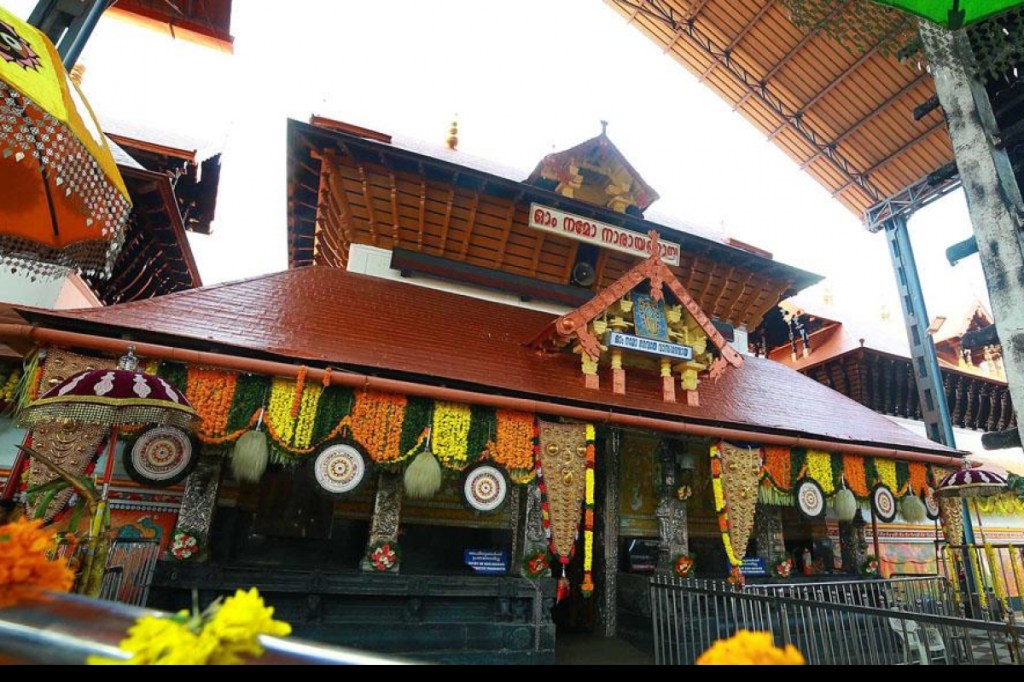
A holiday in Kerala remains an unfinished sojourn unless you do Thrissur. The revered Guruvayur Temple is right here known for its sacred status in the hearts of devout followers. Snowstorm amusement and theme park is a stunning mix of modern technology and landscape architecture. It is designed to lift your spirits. 

Pambumekattu mana has a different kind of thrill in store for you with a combination of romantic and religious connotations. This is the abode of the Snake god where you can make your charities. 

Kauthuka park is another gorgeous attraction. A natural habitat with ample space and greenery where nature lovers enjoy interaction with diverse flora and fauna. 

  • Vazhachal

P.C. Holidify

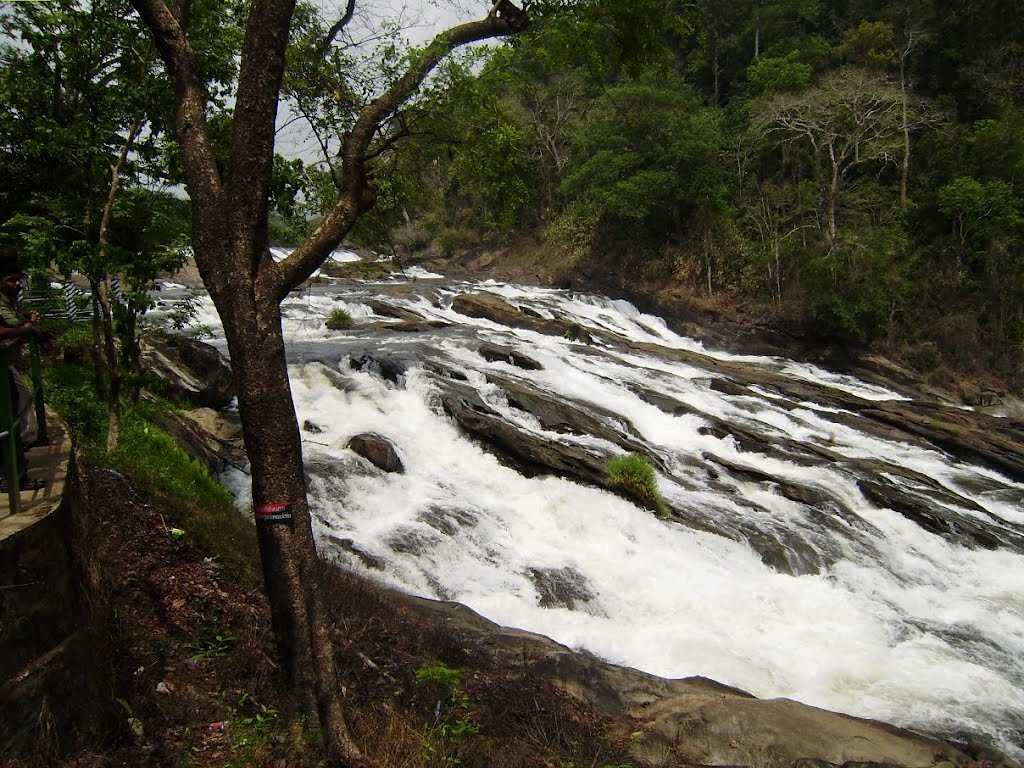
This spectacular waterfall is a powerful crowd-puller. It looms over the Chalakudy river and the vazhachal forest is not far off which promises close contact with the wilds. Located in the Thrissur district it lies in proximity to both Athirappally falls and Sholayar chain of mountains. This is a not-to-be-missed destination ranking high on a tourist’s popularity scale. It is a mystic unspoiled paradise on earth. 

All these tourist destinations highlighted by the influencer campaign are the core attractions in Kerala. As an additional and essential measure, the Kerala tourism department has taken its best foot forward to keep coronavirus transmission miles away from the tourists. All the protocols are forcefully put in place without violation from other ends! 

Coronavirus – A blessing in disguise?
Photo by Bithin raj on Pexels.com

My first trip Kerala would bring God’s own country closer to the world of the travel-hungry crowd. The group of influencers has done a job that’s something groundbreaking in its own special way. Brilliant ideas fused and innovative marketing exercises were carried out. It’s not hype but something very genuine and traditional that these campaigners have been trying to project. 

They have been cut out for the mission and have most successfully placed Kerala before the international travelers’ forum. The Ayurvedic spas and wellness resorts here have been world-class experiences. The message was spread far and wide in bold. 

Coronavirus can be reined with some self-restraint and by carefully following guidelines from experts. In fact, the disease and its threat is transient. With the advent of vaccines, it is expected to be a thing of the past. However, the wellness and Ayurvedic therapies are to stay here for good, working its way towards the benefit of mankind. 

The message was clear and concise. Kerala has been promoted as a very important and popular tourist destination ranking at par if not higher with many world-famous tourist spots. It looks like the fading gloom of pandemic threat has served as a canvas for portraying the brighter, blissful, and healthier side of my first trip 2021. And that is none other than my first trip to Kerala. 

 Ready to make Kerala my first wellness tourism choice

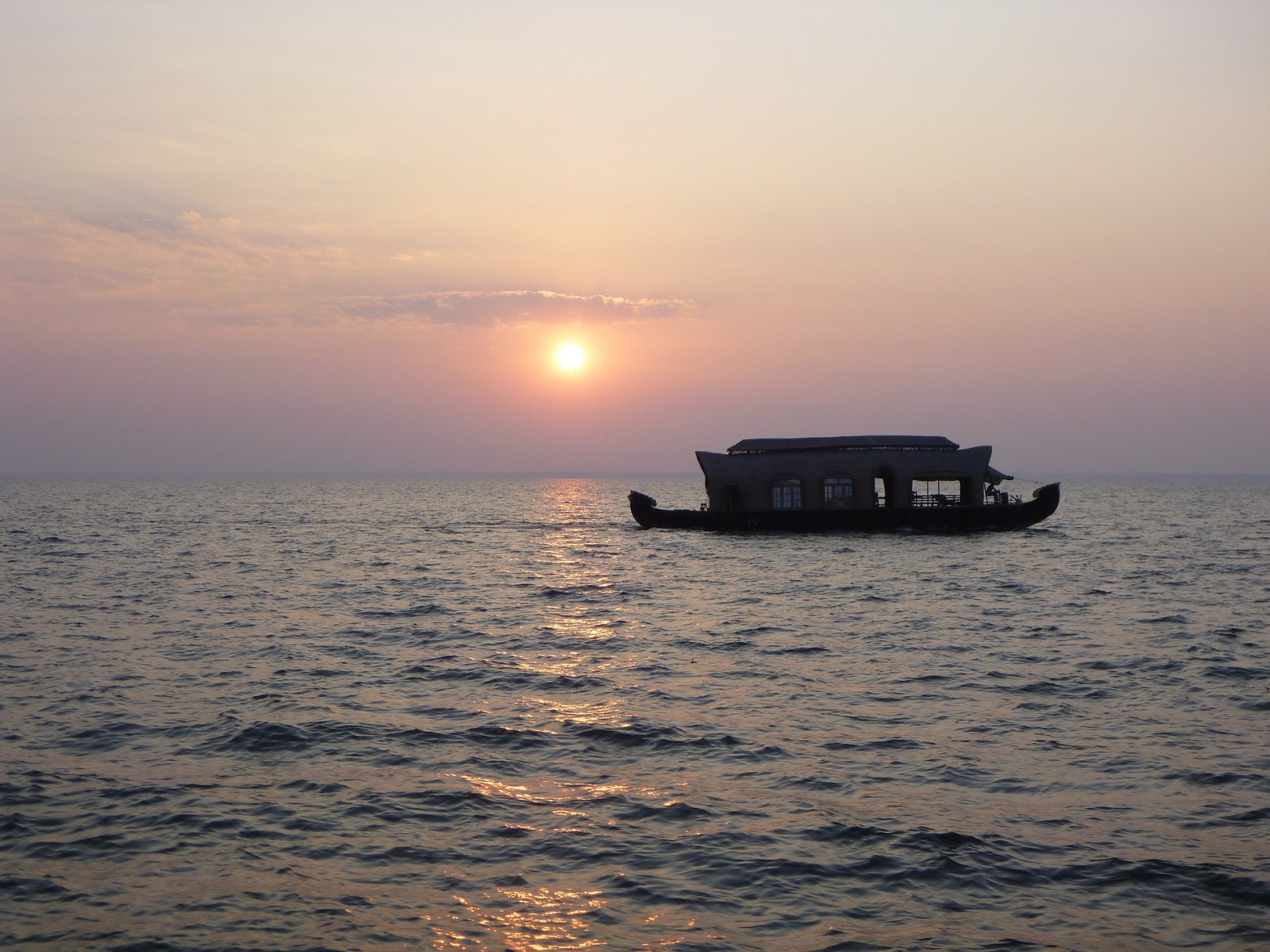
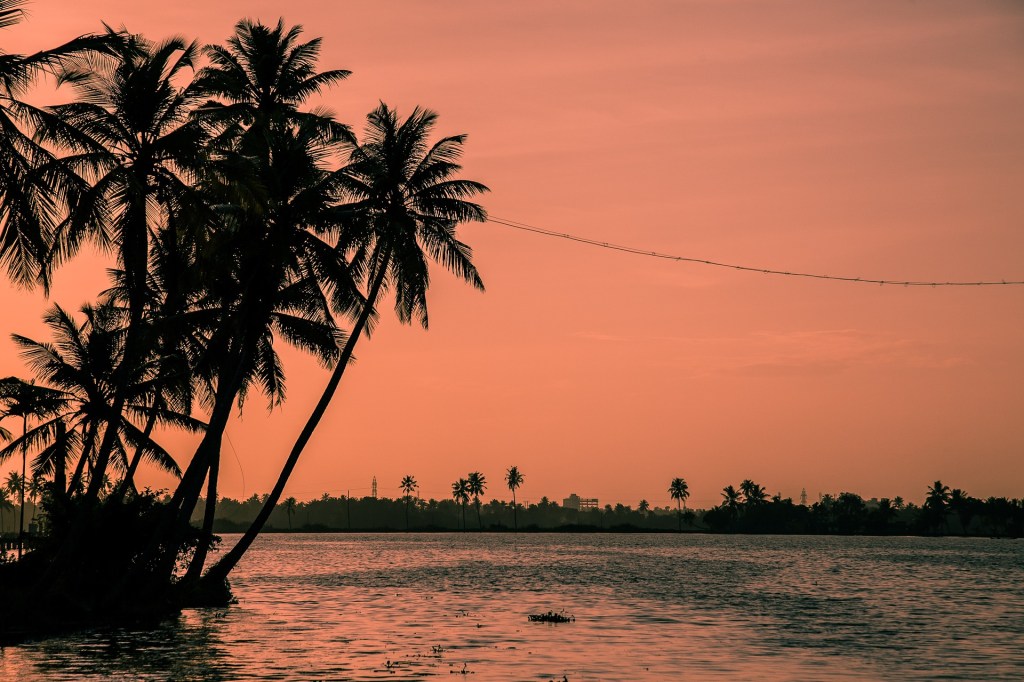
A trip to the land of Kerala is synonymous with wellness. The backwaters and the thick coconut groves would work wonders for your aesthetic side to bloom into a rapture of delight. The tea gardens of Munnar at the slope of hills are no less enticing. So are the Malabar hills and the dense forest cover which is home to diverse wildlife. 

The visual treats are wonderfully blended with an investment in your health and happiness. Kerala has done it and with a meticulously researched industry it has combined travel with health in a big way. Given a choice between Kerala and other destinations, my first wellness tourism would certainly go with the former. 

The resorts are designed with a lot of deliberation so that you can draw the most of the health benefits from their positional leverage. Mostly they sit with a circle of coconut trees around creating a natural perimeter of soothing vibe. You can get a full blast of the sea breeze should your resort be a seafront repository of tranquility. 

A destination built on traditional wellness
Photo by Ryutaro Tsukata on Pexels.com

A range of traditional therapies is available. They come from experienced and qualified therapists with a history of sound credentials.  Spa treatments and body massage alone comes in a multifarious form and with multiple benefits. The entire package is carefully crafted to bring you out with a renewed and recharged mind and a feel of physical well-being. 

You will see the incredible range of body oils for massaging, with the masseur’s magic touch how well they seep through your skin to do you a world of good. Coming to spas and floral baths, my first wellness tourism had a stunning impact by the assortment of herbs and flowers that go into the process.

How closer can you be to nature and all her fresh green feel than being coated with herbs and flowers? You feel the caress and it unwinds you. You feel refreshed and it reconnects you with yourself. 

You may as well lie down on a beach on the Kerala coast with the shady groves around and the receding waves lapping at your toes! This is something sublime, it takes you far away from the city grind and the summer blaze. With some coconut water inside you feel rejuvenated and prepared to handle the toughest of times. You will willingly love to waste your time here! 

The galactically popular wellness resorts
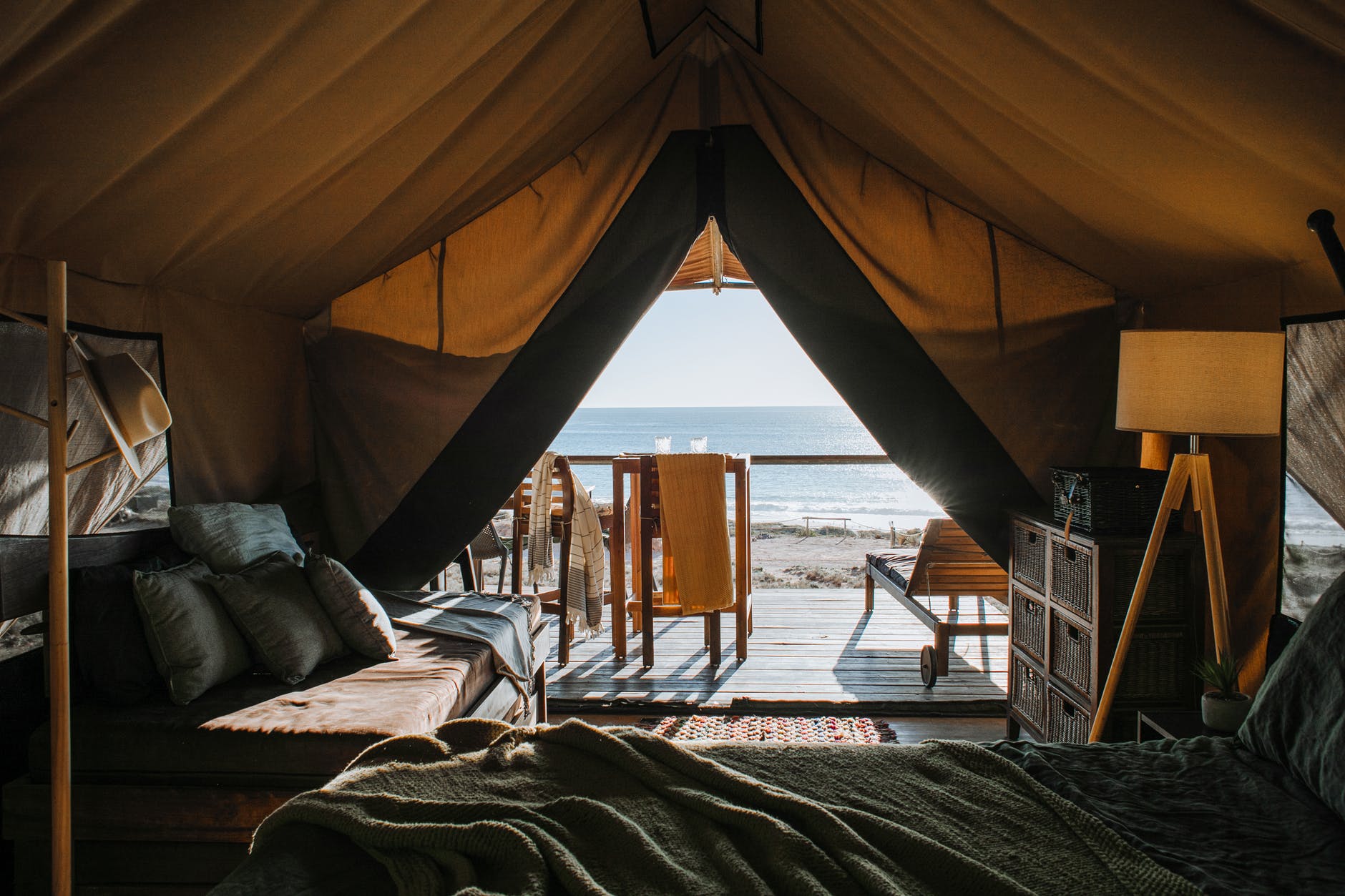
Photo by Rachel Claire on Pexels.com

Wellness resorts here are the pillars of Kerala tourism. These are collection points for revenue generation from tourism. The worth of these resorts is honestly matched with every tourist dollar. They offer a wise conglomerate of a relaxing vacation and a range of health therapies and wellness. 

They are the goldmines of a trip to Kerala. The influencers of the visit Kerala campaign this summer have rightly put across the worth of these resorts before the world. They offer services to the tourists far beyond the normal hotelier- guest relationship. 

Their kitchen cooks nutritious food, their sessions include yoga, meditation, and exercises having roots in the Ayurvedic school of thought. 

Their spas and saunas are designed to give you the best value for money. All in all their entire service module is amazing and a lot of thought goes into it making it a seat of learning for developing your creative side, spiritual upliftment, and self-actualization. 

The resorts are more than vacation rentals. They bring out your positive self that you didn’t know. They teach you to think and adapt to a healthier, better, and greener lifestyle that is so close to nature. 

Few popular wellness resorts in Kerala

  • Mekosha Ayurveda Spa Suites Retreat

P.C. Mekosha.com

This is a very homely kind of wellness resort right in the heart of the capital, Trivandrum. Inaugurated in 2018 it sells Ayurvedic therapies and formal medical treatments of global quality. You have the service and close monitoring by experienced and qualified physicians. 

  • Niraamaya Retreats, Kumarakom 

P.C. Realtyplusmag

This refuge is located in an idyllic setting on the banks of Vembanad Lake. The place is exquisitely beautiful and nature has been generous in endowing it with lushness. Here you cherish a staycation experience in the lap of nature. A mix of service packages is offered which can be very flexible and customized to customer requirements. Some of the facilities include Yoga, sunset boat rides, cycling amid nature, duck feeding, and other traditional Ayurvedic therapies. 

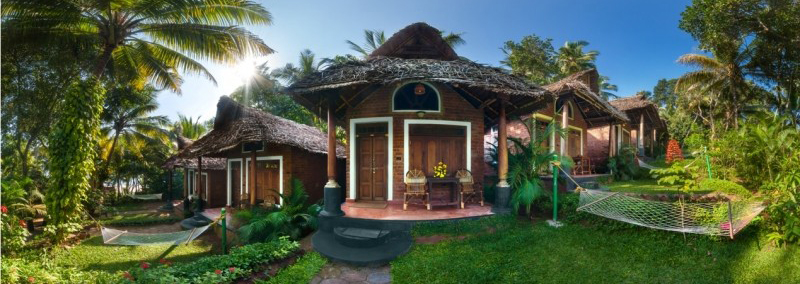
  • Somatheeram Ayurvedic Health Resort 

P.C. Somatheeram.in

This the oldest Ayurvedic village cum resort in Kerala and earns the distinguished title of ‘ the world’s first Ayurveda village which is also a resort ‘. Facilities offered include yoga, meditation, and Ayurvedic treatment. Amenities feature a combination of traditional and current paraphernalia.

  • Carnoustie Ayurveda and Wellness resort
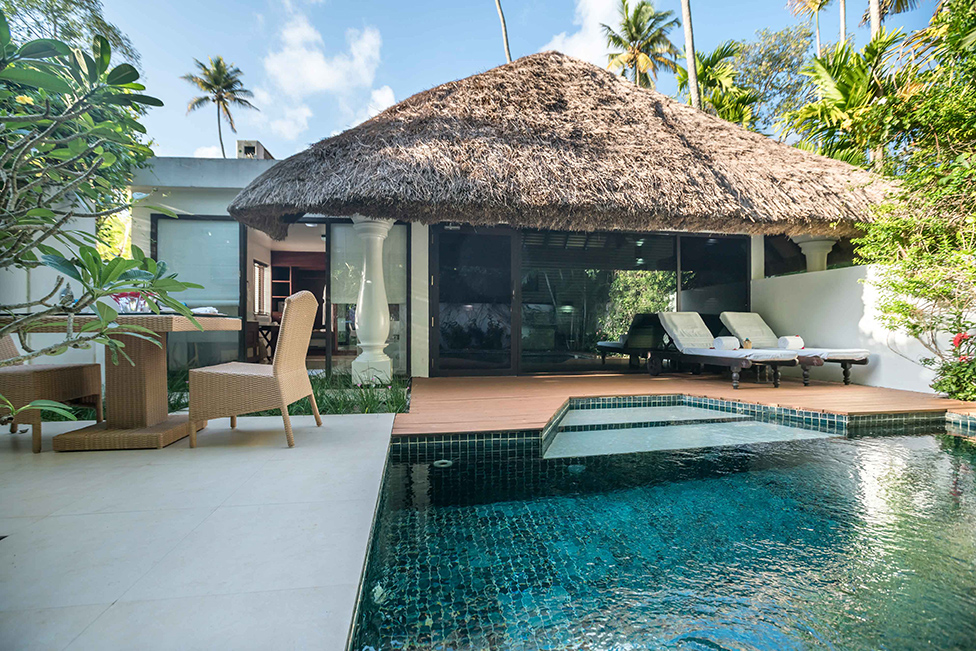
P.C. globalspasonline.com

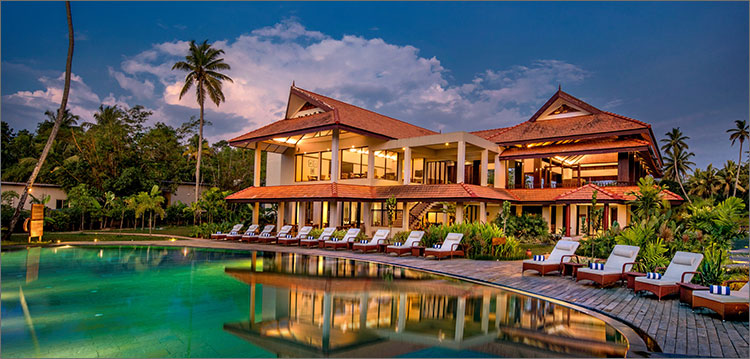
This property is located on Marari beach in the Alleppey district and has won many awards. The unique character here is they have a holistic approach to therapies. They offer an amazing blend of Ayurveda, Mantra, Yoga, and Naturopathy. 

Villas are oceanfront and have a breathtaking view of the garden. These are luxury villas with private pools. This property has been ranked number one Ayurveda Spa and Wellness resort by the Geo Asia awards continuously from 2013 to 2018.

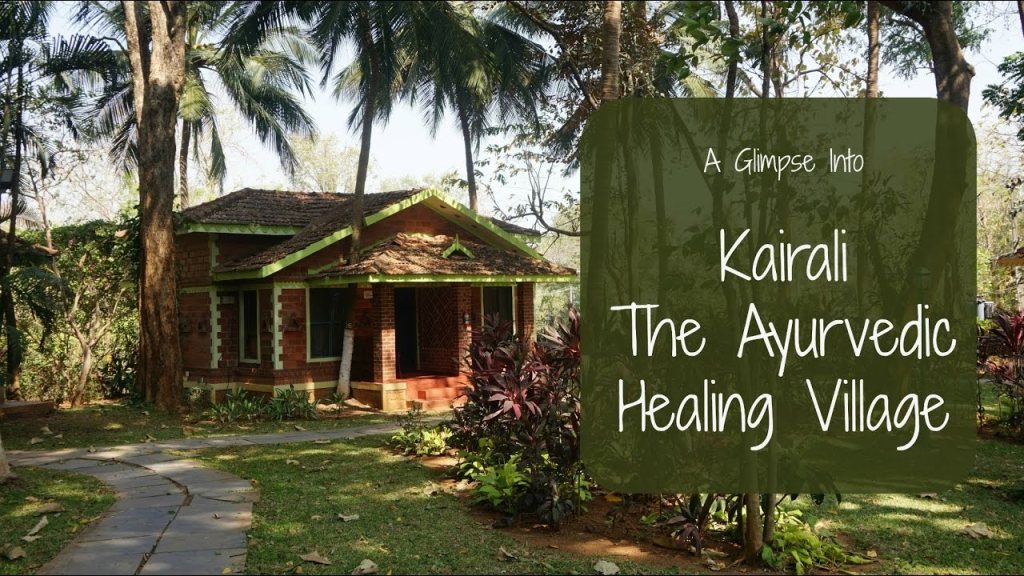
  • Kairali Ayurvedic Healing Village 

P.C. youtube vlog

They put sincere emphasis on Ayurvedic therapies. It is not that its competitors are casual. It has an edge over the others in matters of treatment. Nestled right in the middle of vast rice fields, it lies in absolute rustic solitude. They specialize in detoxification of the mind and body. You get farm-fresh vegetarian food and cigarettes and alcohol is a strict NO. A vacation at this resort would change your perception of life. You feel there is still a lot to contribute to yourself and society. 
A cultural pilgrimage to Shantiniketan (The Abode of Peace)

20181215_122357

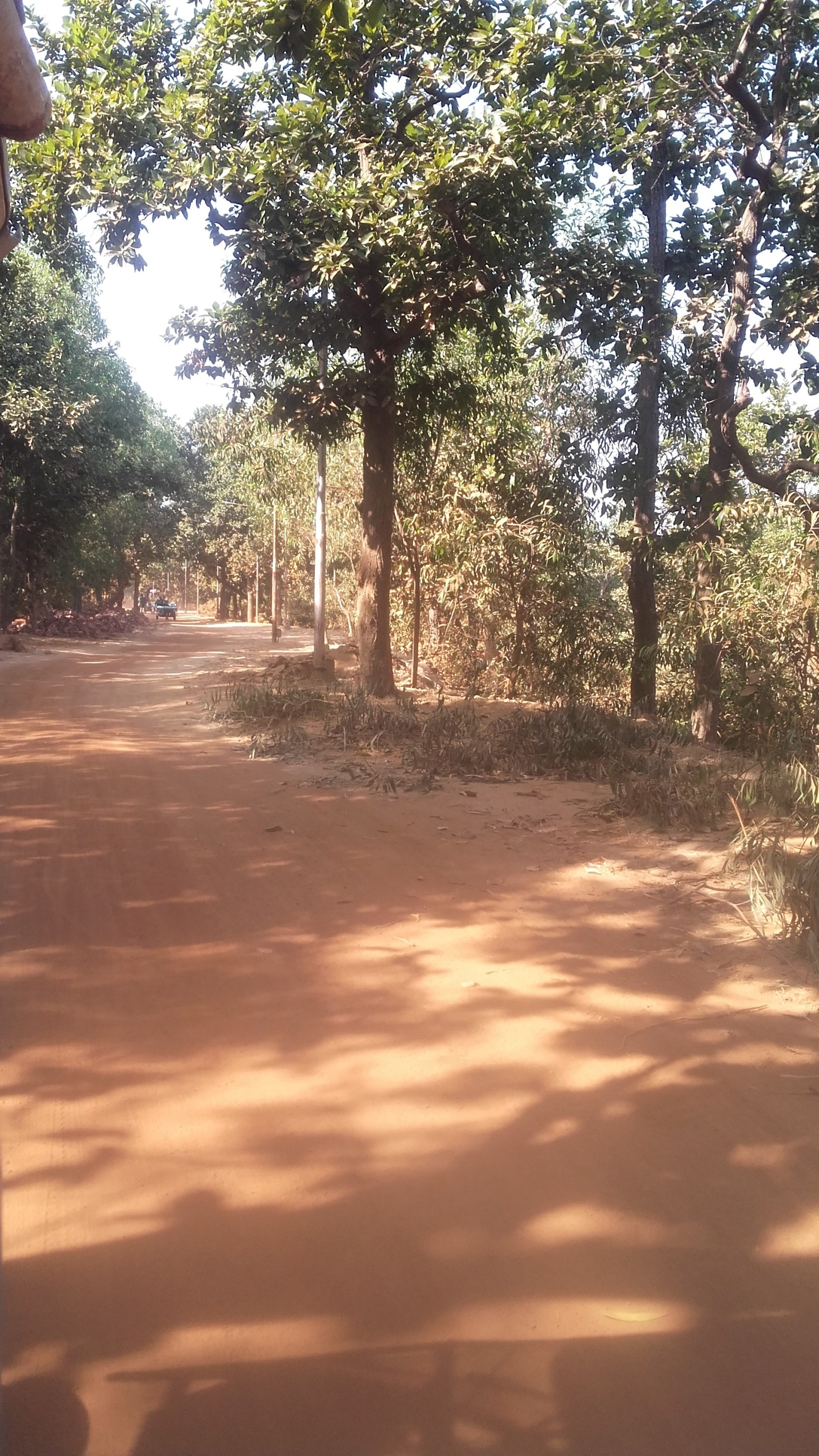
A weak net connection was disrupting my focus. Several attempts to book a reservation from Bolpur to Howrah failed. I had asked my Toto ( Tuktuk, the battery operated three wheeler ) driver to take a break. Fingers failed to connect the right buttons  as the ride along dusty trail was far from uniform.

The vehicle was  parked beside a shade of Sal grove. Sweet melody poured out from a  mud house  amidst the grove. Visit to Shantiniketan (The Abode of Peace), Bolpur  had been in my mind and this  morning  I could make it!

20181216_151344

Shantiniketan – The Abode of Peace:

Peace and tranquility reign in Bolpur.  Once an unknown part of rural Bengal in East India caught fancy of Maharshi Debendranath Tagore, father of  Rabindranath Tagore. Densely surrounded by huge Chatim trees and Sal groves, he discovered this place appropriate  for reconnecting one’s own self with the surroundings and thus the name Shantiniketan, meaning the Abode of Peace was rightly suggested.

The kaleidoscope of Bolpur got set in Tagore’s dream of raising a culture of broad based expression of mind and thoughts. Embracing diverse cultural landscape scattered across the globe was  core of the equation.

Literally, an abode of peace, here every support is available for shaping impressionable minds and sharpening  intellect . What is so special about the place making it a global cultural hot spot acted as a motivator.

Tagore’s Shantiniketan – Evolution of Indian philosophy, art and culture:

Shantiniketan and Tagore are inseparable in Bengali culture. While the world gets acquainted with Tagore through his words, one feels fortunate to explore a place where a personality of this stature had once made priceless contributions.

The Kanchenjunga express left Sealdah station sharp at 6-35 in the morning and was scheduled to reach Bolpur around 9-15. It was a little foggy. December had started its bite of chill.

Checking into the hotel wasn’t possible before noon but the reception offered a piece of valuable advice. That we book a Toto, start right away, wander along the  enchanting landscapes of Bolpur all day exploring Khowai, Kankalitala, Kopai river bed and sections of greenery that would come in our way. The journey would take a rough 8 hours after which we would rest in the hotel.

Apart from Shantiniketan, this rural area has other interesting aspects of cultural and tribal tourism rich in vibrant folklore, folk music and traditional art that is no less interesting. The place has the right kind of fodder for the culture-craving souls.

The next day, we can do Uttarayan, the cultural hub of Tagore estates covering the art galleries, museums and exhibits of priceless artifacts and Visva Bharati University Campus.

Kankalitala – The revered Shaktipith (Shrines based on Shaktism reflecting the power of Goddess):

Mythology associated with Gods and goddesses forms the pillar of rural Bengal culture and Bolpur is no exception. Kankalitala was about 8 kilometers from our hotel. A temple by the banks of Kopai river is a seat of pilgrimage.

Legend has it in the event of Tandava Dance by Lord Shiva, Lord Krishna intervened and stopped the universe from facing destruction cutting off Sati’s corpse by the Sudarshana  Chakra. Body parts flew in different parts of the country and the waist bone (Kankal) fell right here in Bolpur, Sriniketan. Thus, the name Kankalitala, a sacred site with a temple erected for worshiping Shakti.

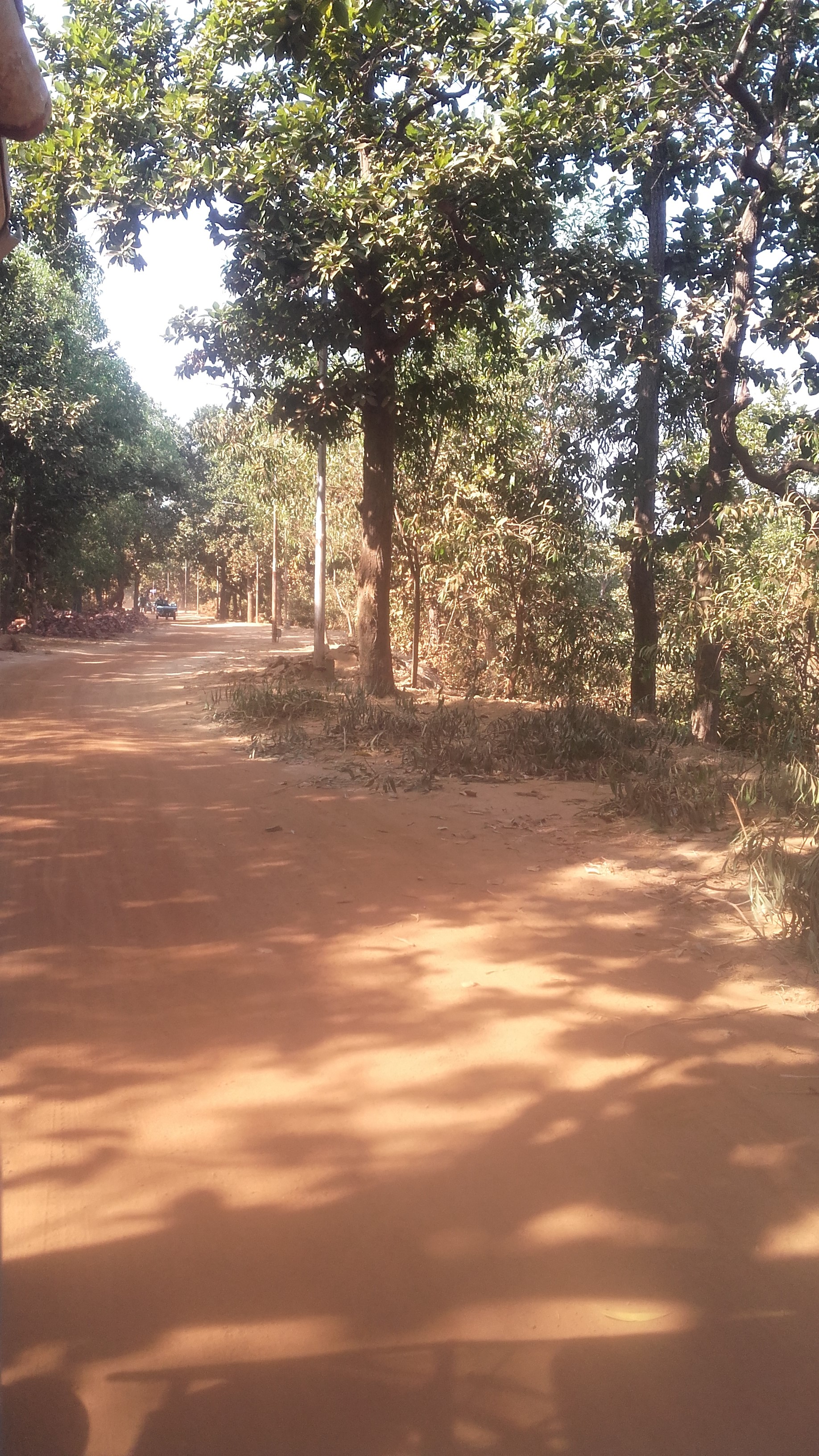
The sky was bright. As the Toto sped along red dusty trail, cold wind struck us on the face. It was pleasant and relaxing. As usual, the temple was crowded with pilgrims. Hawkers peddled their  trade of  handicrafts and heaps of  sweets stacked inside glass. Business was smooth keeping efforts of vendors well sustained with cash flowing in from the tourists.

Sun rays threw a comfortable warm shaft on the temple frontage that felt good in the cold morning. As always, the entrance to the temple was crowded with derelicts. Plea for aid  made strong  by  display of whatever skills left – playing the ‘Ektara’ (one-string musical instrument largely used by folksingers of Bengal) and worn out harmonium. An effort to survive the curse of penury is a matter of compulsion. Choice has no place in their lives.

The charm of  picturesque terrain of Birbhum (red-soiled district of which Bolpur is a subdivision) unfolded as we raced along open plains.  Bright yellow mustard fields  ended in rugged plateaus of brown and green meeting the sky in the horizon.

By the side of our travel route, we spotted occasional homesteads enclosing groves. Almost every house here has a patch of green in the yard. Some belonged to locals and some owned by people from far-off places like Kolkata.

They spend here a relaxing weekend away from the  rumpus. Even putting their own properties up for vacation rentals is in trend. It is an excellent way to experience vacation as a local, staying in a residential area instead of one catering to typical touristy environment with a lot of hotels around.

Moving past  a wintry rural setting I was fascinated by fields that lay in rustic beauty where crops have just been harvested. Trail of bullock carts looked like formless long lines punched in red mud. We rode past  bards, threadbare and wretched who played string instruments under tree shades in run down humor that didn’t apparently betray  any troubled thought about  spending the next day. Poverty existed and possibly it did not make a dent in their elevated spirits.

Prakriti Bhavan – Nature art display:

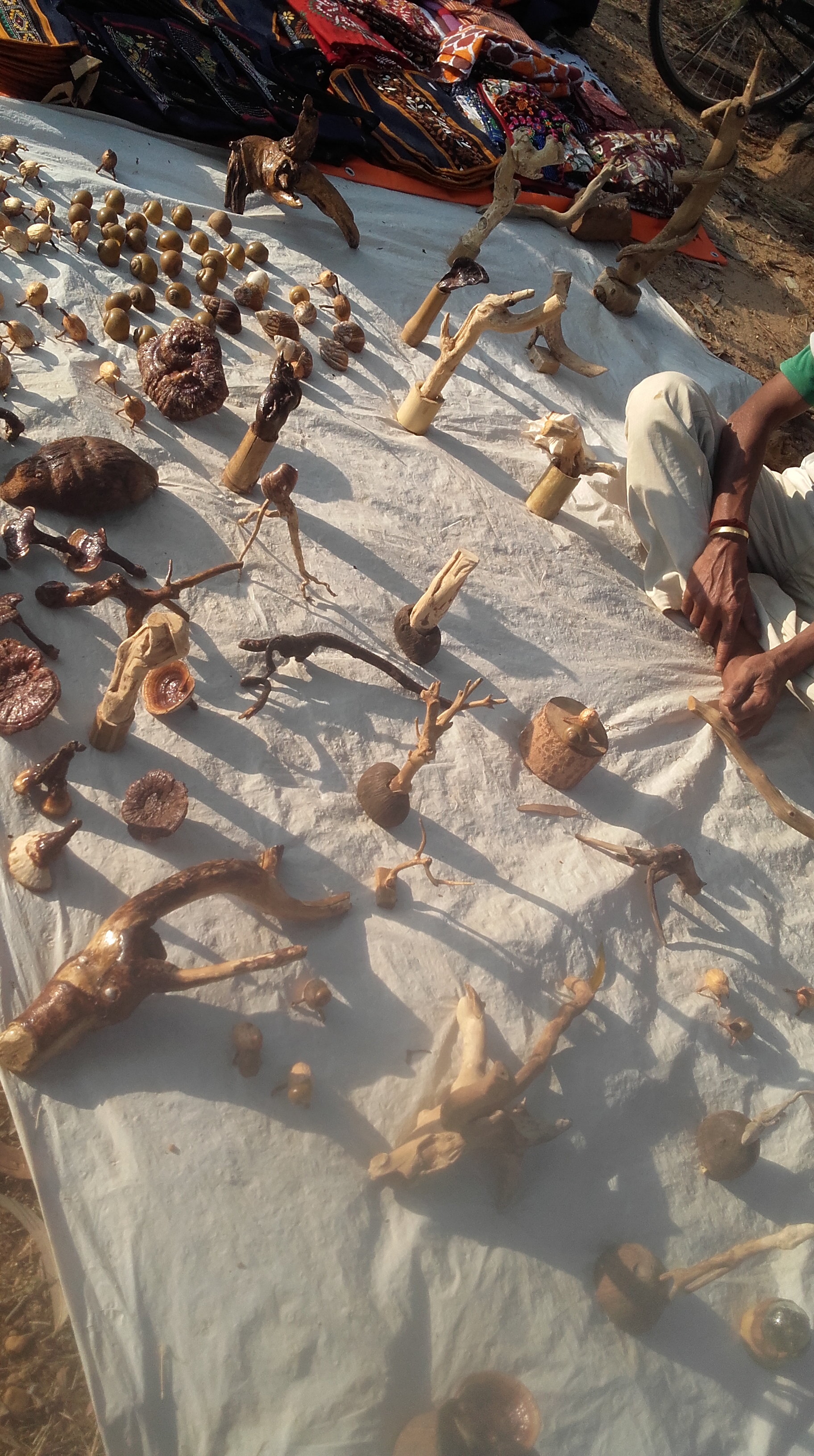
We reached Prakriti Bhavan after half an hour. Nature artists have identified special features in natural formation of wood, tree trunks, branches, stones or metal parts. No additional sculpting or chiseling was  needed to achieve a definite shape or form.

It is the artist’s keen eye by which he could identify a bull head, bird, serpent or a cow from the naturally-shaped wood, stone and metal parts. An inexperienced eye is likely to miss these hidden objects. An official guide was doing his best to explain subtle nuances between one model and the other.

But  his  narratives soon lost audience to more visually pleasing  open air garden with natural rock sculptures  evincing  effort to connect man with nature through music, art and poetry.

Reasons for this displacement might have been either the guide’s sermon wasn’t very compelling or audience might have suspected paying too much attention to  all what he  said would end in a commitment for payment. It is wiser not to wait for the moment of embarrassment.

Srijani Shilpgram – Eastern Zonal Cultural Center:


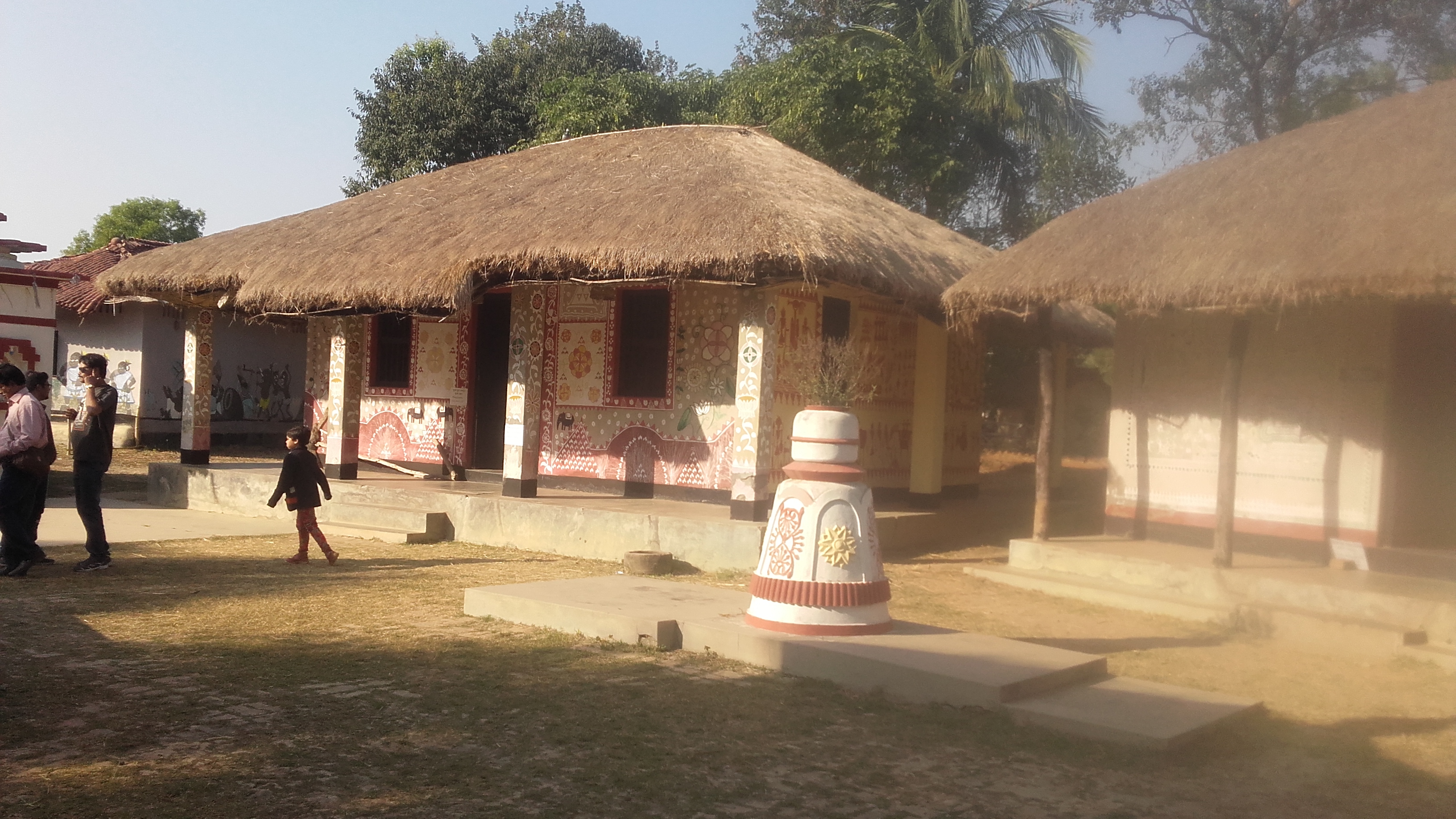
Srijani appeared soon after, a melting pot of culture of eastern states of India with beautiful carvings and clay models.  The expansive space dotted with intricately-chiseled models, rock art and artifacts is simply mind blowing. An ideal place for art lovers and shutterbugs where one won’t mind spending an hour or two admiring art intermingled with natural beauty.
 

The artwork on the walls of small rural huts, each representing 8 eastern states of India was a feast to the senses. A stage has been set up giving an opportunity to folk-artists display their culture through lively music and dance. 

20181215_142709

A well-appreciated government supported platform to sustain the dying regional folk art.

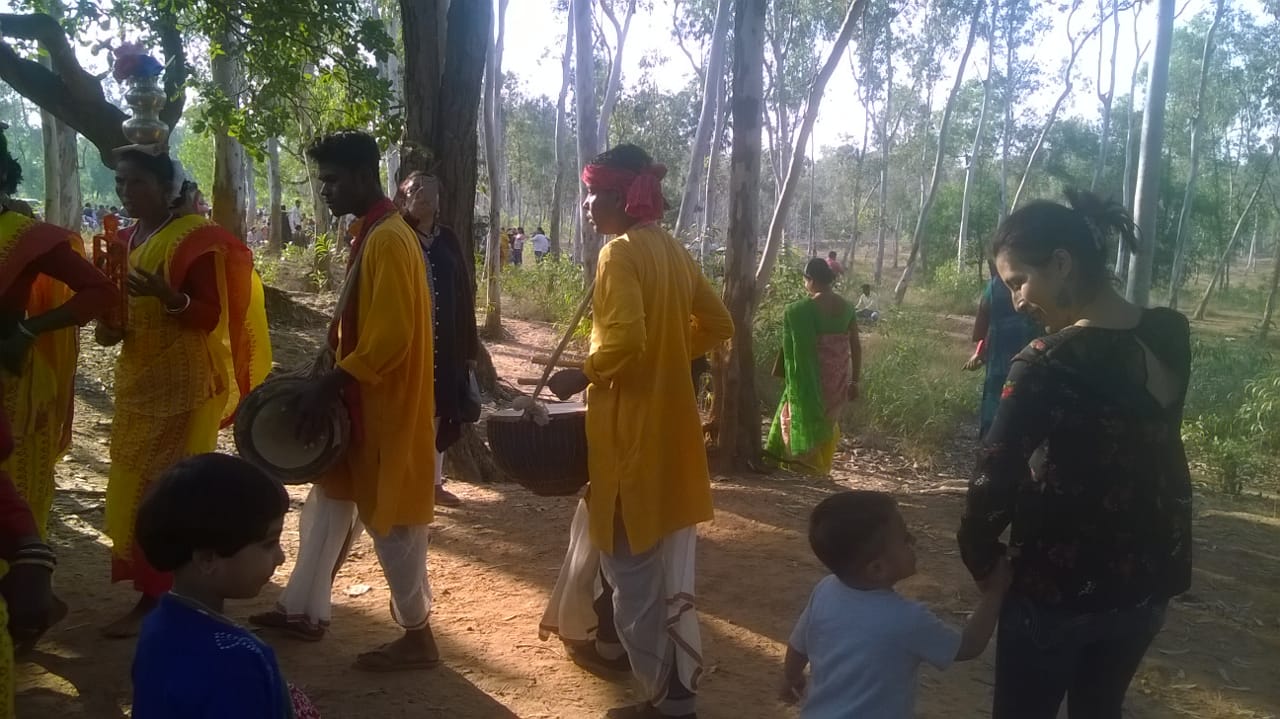
A dance troop from Chattisgarh performed on open air stage. Pleasing music, vibrantly colored attire and the rural musical accompaniment treated us to a different world . Body movement and rendition are powerful enough to hold us spellbound even if  the lyrics are beyond grasp. Tune was drops of honey to the ear.

Rangabitan Tourist Complex:

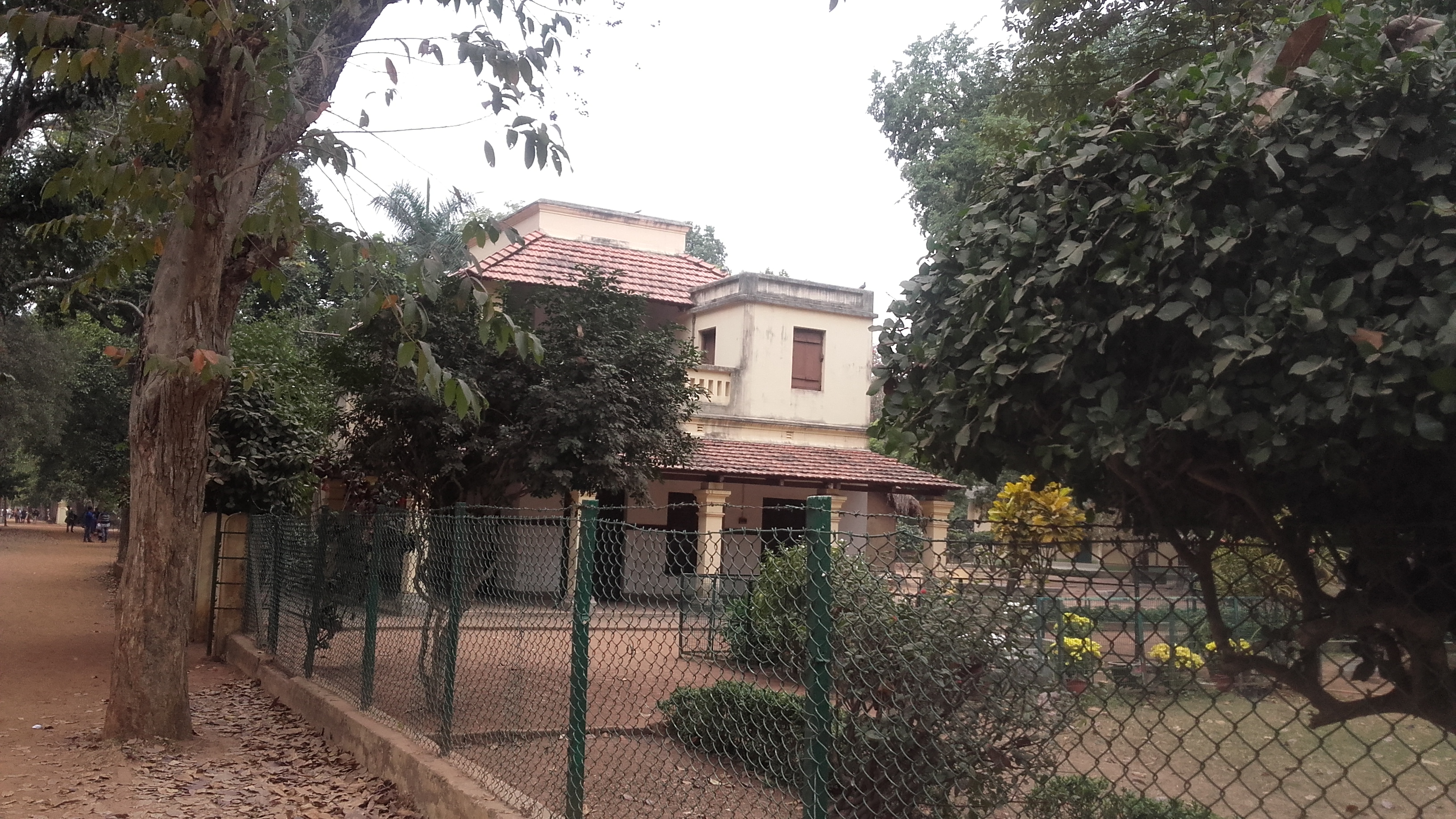
We crossed Rangabitan, a West Bengal government tourism department lodge  complex, set amid Birbhum red mud magic, quaint woods and a mango garden. The accommodation  is reasonably priced answering the needs of  tourists well.

Amar Kutir (My Home):

Amar Kutir is where a large handicrafts center is set up. This is a time honored  institute featuring  endeavors of Tagore  inspiring the lives of locals, nurturing and molding their innate talents. A great example of sustainable tourism supported by the government.

Producing handicrafts and farming is not just an end in itself. Follow ups for locating a demand for niche skills to market the produce completed the cycle. The handicrafts center was a razzmatazz of delicate artwork.

A little expensive with an amazing finish, the wares stood in racks. Brittle clay pots and glassware were way too enticing.  “Once broken considered sold” was a standard tag that did not deter us from close exploration of the genius the terracotta  held.

The restaurant in Amar Kutir offered a gratifying lunch.  One cannot but help admiring food being served in brass cutlery, an honest effort to keep up with the long lost Bengali culture.  Coupon system of buying food was in vogue. A long wait between buying the coupon and receiving the plate made us somewhat grumpy.
The wait was at last rewarded with awesome food served hot! Spoons and forks hung on the stands. Piping hot Bengali lunch is not a ritual of knife and fork. It wouldn’t taste the same eating with fingers adds to its sumptuous voyage.
Sriniketan:

Visit to Sriniketan was a journey along a desolate road lined with trees on either side. A deserving enterprise by Tagore for agricultural promotional efforts who strongly believed uplifting Indian agriculture is important for the sustained growth of our nation.

A school imparting knowledge in skills and tricks on farming was meant for children from local hamlets who would learn and implement tricks of the trade for well-being of rural colonies. Irregular twitter of birds subscribed to unspoiled pastoral vibes.

Not very far was a Kali temple on the banks of  lake Krishnashayar. Mood was held in an awe-inspiring silence. In the temple yard stood a sacrificial altar.  A somber note hung in the air no matter whatever might have been the number of innocent animals butchered here, the haloed ground will  continue to be sanctified.

Ballabhpur Wildlife Sanctuary:

Ballabhpur deer park came in our route. The forest has a large herd of naturally bred deer. Existence of nature so close to Visva Bharati campus life opened up a man – nature interface that is necessary for much needed respite.

Established in 1977, it is one of the most successful deer conservation center. Large water bodies shelter a host of  birds welcoming seasonal migratory species as well. A  diversion from art and cultural exploration to observation of Cheethals and Blackbucks from close quarters is a desirable break.

Shonajhuri Haat – A signature blend of cultural and tribal tourism:

IMG-20190302-WA0022

It was a Saturday and Sonajhuri Haat ( rural market ) was as usual in roaring trade. A mela on the banks of Shyambati irrigation canal offered locally handcrafted jewelry, decorative pieces, cotton clothing and delicately chipped statuettes.

The Haat is laid out along one of the tidiest forests I have ever seen with its floor carpeted with flaxen Sonajhuri flowers. The atmosphere was pollution free and vehicles  not permitted inside the forest. Swarm of handicrafts men collect  from villages near and far vending produce from morning till sun down.

20181215_153032

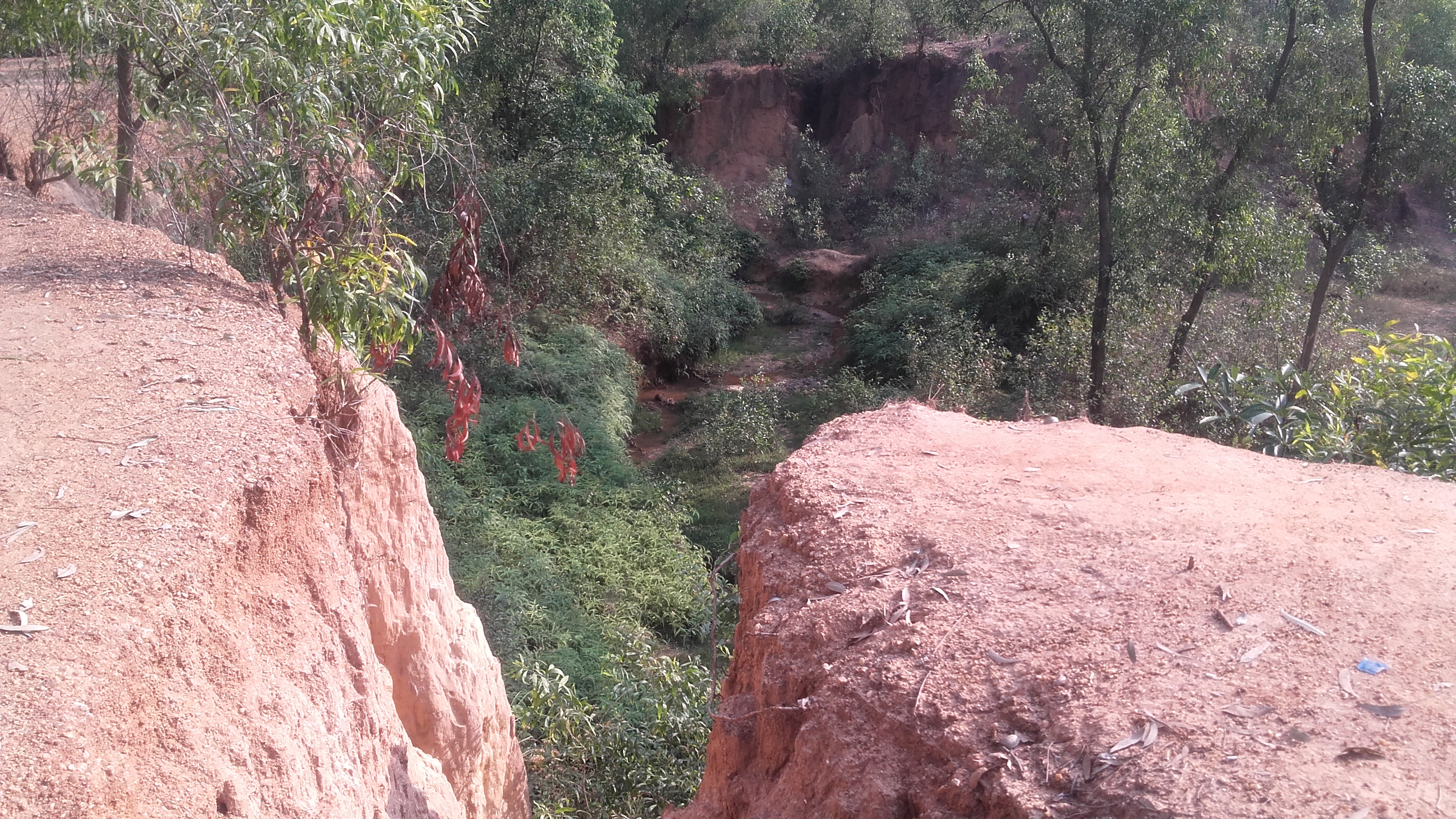
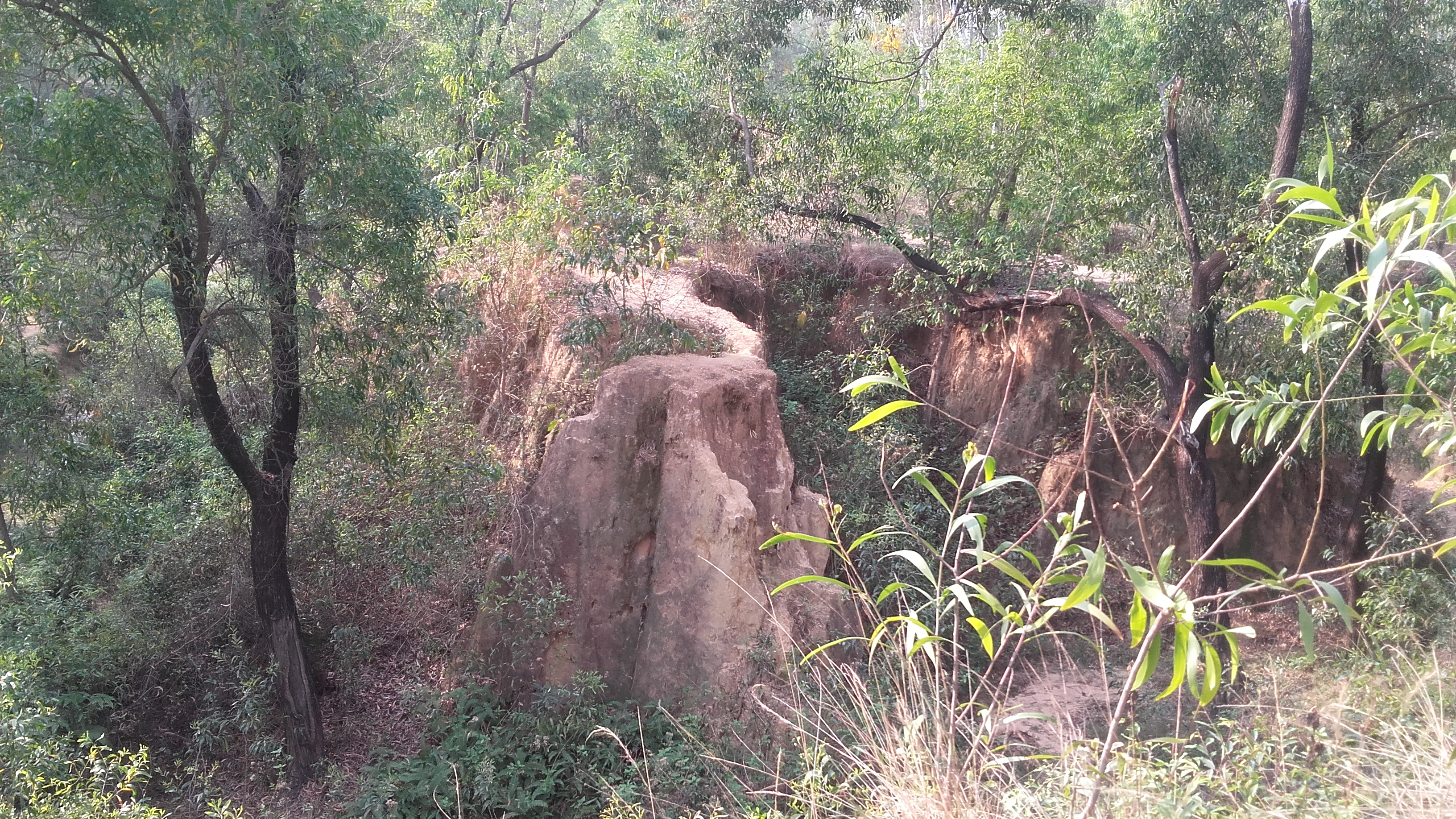
Local folk dance and Bauls (folksingers) playing ektara  had an offbeat charm. Presence of natural formation of Khowai (a local term for soil erosion) in which Sonajhuri Haat is set added to its landscape beauty. Evolutionary development of small canyons from erosion by wind and river had wonderfully fused with the extreme eastern tail end of Chotanagpur plateaus.

20190317_080855


Haggle for prices is common and we bought some embroidery and craft work and ate pot full of Raabri( milk condensed on low heat and flavored with cardamom) that the vendors carried  on bamboo poles rested on shoulder.

It was around 5 in the evening and our shadows were cast long by  sun that would be in the sky for a short while. We headed  towards Kopai river bank. Our route was along a labyrinth of mud strip winding past  a tribal village.

This tributary of Mayurakshi river runs dry in summer and winter but spills over its banks in  wet monsoon. Soil is purple featuring ravines on the banks that had run for miles melting into wilderness in far off fringes. Decades ago,  packs of wolves roamed the grounds, they had been a part of local fauna now extinct.

20190317_080152

Inspired by the  pristine beauty of the region the Nobel laureate had composed immortal lines themed around Kopai river. A choir of singers  were rehearsing passionate numbers in  the backdrop of  red sun in its fading blaze that was about to sink. Our shadows seemed elastic they grew  in length.  A cold breeze blew in from the North. We boarded  Toto and moved in the direction of our hotel.

 Visva Bharati Campus & Museum:

Started around 9  the next morning. First stop was Rabindra Bhavan. Viswabharati  University building premises darted back as we moved ahead. Hostel buildings , Ananda Pathshala ( elementary school for kids established by Mrinalini Devi, Tagore’s wife),  the iconic Taal gaach (palm tree) shooting out through the thatched roof, the sprawling  Amrakunja (The Mango garden) ending in  majestic edifices and abstract artwork came in a row.

Tagore’s presence was felt everywhere. A tight security was in vigil. Vehicles were not allowed to stop save a few selected spots. We kept moving, awaiting a chance to stop and click the camera was hard though I had some success in my attempts.

Statues created by the renowned Ramkinkar Baij assumed an assortment of shapes. They are not chiseled with hand. Mounds of soft mud stand as a target and you got to chuck stones in soft mud until your dream is realized. It is far easier said than done but conveys a message if you are strongly driven success cannot be far away.

Rabindra Bhavan – The heart of attraction:

20181216_120122

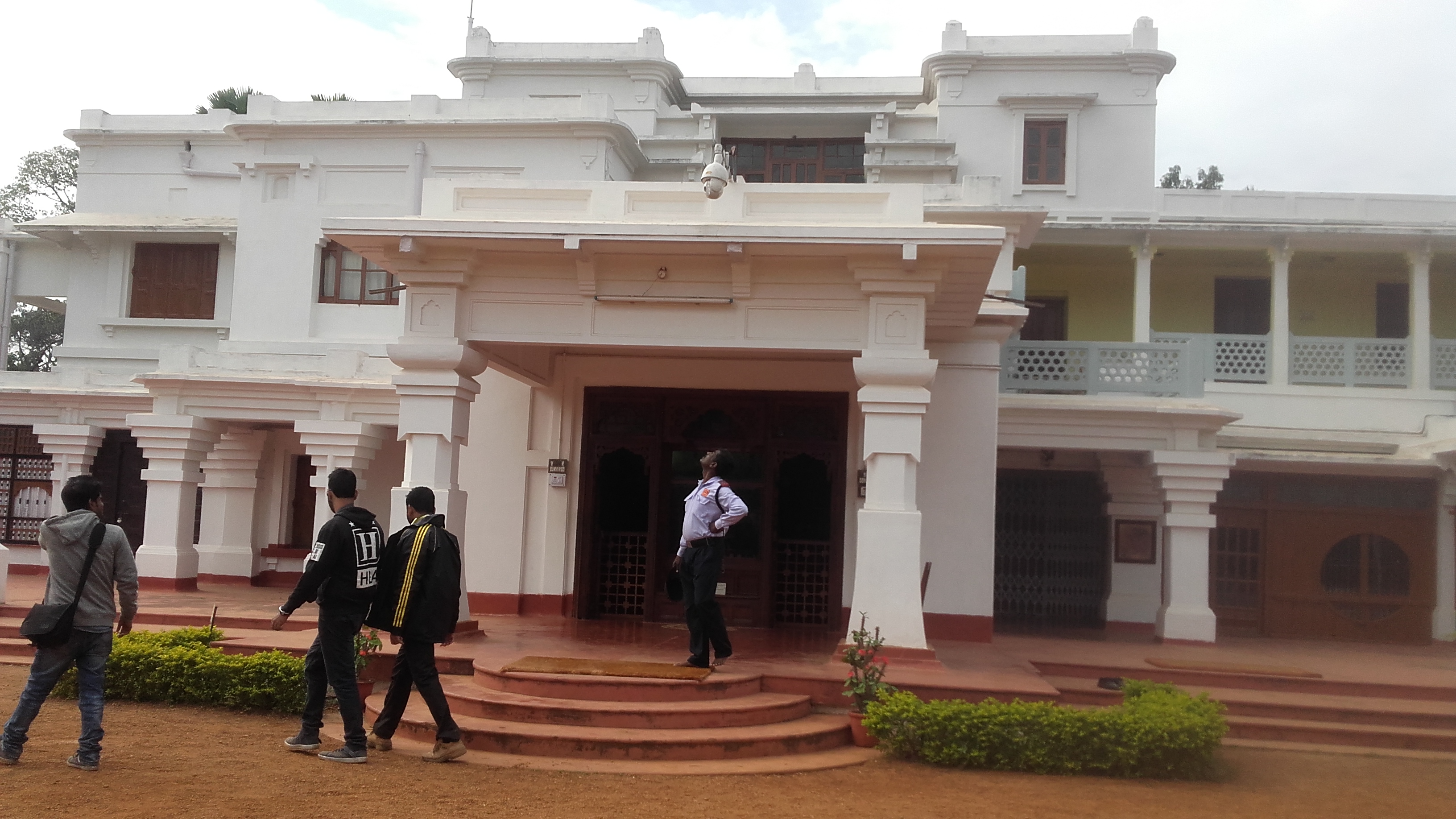
Rabindra Bhavan housed a museum and that is fabled. Here 5 homes where Tagore stayed in a cluster known as Uttarayan complex draws tourists from home and abroad. Pieces of antique furniture and decor  is a reflection into a bygone era Tagore spent here in quaint peace spinning his gossamer dreams  that would have a profound impact on the society .

It archives 1580 original paintings by the laureate himself and 554 done by others. Besides 11380 priceless photographs, 3855 curios and 52 statues and certificates , mementos and memorabilia connected to signally fascinating aspects of the Poet’s life are all set in an absorbing presentation. Events from the past fascinate.

At times it becomes hard to reconcile the modernized thoughts and global quest for knowledge and information that boiled inside the poet in a timeline more than a century old.

Heirlooms were numerous and enchanting , like coffee pots presented to Tagore by tribal chief of some obscure African nation or a watch case set in ivory awarded by king of Siam truly attest to the fact that the man had an astounding global influence. Photography was strictly prohibited.

An international acclaim was bestowed when media of communication and logistics was way too primitive. He had succeeded immensely to put across his thoughts and tabled his hopes and fears on a global platform and that too in a regional language. Well that is another story my thoughts and words are too weak for an analysis.
Continue reading “A cultural pilgrimage to Shantiniketan (The Abode of Peace)”

Captivating Coorg

DSC00249

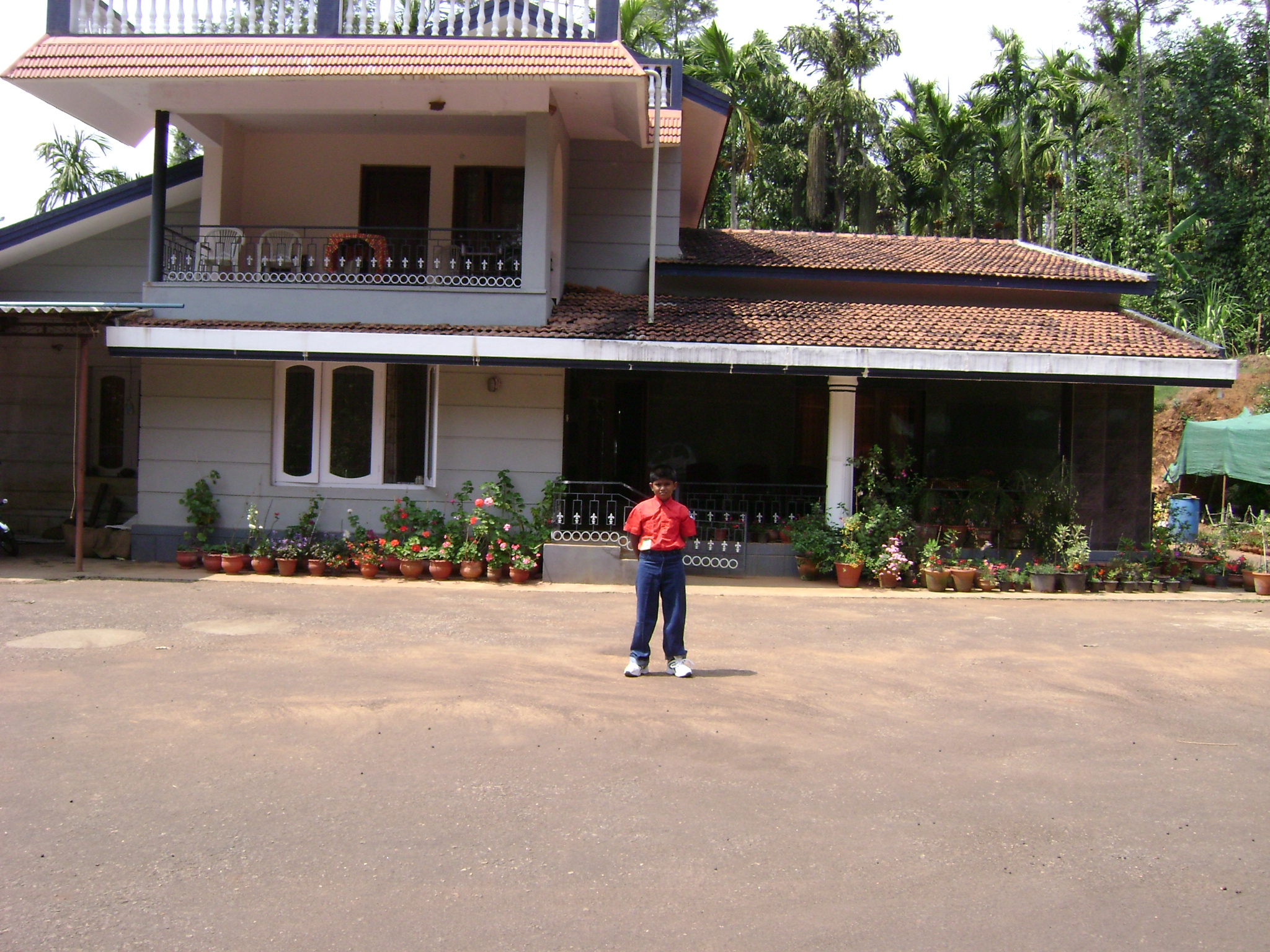
Welcome drink of ginger wine was only a faint hint at the warmth  of hospitality coming our way from  Prasad family, the owners of coffee garden homestay, a breath-takingly quaint abode set amid lush coffee plantations of Coorg, in Southern Karnataka.

DSC00401

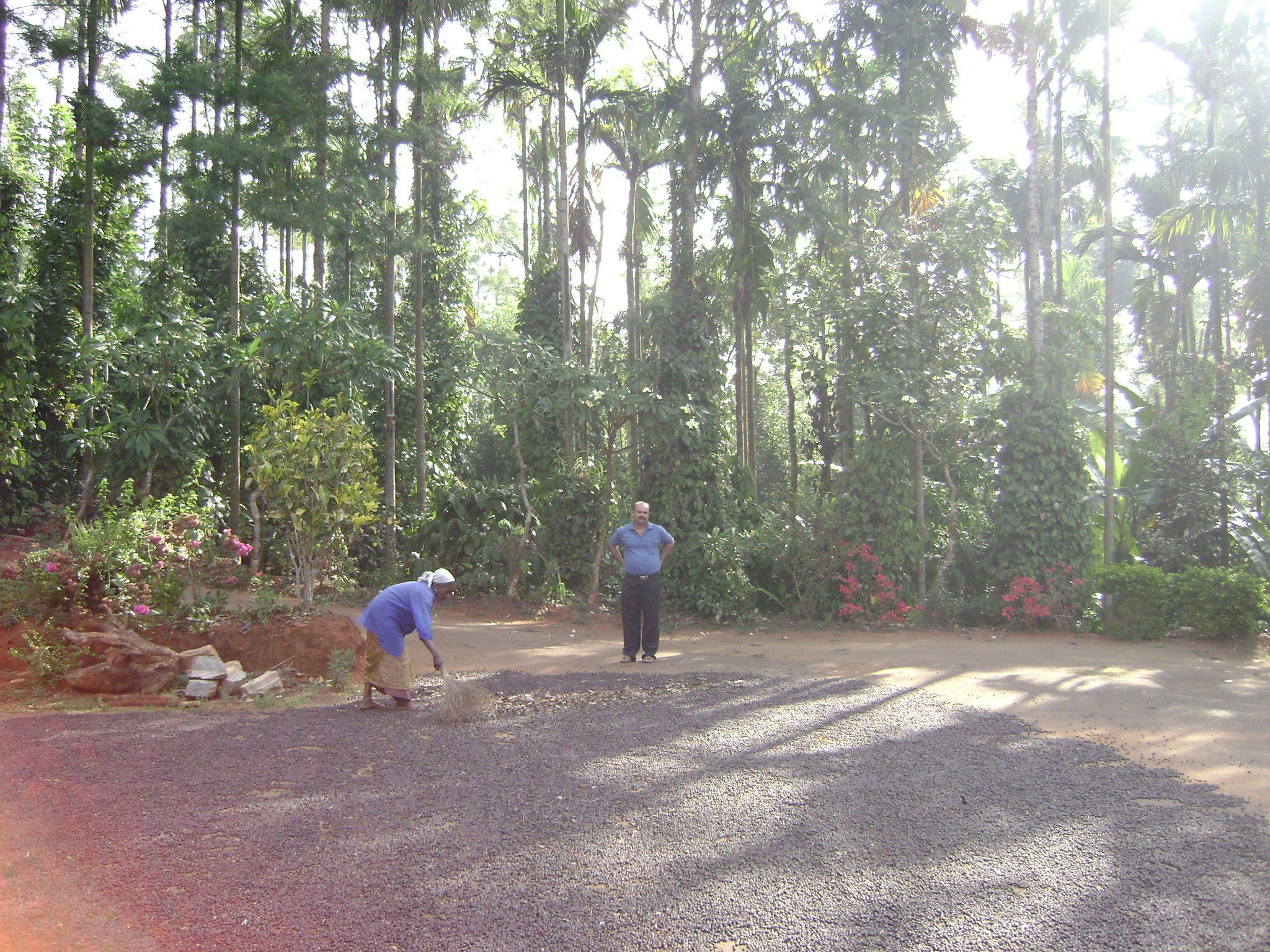
Spread over a sprawling estate the living quarters featured a lot of greenery, an open front yard for drying ripe coffee beans after harvest and a large backyard allotted to organic farming of vegetables. A deep pond lay close by from where irrigation water was sourced.

A pack of guard dogs ensured security to the master,as did a skein of ducks, no less threatening than the dogs themselves. The birds would charge trespassers to the estate with a shared fury – a show of loyalty to the estate owner. Heads pointed low in a stubborn threat and a high pitched chuckle would make strangers run to avoid an assault .

We started the night before from Karwar, a sea side picturesque town known for exquisite beaches, the distant Western Ghat mountains and a lot of fresh catch of marine fauna ready for the market. It was an overnight journey to Mangalore, where we boarded another bus to Madikeri , a hill station not far from Coorg , the principle coffee belt of India.

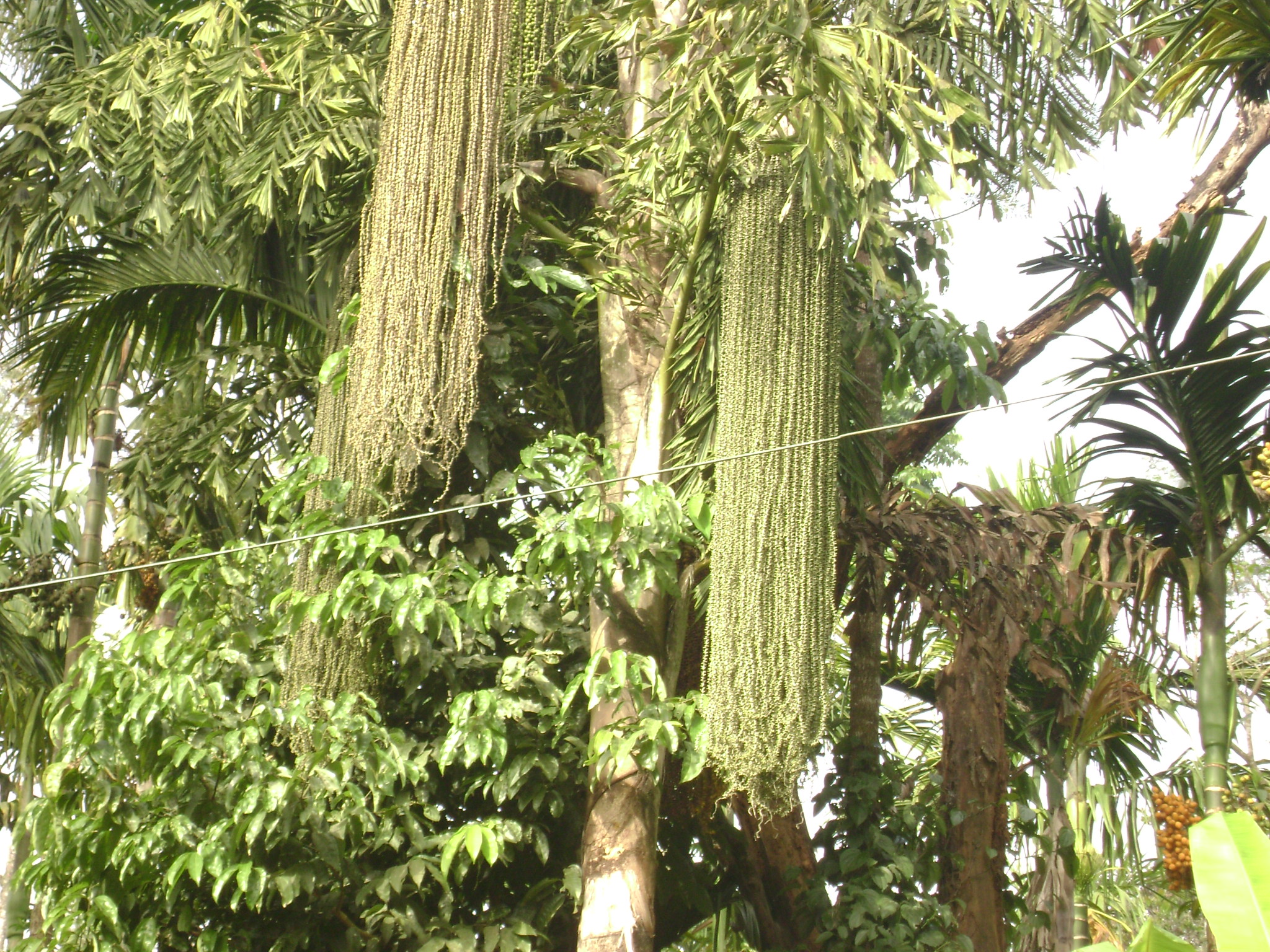
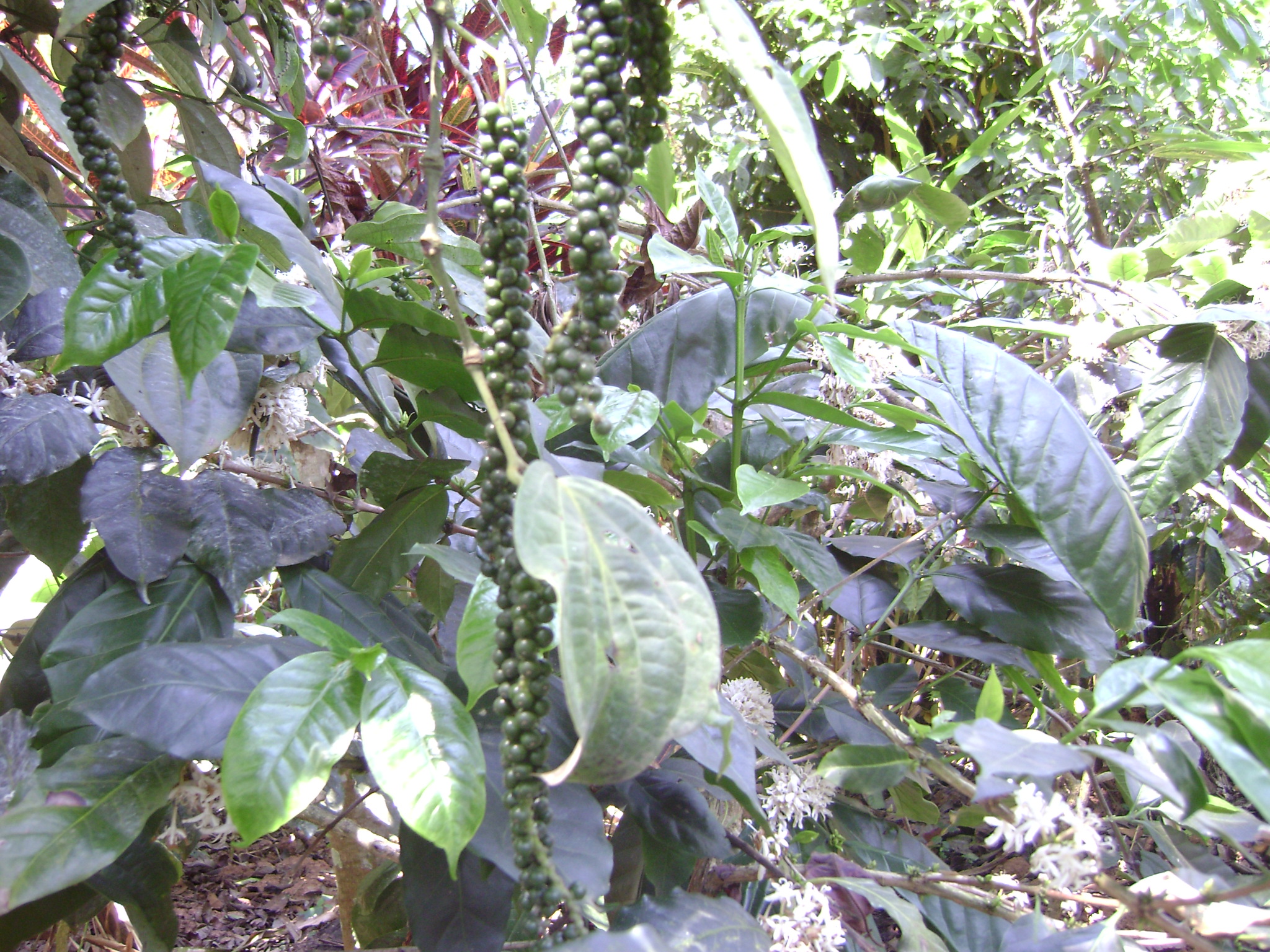
It was spring and the forest was in full bloom. Its indigenous  vegetation included a wide array of familiar trees and some were completely new to us. Teak , Sal , Panas( a type of jackfruit, the leaves shredded around midriff) , beetle nuts and a lot more. Among outlandish varieties,  rubber , cardamom, black pepper and vanilla were the ones on which I set my eyes for the first time.

DSC00398

This part of the country is quite unfamiliar save for a knowledge that people are hospitable and brave. They contribute a substantial support to the country’s armed forces. Soft rays of the early morning sun shot through drifting smudge of clouds and the foliage high up.

The green canopy had started to thin out pouring a shower of old leaves. Fresh new sprouts replaced them heralding the onset of Spring. It was mid February  and nature started to look up bright and blooming. We reached Madikeri, the nearest outpost to Coorg coffee plantations by 10 in the morning .

This was a place of rain forests receiving a heavy spell of annual showers . We took a cab to the homestay located  in the middle of coffee farm. Half an hour’s drive and we were in the Estate. The cottage was impressive, the interiors well furnished. In consultation with our hosts we drew up our travel plans.

It was a brief three days vacation with an intent to cover as much ground as feasible. First day would be spent in Dubare Elephant Camp and Tibetan Monastery at Bylakuppe, ending the days trip with the sunset viewing over river Tala Cauveri and Raja’s seat.
The second day was to be completely devoted to Iruppu waterfalls and Nagarhole wildlife sanctuary.

Mr and Mrs Prasad were a wonderful host. Days were spent in sightseeing and nights over rounds of coffee with interesting conversation on subtle crafts of coffee farming, local culture and places of interest.

We were served the local cuisine where pork formed the principal meat. A second meat that was popular was lamb. In fact the number of pig butcheries’ in Coorg reminded me of pork stalls set along Guwahati – Shillong road.

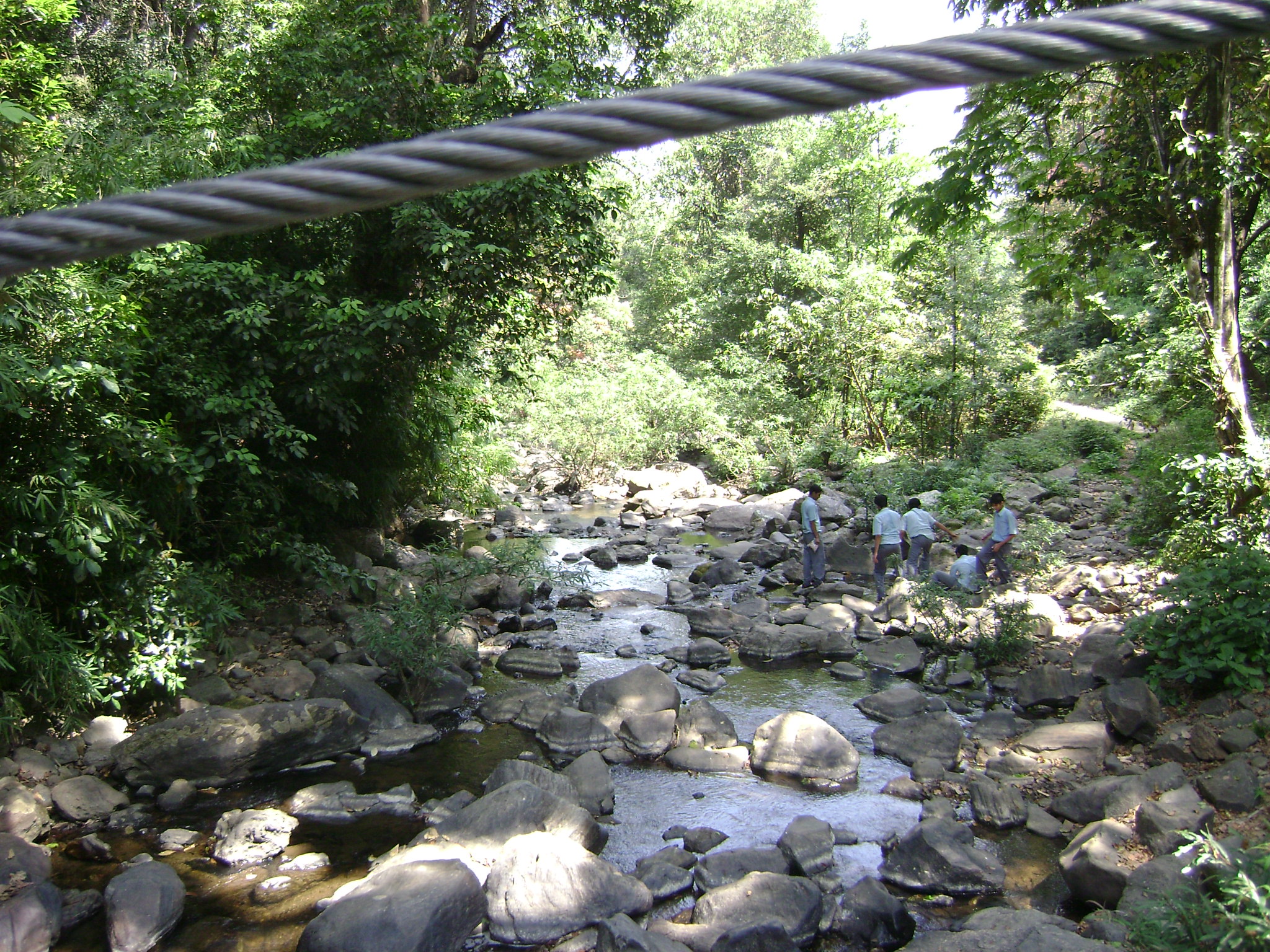
Our first stop was Dubare . Drive was along a stretch of silt strewn with boulders, undulations and dense woods closing in on either side. It was a reserve forest known for spectacular range of avian fauna. An elephant ride point and training camp on the banks of river Cauvery had made this place a popular tourist haunt.

imageedit_4_4931128546

Unfortunately the giant pachyderms’ were out on business carrying tourists atop their backs. Huge mounds of poop marked a trail of  movement and were finally lost behind rock and bush.  Angling buffs focused efforts on harvest from the river. Mahaseer is found in plenty .

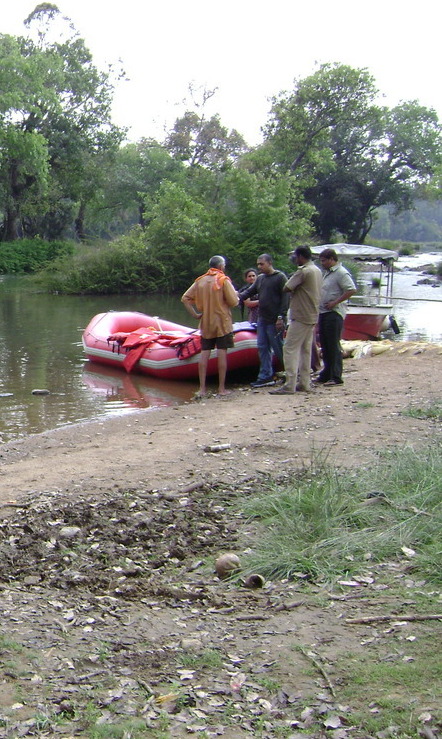
They are big and tasty and prized throughout the region. License from Coorg wildlife association is mandatory for fishing in Cauvery. Limited time frame and tight budget  kept us away from the tempting opportunity for water rafting.

imageedit_4_8246724341

Cauvery Nishargadhama was our next stop. It was an amazing place to visit especially those with kids. We had our 6 year old with us . He was bubbling with enthusiasm and there were  strong reasons for him to be jumpy and frolicking with fun. The place was predominantly occupied by bamboo grove.

DSC00276

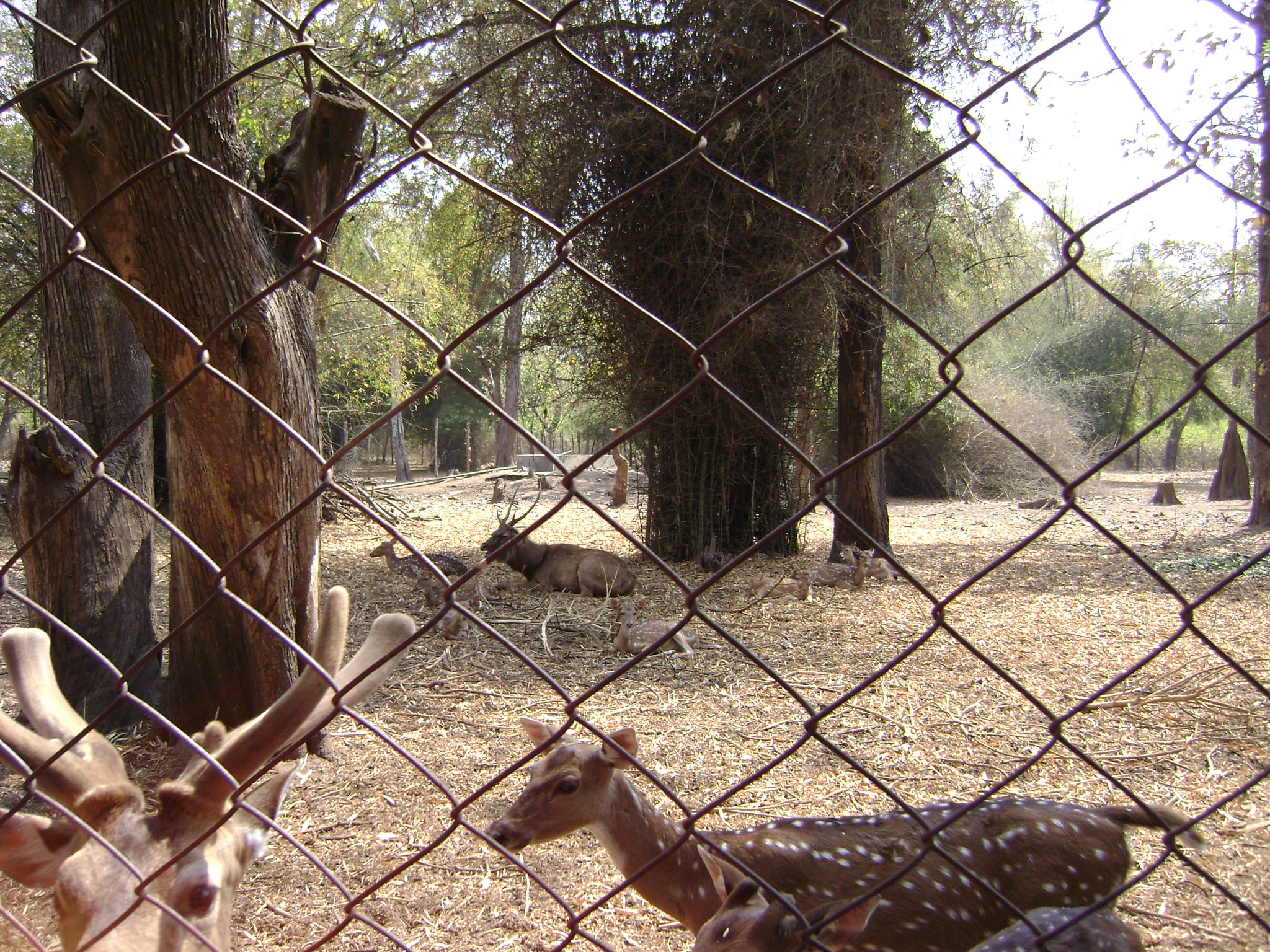
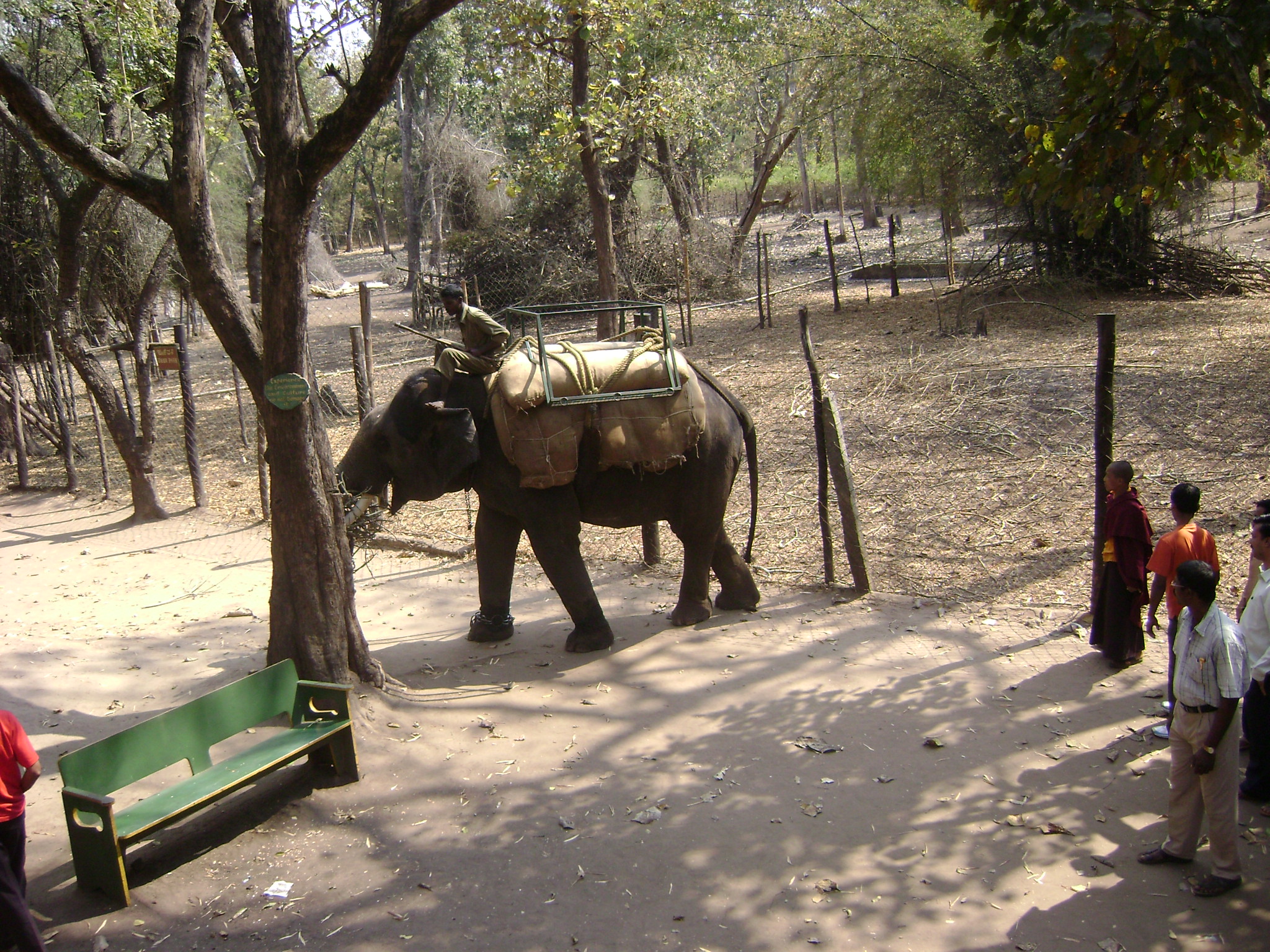
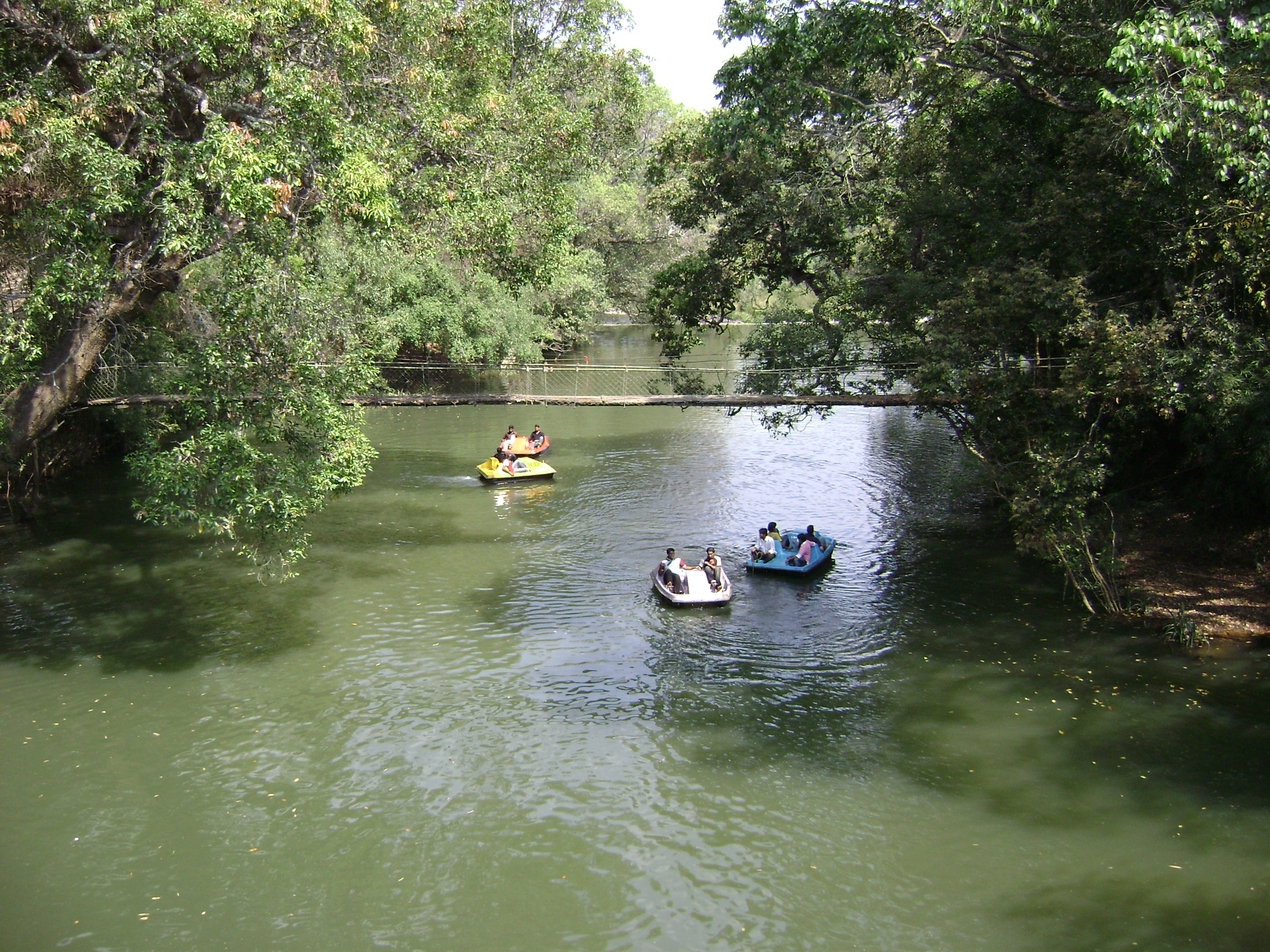
Enclosed within, were separate enclosures for deer , rabbit and peacock parks. What we couldn’t get in Dubare was achieved here. We had an elephant ride though the span was only for a short 10  minutes covering about 400  meters of parkland. A lake was cut across the park through center and a bridge hung over it running end to end.

DSC00282

Half an hours’ boating at the lake was an amusing  experience.Water was far from crystal clear and mostly covered with floating reeds. We felt hungry and exhausted from boating but our flesh and mind was pepped up craving for more.

DSC00268

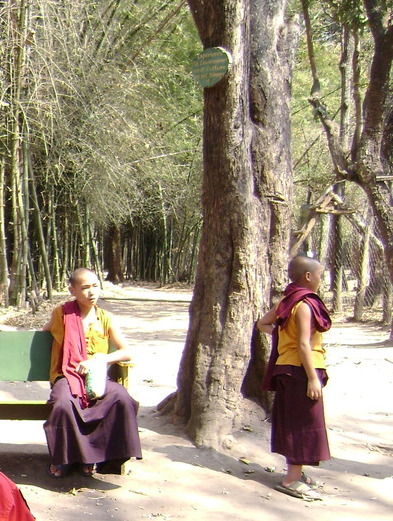
Next destination was Namdroling Tibetan Monastery at Bylakuppe that took around one hour ride along fast roads with a splendid backdrop. The abrupt and dramatic presence of stubby coffee bushes and sight of tall trees interlaced with pepper vines was jaw dropping.

DSC00294

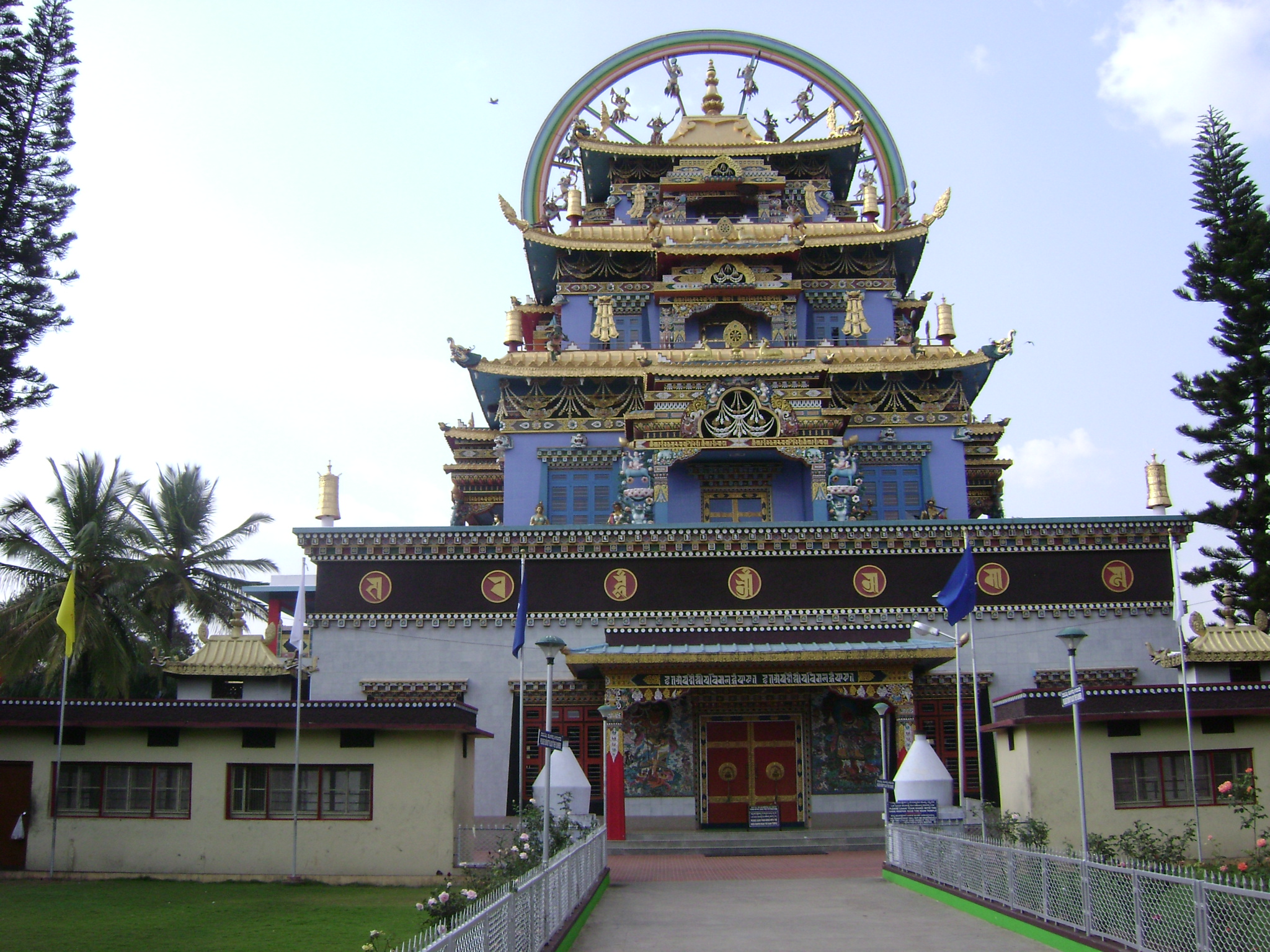
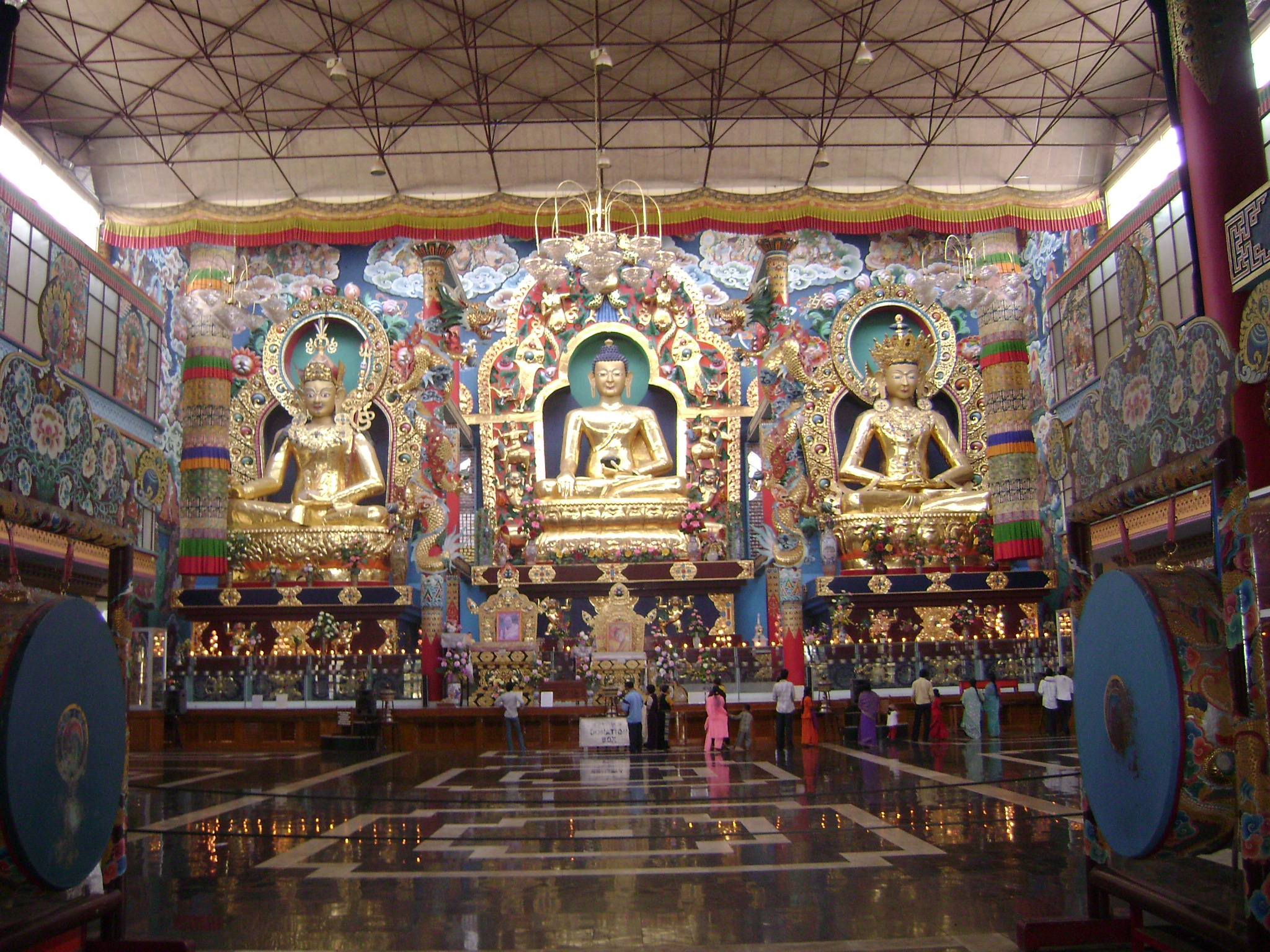
The  monastery has an imposing structure. This place is the second largest settlement of Tibetans in India after Dharamsala. The temple complex is immense with a  40 feet high gilded statues of Buddha Sakyamuni and Guru Rinpoche. Temple tower is richly decorated and walls are painted with elaborate murals taken from Jataka lore.

DSC00304
DSC00297

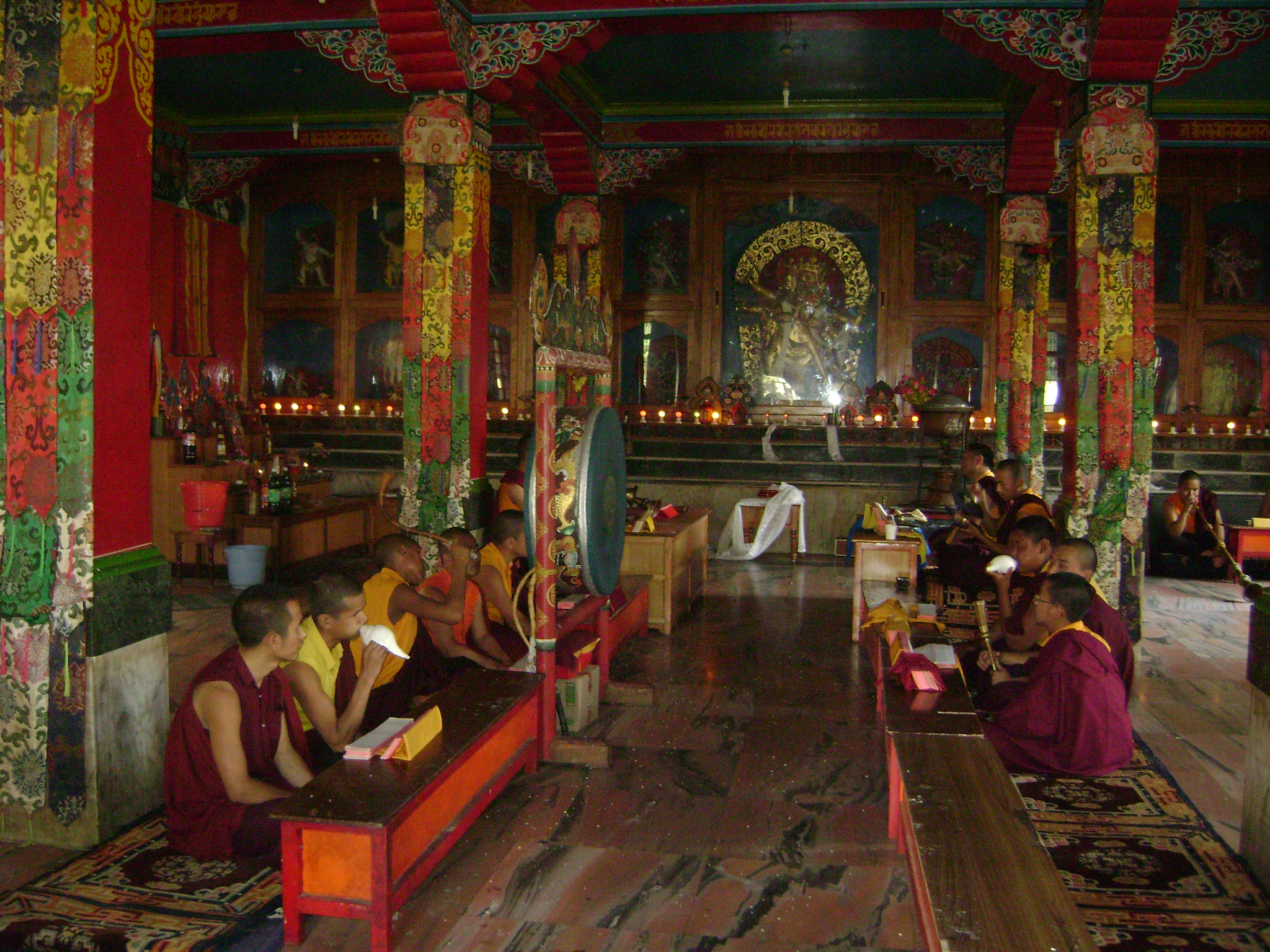
Depictions of  Deities and Demons  from Tibetan mythology added to the temple frippery. Here we relished vegetarian lunch , hot and fresh and insanely tasty. At the outskirts of the monastery we encountered rhesus macaques. Deceitfully harmless the harlequin in these cart-wheeling primates is too dangerous to be funny. A large portion of their thought process is committed to shenanigans. We warily avoided the troop keeping safe distance.

The sun had now inclined to the West and the temperature dropped by a few degrees Celsius.  Wrapped in light woolens we moved ahead in the direction of Raja’s seat , the point from where some amazing sunset viewing was guaranteed.

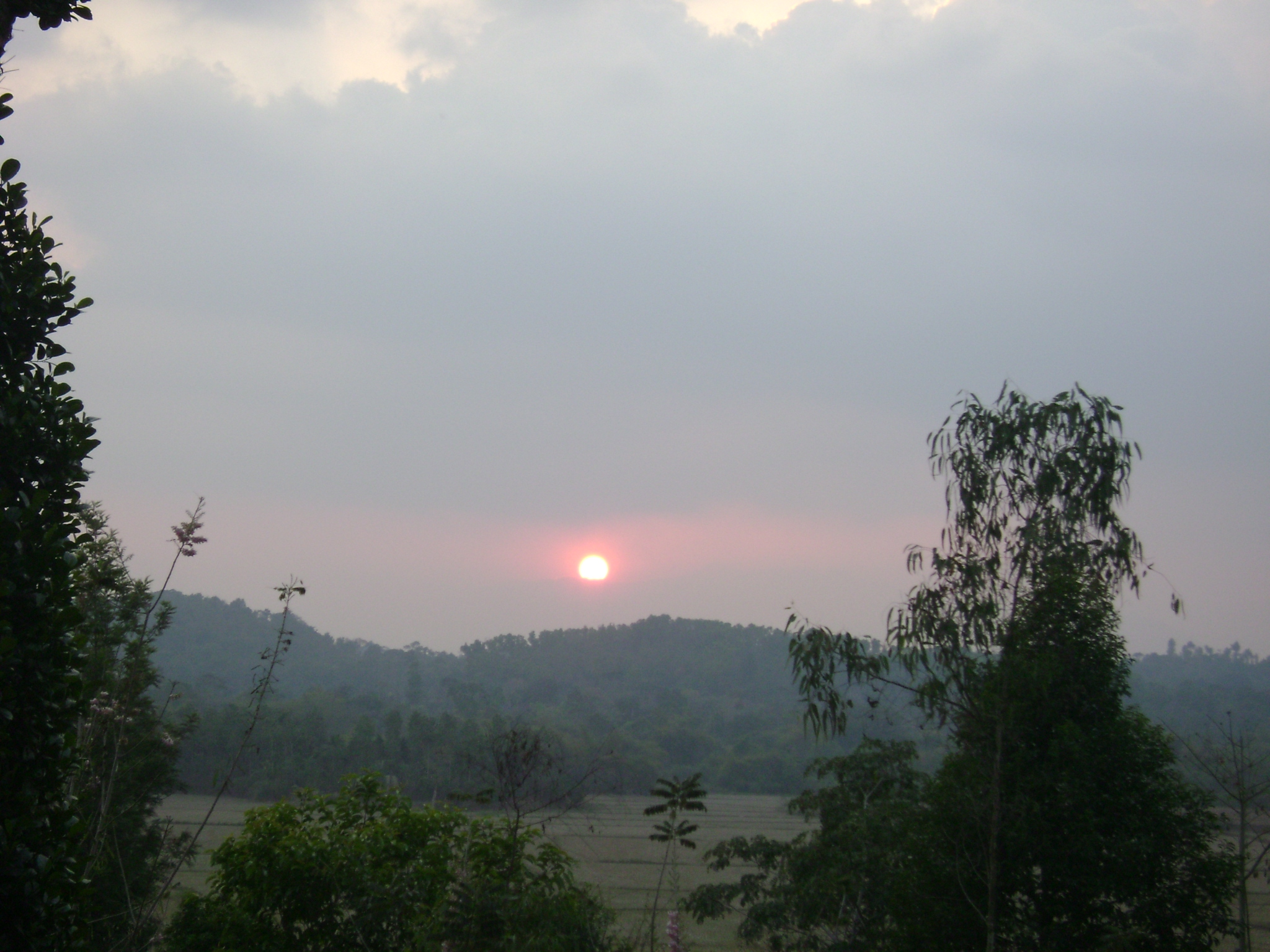
The seat is perched on an elevated platform from where the evening sky looked surreal. The sun was a massive burning ball and had shot in its fury, the color of fire. It was doozy, holding a kind of rendezvous between us and the divine.

DSC00392

Mellow rays of the setting sun had drenched the cliffs and valleys in fiery red clearly explaining the reason for this being a favorite haunt for kings of Coorg. We reached homestay late that night and were treated to a sumptuous dinner of ghee rice and lamb curry , rounding up with some yummy home made desserts.

Post dinner conversation break with the hosts and other guests was concise as we called it a day to an amazing evening. Excitement of visiting the Nagarhole national park next day was blinking inside us. Next morning, the second day of our Coorg vacation, we started early, our first destination being the Irupu Falls.

DSC00323

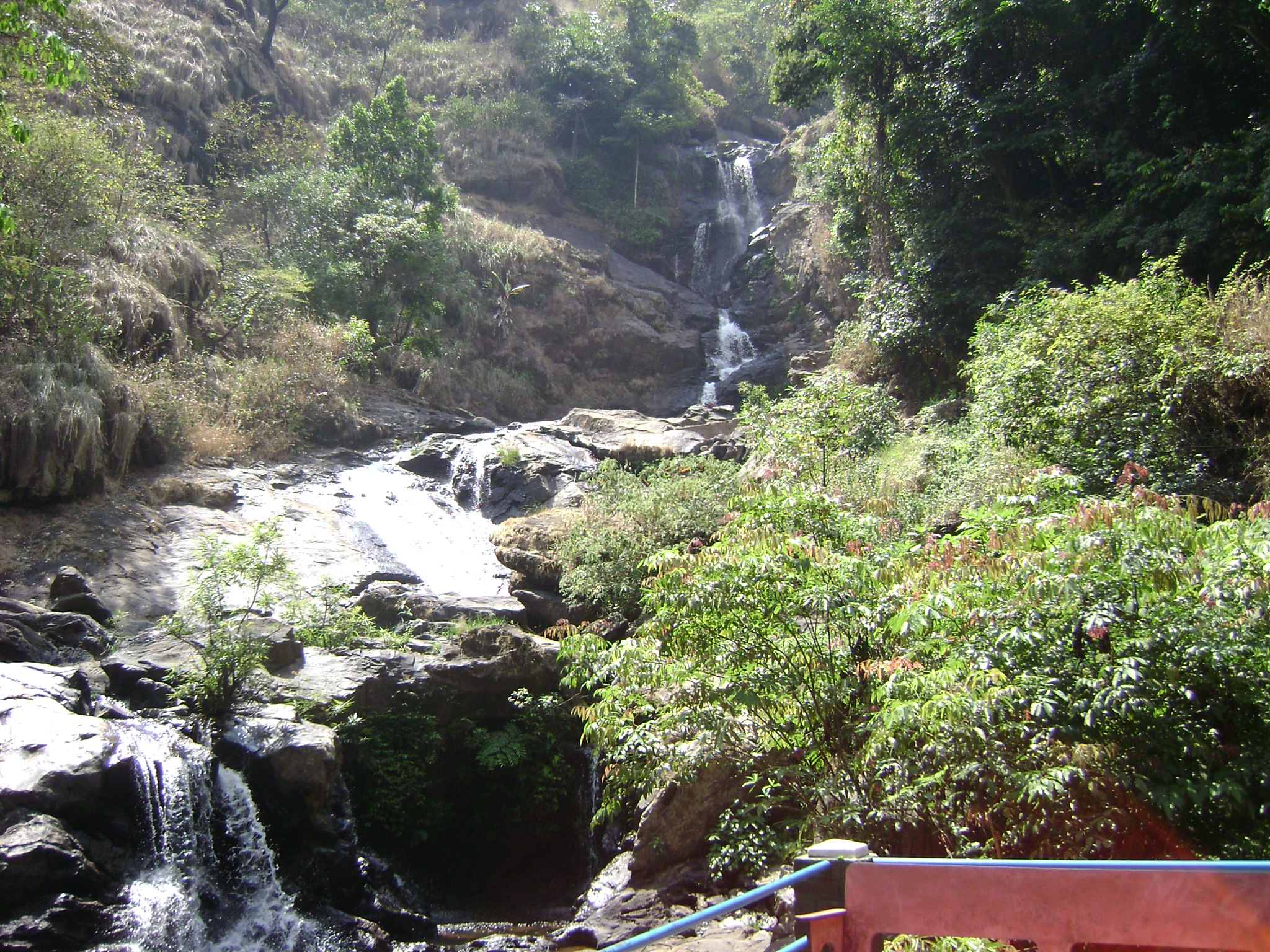
We parked our car half a kilometre away from the cascading falls and continued on foot. The place was all immaculate beauty with rocks , boulders and thriving greenery being the primary elements, needs of civilization were secondary.

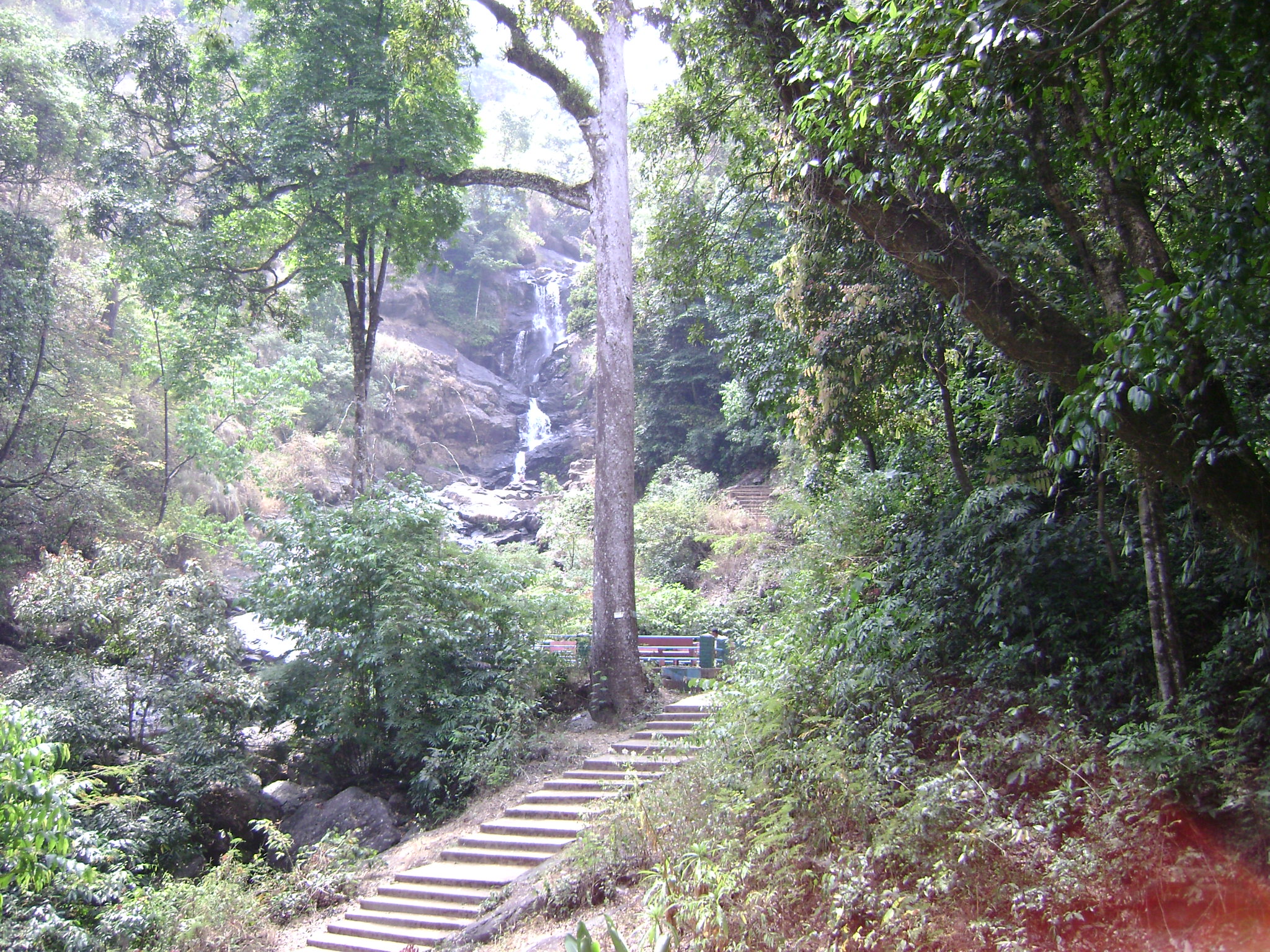
Nature has sculpted the place  with a creative zeal and what has come up was of incomparable artistry. Steps ran up to the source of the waterfalls. It was quite a trek, climbing around 130 rocky steps slippery from moss.

DSC00325

The  environment was too scenic to be captured within the limits of a 5*3 digital screen. As we approached the source, thunderous rattle was deafening. Having spent some time up there, we managed to capture some dimmed yet wonderful moments through our lens and started on downhill trek. Needless to say, that trek left us very hungry.

DSC00334

Lunch was simple and quick, keeping in mind Nagarhole visit. Rushed towards Nagarhole, driving past enchanting scenery of rivers, streams, green dales, hills and forests. The cabbie took off at full throttle as he dragged hard on his cigar.

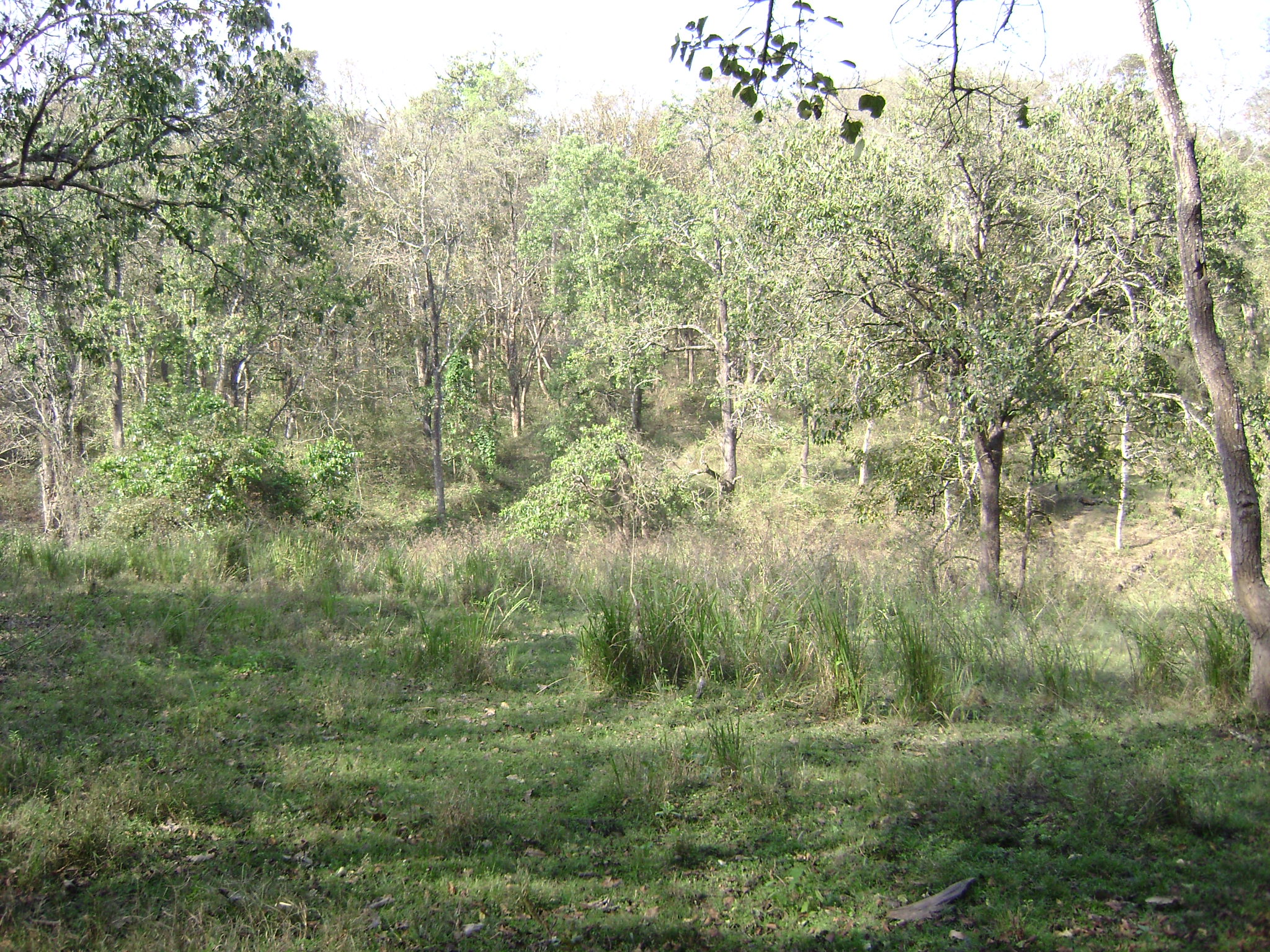
We reached the Nagarhole entrance around 11 am.  The path into backwoods was edged out with tall trees. Beyond the first line of trees lay open grassy plains that was again fringed by a second layer of vegetation. This was thicker and possibly sheltered wildlife.  One could smell thrill in the air with all eyes narrowed and focused on dense undergrowth to catch a glimpse of our evasive wild hosts.

DSC00387

Our ride wasn’t allowed beyond a point blocked by a gate barrier. We walked up about fifty meters to a ticket counter for boarding safari bus. Booking counter was shut and it was a long wait on a sun drenched spacious ground covered with trimmed grass. The counter opened shortly to a rush for tickets.

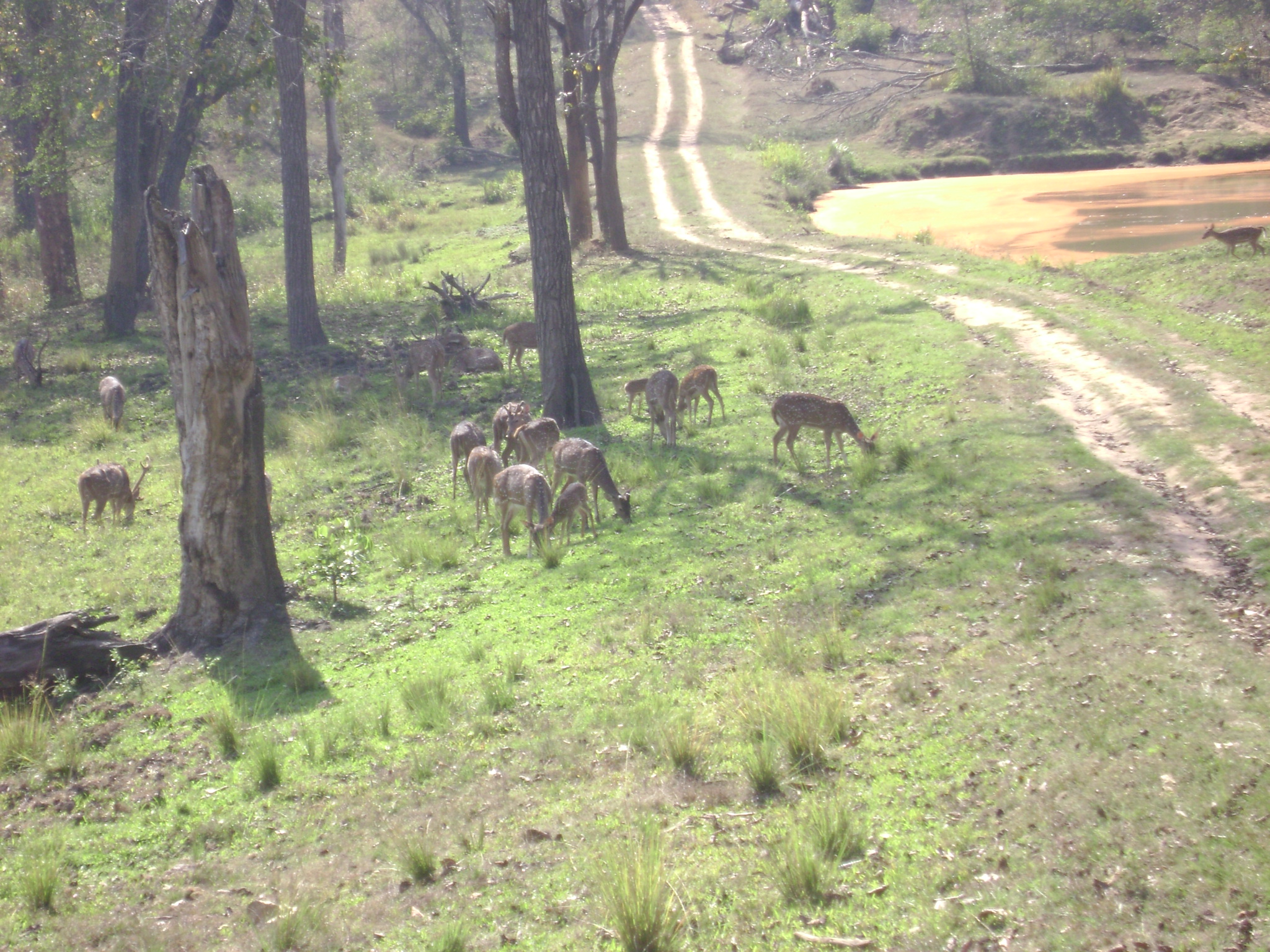
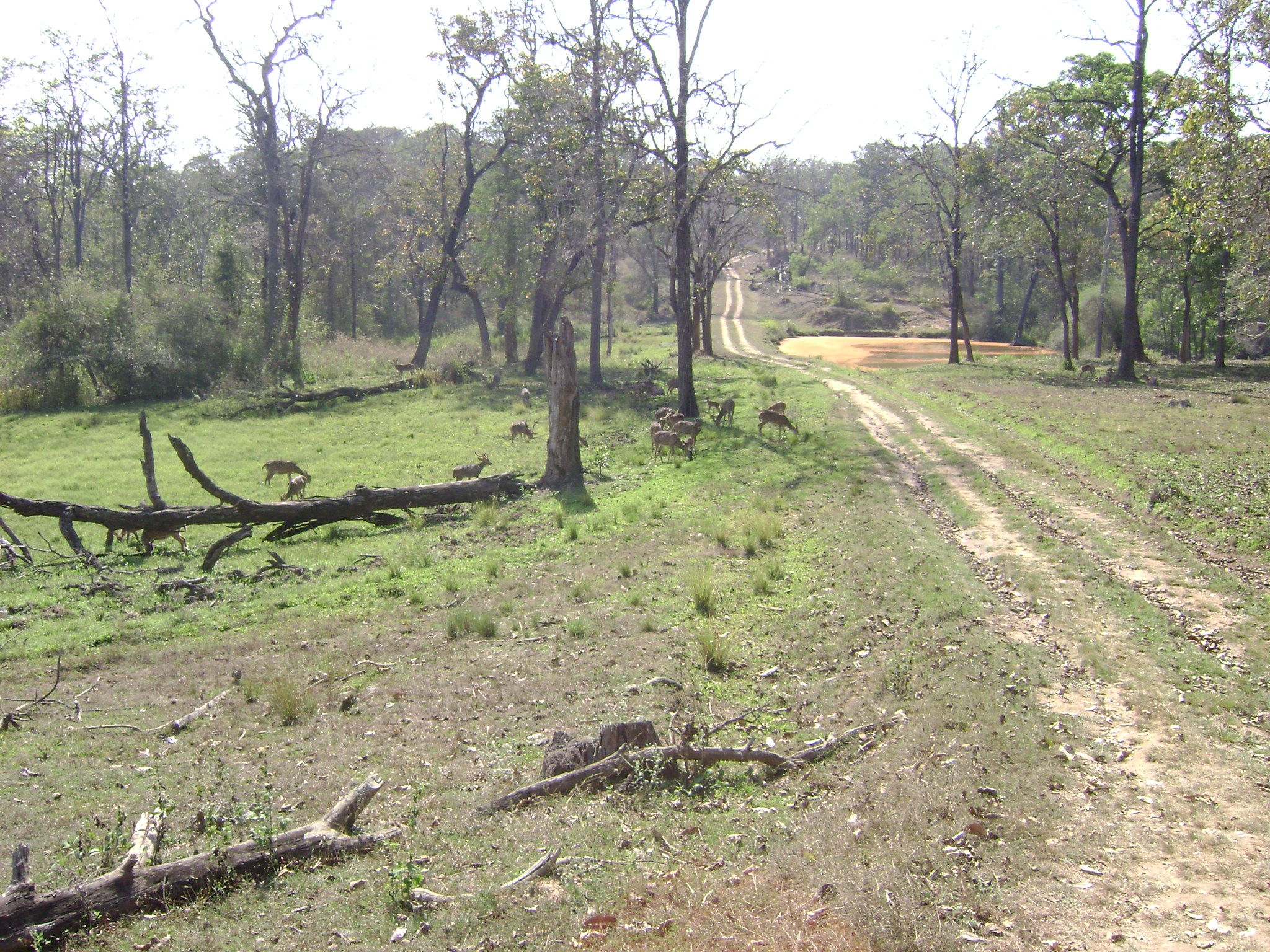
Ride started and bus moved deeper into the jungle. 15 minutes have passed and a herd of chitals came into view. They were busy feeding,unmindful of the tourists. This was a sanctuary  not to expect threat from visitors. Bus stopped and cameras clicked.

DSC00376
DSC00375

Trees were huge and creepers ran up clinging to the thick trunks.Grey langurs in large tribes swung  in boughs. You like or not Langurs are in abundance and you fail to spot your favourite animal in the wild despite your best efforts and expectations. A bad stroke of luck is your  companion.

Forest cover grew tightly packed and a sodden bed of rotting leaves and stumps of fallen trees made the ground squishy. Decaying fronds collected on the forest floor had an overgrowth of mushrooms and moss. On the putrid twigs and slippery foliage fresh dry leaves dropped  setting up an eternal cycle of ecosystem monitored by nature.

DSC00385

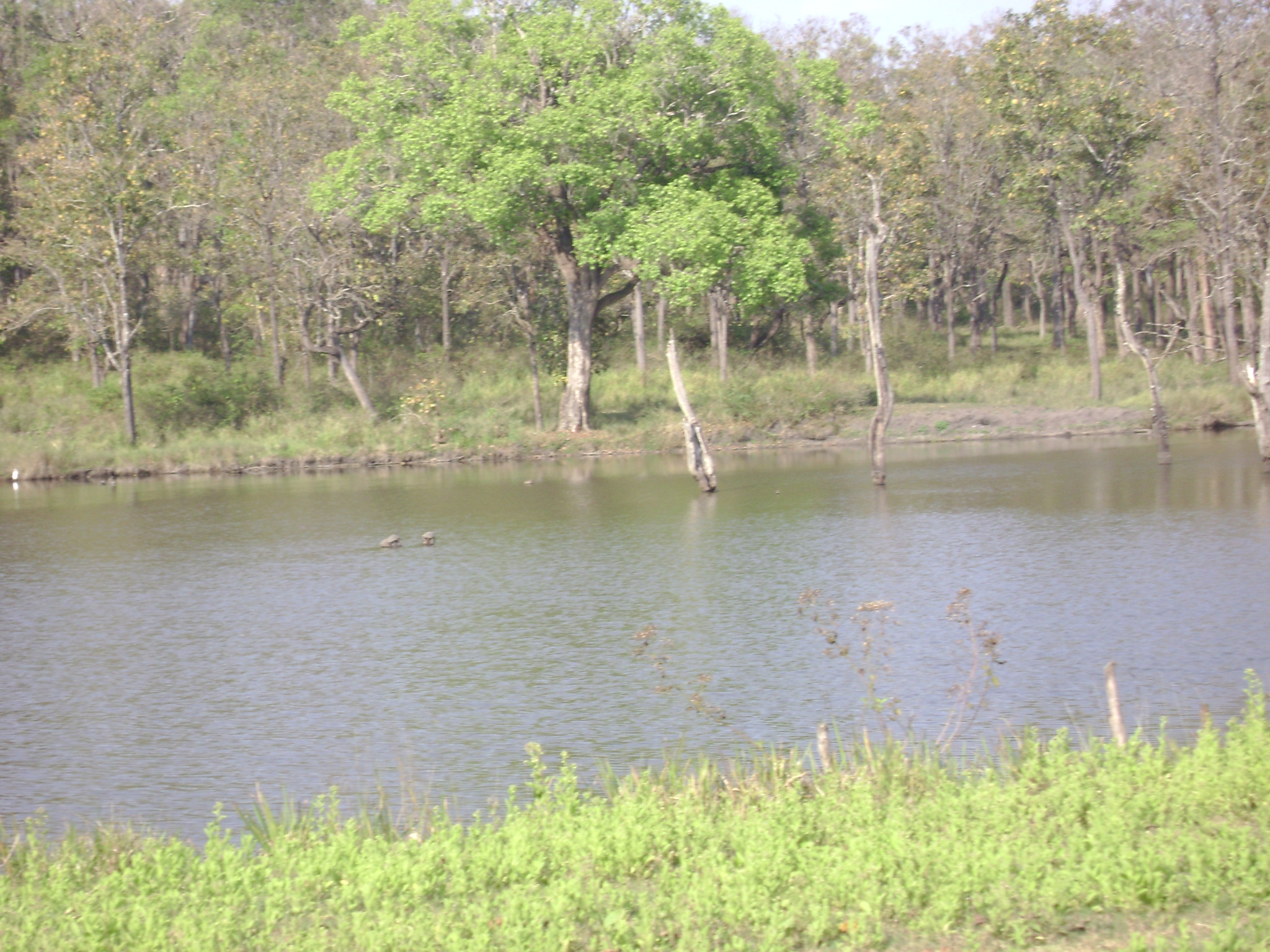
As we traveled further, dense woodlands had receded to a scanty chaparral. We stopped by a lake, its water green from algae. Sight we expected the least was of three tortoises cuddled peacefully around a dead tree stub partly submerged in water.

DSC00388

A philharmonic of melody around us sounded exotic. Warble of birds,ceaseless chirp of crickets and screeching of macaques had set up a jungle symphony that wasn’t too bad on our ears. The bus moved ahead occasionally stopping at breath taking landscapes for photo session.

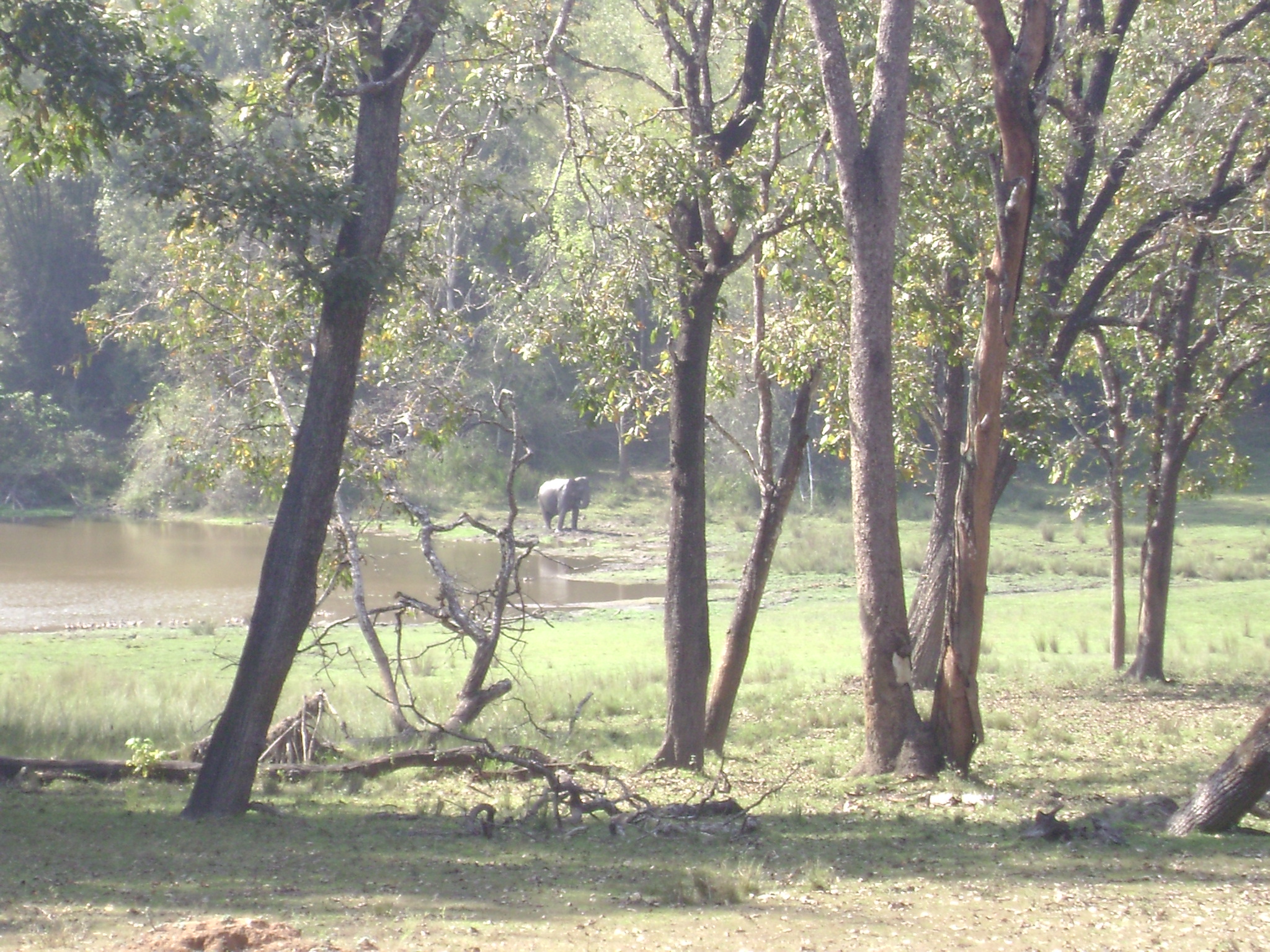
We rode past a compressed growth of bamboo orchard and the green lake came into view again. Far in the distance at the bank of the lake stood a lone tusker. Bus stopped and shutters clicked. The elephant was  frozen in time like a despotic monarch caring a fig for  bus load of tourists. Only a stroke of luck can give you a glimpse of a tiger in an Indian jungle and Nagarhole was no exception. Nevertheless, the ride couldn’t be more exciting.

DSC00378

DSC00382
Pristine nature was a welcome break from bustling city life. By the time our Nagarhole trip was over it was 4-15 in the evening. We were back to the homestay after sun down. Our hosts had cooked pulav with a lot of garnishing and vegetable side dishes. Home made sweets were a hell of a treat ! Next morning was programmed to show us the coffee plantation before departure. Estate owner had promised to drop us at Madikeri in his jeep.

The day of departure was no different, being misty as usual. A little later fog cleared and sunlight beamed in. Our guide to the plantation was a lad Ganesh, the garden supervisor. And along came one of those guard dogs . We froze in place but Ganesh assured us of no threat patting the dog gently.

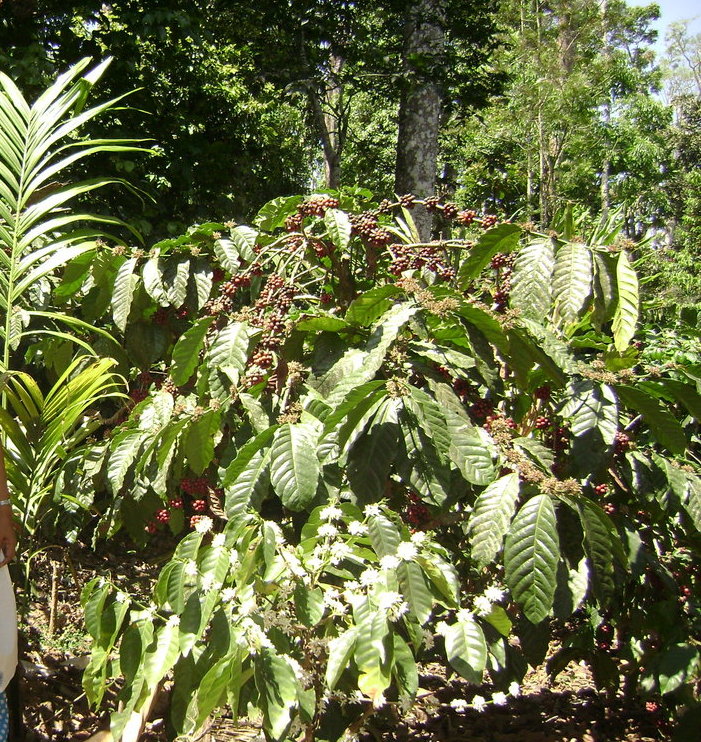
Plantation was up on a slightly higher terrain flanking the homestay resort backyard. Coorg coffee is excellent in taste . It is mild and grows in shade of Rosewood, wild fig and panas trees. The trees keep soil intact and anchored firm, setting up the nitrogen cycle as well.

DSC00418
DSC00414

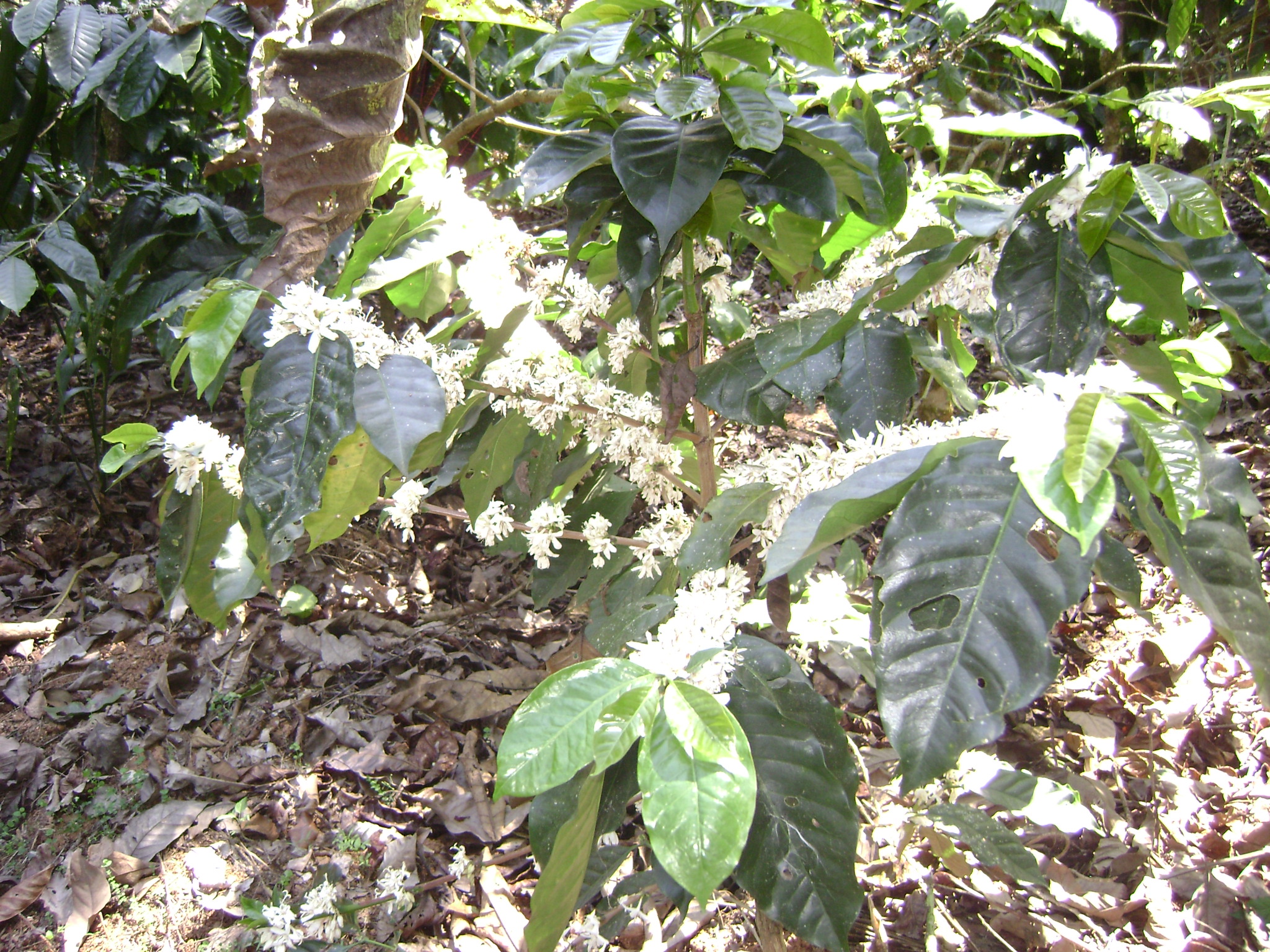
The atmosphere was laden with a very pleasant fragrance given off by white coffee flowers that blossom in February. November is the plucking season when ripe red beans are harvested for drying. “The basic strains are Arabica and Robusta ” the supervisor rode  on a lengthy sermon finding his comfort zone in technicalities of coffee farming, its history, prospects and current issues.

For an honest opinion I was  more engrossed with wonderful vista around me. The sweet fragrance was everywhere. Not only the coffee blossoms, it could be the vanilla too, contributing towards a feel good ambiance.

We finished our round of plantation trip hastily, keeping in mind Mangalore bound bus from Madikeri left at 11. After a reluctant farewell we sped towards the Madikeri bus terminus putting as much miles as possible between the estate and our speeding jeep.

Hadrian Villa – An amazing exploration to Olive Oil culture


IMG_3113

One of the most famous Greek myths is about how Athens got its name. The miniscule population of this prosperous city in Greece was given the choice of being dedicated to either Athena, the goddess of warfare and wisdom, or her uncle Poseidon, the god of the sea. Each deity had gifts to beguile the innocuous citizens with, Poseidon assuring the city with no cases of drought while Athena planted a seed that grew into the olive tree that people around the world have come to know and love. It is obvious who became the well deserved patron, or rather patroness of this city and it can be safely said that if those clever Athenians did not exist a lot of our industries would not be so efficient at money-making. Indeed olives are an integral part of millions of lifestyles, whether it be for beauty or cooking.


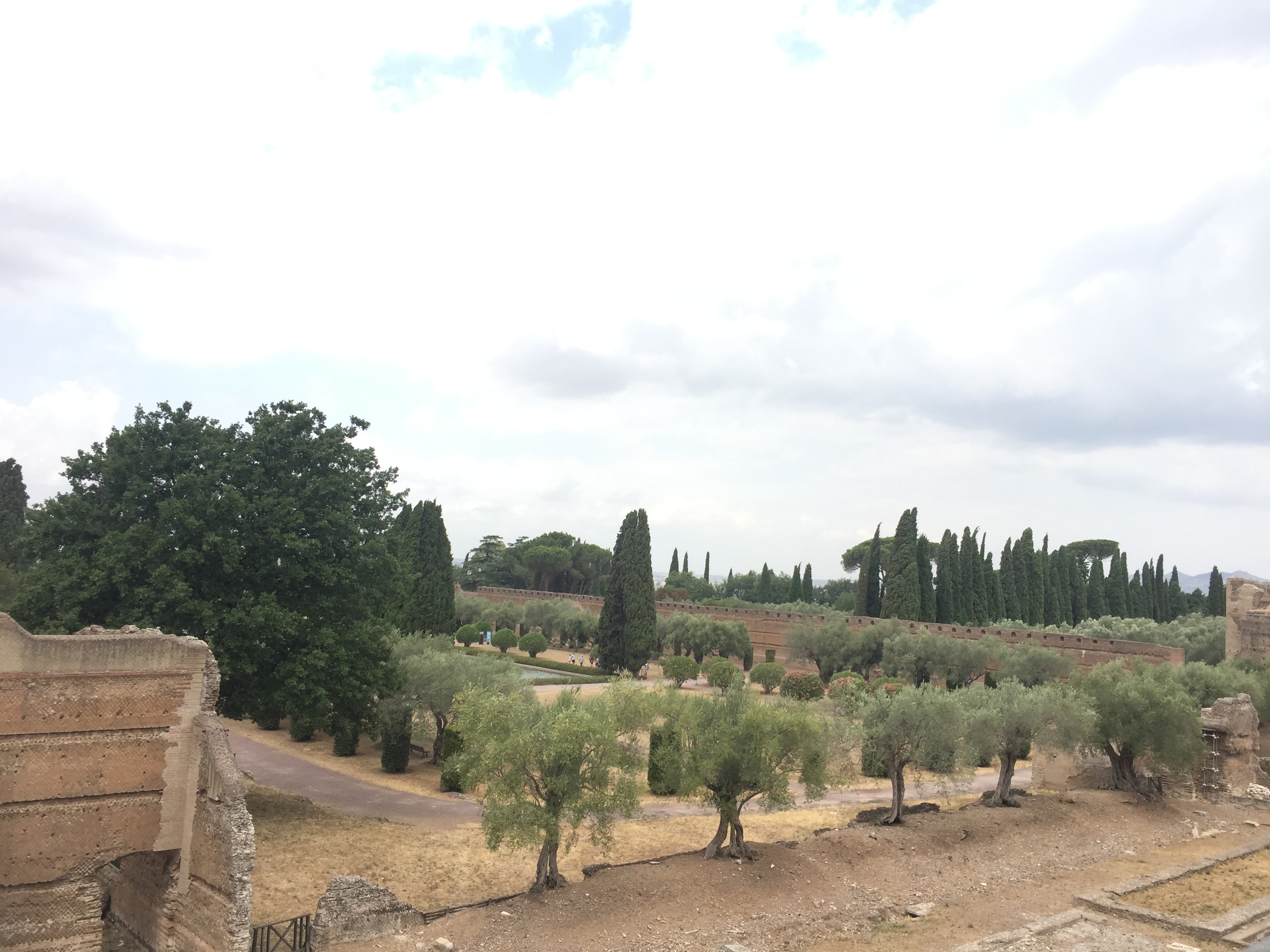
Olives are grown in scores of places around the world with global farming industries in places like Italy and Greece. Tuscany, one of the largest and most renowned region in Italy is known for its fertile soil and the quality of oil in areas like Tivoli, a town overlooking the Roman Campagna in central Italy. In Roman times, the extra virgin olive oil made from pressing whole olives was called “Oleum Tibertinum” (Tibur being modern-day Tivoli) and Pliny and Varro lauded this beautiful landscape so highly that it was here Emperor Hadrian decided to build his architecturally pleasing retreat from Rome in 200 AD. This ancient tradition of cultivating olives was based on the mild climate and the slopes covered in volcanic soil, producing the Terre Tiburtine oil of the most globally recognised produce of all time.

IMG_3134

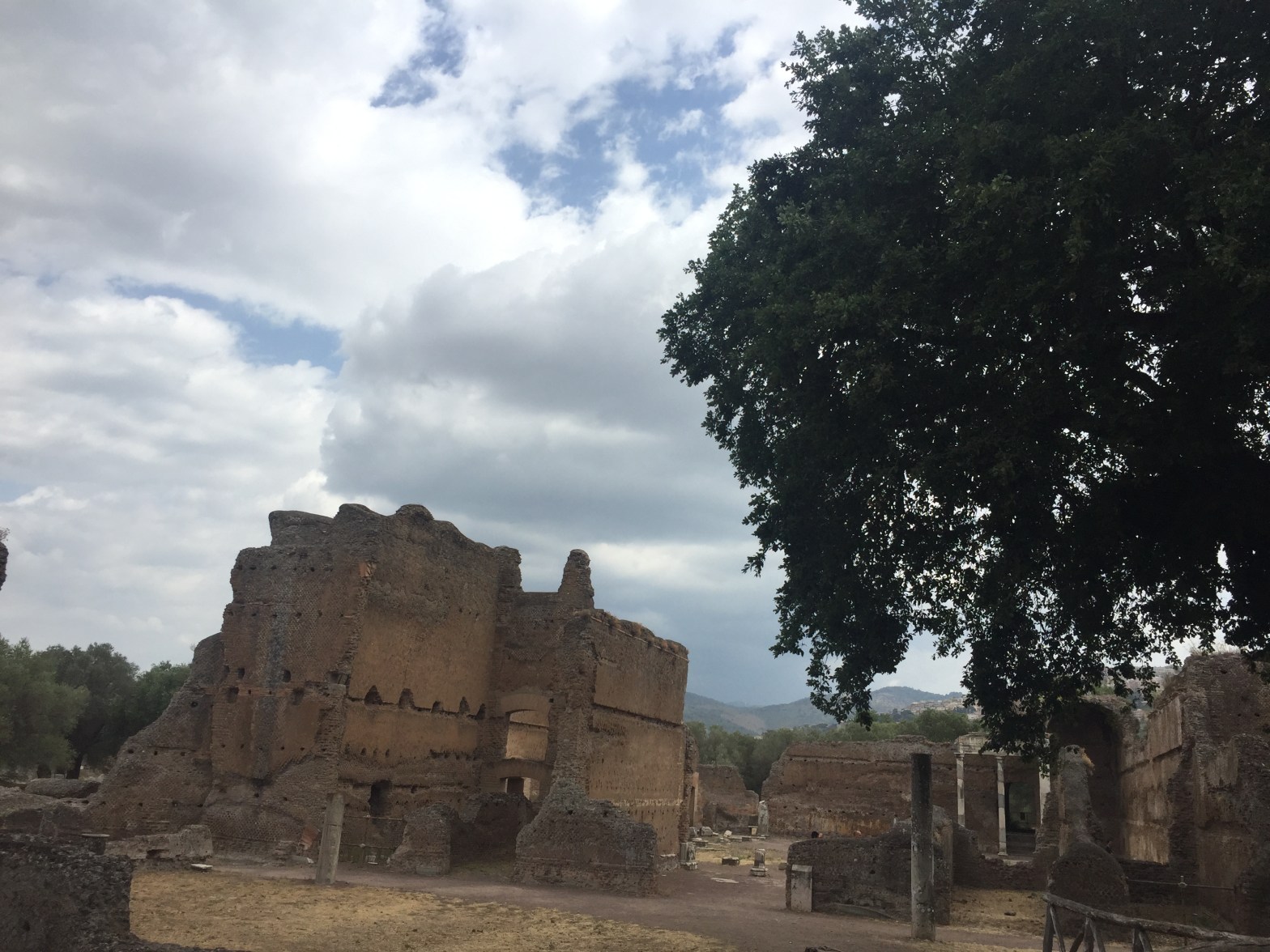
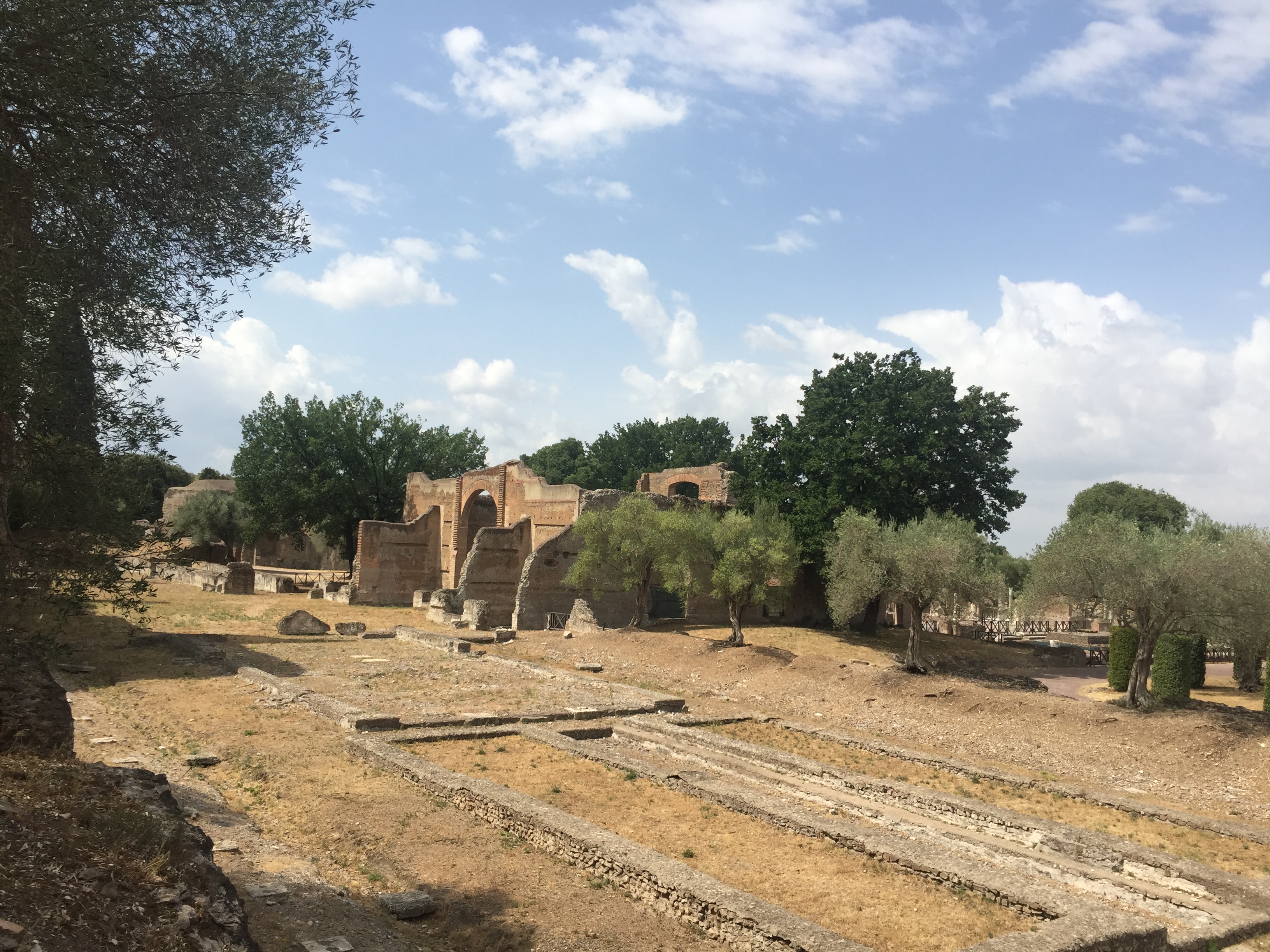
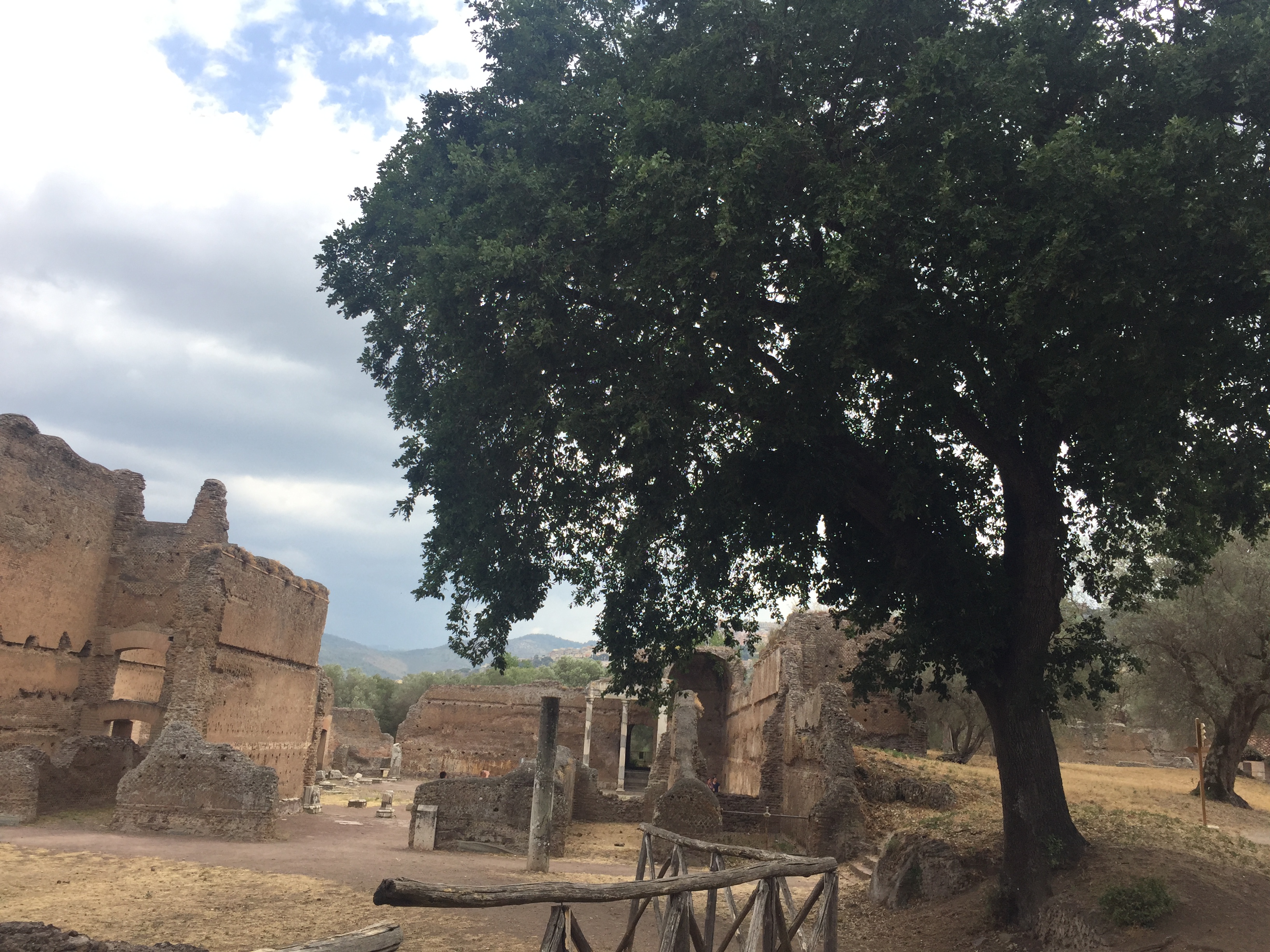
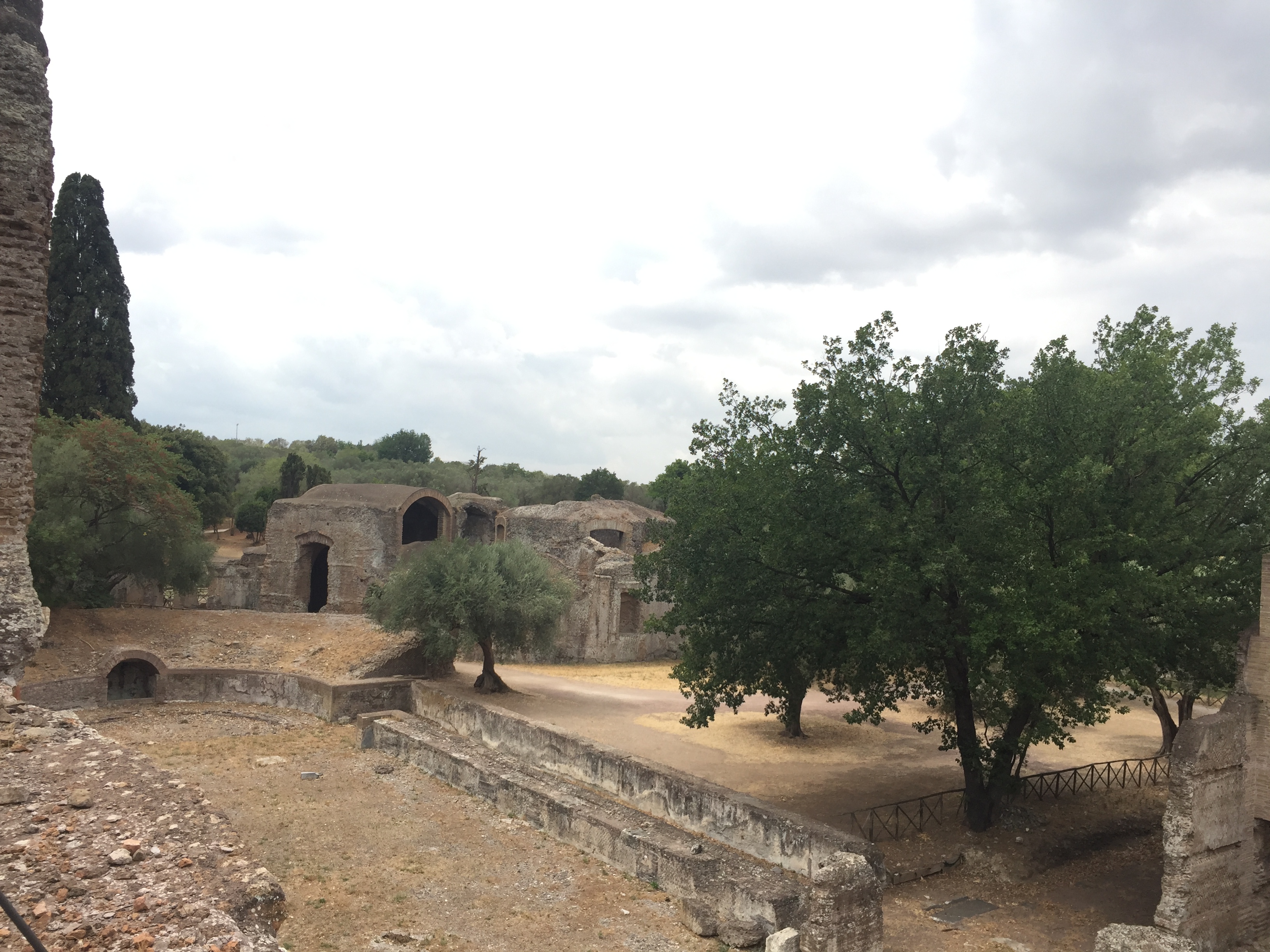
Hadrian’s villa is a large complex structure, comprising the Serapeum (a temple dedicated to the god Serapis), the Maritime theatre, baths, pools, bedrooms, dining rooms, guest rooms and the servants’ quarters. This was cleverly divided into the open plans for summer and the closed rooms for winter. In fact, Hadrian went to great lengths to preserve the idyllic nature of the villa, by creating a network of subterraneous tunnels for the servants to continue to work.


Emperor Hadrian was otherwise known as the last minute emperor due to the fact that he was proclaimed heir to the empire at the very deathbed of his adoptive father and rightly so for he was the third of the mere five good emperors of the Roman empire. He was described as the most versatile of all Roman emperors, patronising the arts by demonstrating his knowledge of all intellectual and artistic fields. In fact, Hadrian’s Villa was known as the finest Roman specimen of an Alexandrian garden. The various Greek architecture is said to have inspired the Italian Renaissance artists as well, and it was here that one of the biggest olive oil-producing industries had started. As probably already surmised, Hadrian was very popular amongst his subjects and especially the slaves since he was once a slave too and so he took it upon himself to ensure that no other slave would have to face what he did.

IMG_3142

At his humongous villa, every slave had a home and wage amidst the breathtaking rural scenery of Tivoli in return for tending to the emperor and villa’s needs and working in the then newfound olive oil industry.

IMG_3140