
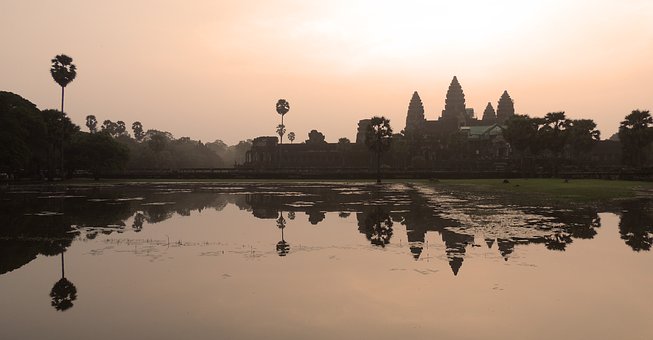

The imposing temple of Angkor Wat had always been a magnet for tourists. The beckon was irresistible to me as well. My dream turned up in 2001. Made travel arrangements and packed my luggage boarding a flight bound for Cambodia.
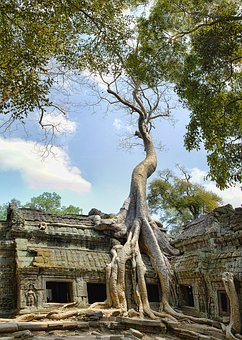
AngkorWat – a way out attachment to a culture extinct and buried! Sheer size is awe-inspiring, the rich interior tempting and so are the crumbling structures. They stand scattered with a crown of Banyan roots sunk deep down to the temple floor. Rustic vista of Cambodia is fabulous and a short sojourn into the pastoral landscape before getting to the temple site will not be a bad idea.
The drive along the countryside was a beaut. An easy going feel held. No sick hurry and I was far far away from the grind. The chaotic hustle and bustle was absent. It was all green in the horizon. Lush paddy fields lay in silent calm where farmers pushed through knee deep water. Long- blade ploughs followed their water buffaloes and pointy headed rice hats looked iconic. An ancient method of farming indeed but the region is productive. An indispensable rice bowl to feed the country’s entire population.
Having said that, once I set foot in rural Cambodia I was admiring the landscape moments later. Tall palm trees stood across paddy fields and occasional kingfishers dropped from sky for fishes. Storks and Pelicans moved gracefully across swampy marshlands. Their way of walking wary and heads bent towards water that offered promises. Fish and shrimps, crabs and snails, snakes and frogs are profuse in shallow waters.
Angkor:
It is a story of hard earned peace, the country has witnessed strife and human sufferings decades back. It has also seen expansion of art and sculpture long long back making it to pinnacle of repute. A rich culture thrived turning South East Asia a glowing spot in the history of civilization.
Dark clouds gathered overhead in late 70’s. The autocratic Khmer Rouge had put a stooge for mass genocide wiping out a quarter of Cambodia’s population. The motive was complete elimination of political rivals. And the deputed General precisely willed to do that. Civil war broke out, death and panic ruled. Grief tourism takes you to exhibits of death and pain, silent wail rising from remains of mass annihilation lost in limbo. This is now history that we do not like to recall. What we desire is to go back further into first half of the twelfth century. This period Cambodia had given the world its mind-blowing gift : The Temple of Angkor Wat.
The legend of Angkor starts in ninth century when the juvenile king Jayavarman II ascended the throne. He had set up his capital near Kulien mountains. Showing potential from an early age he unified small independent warring states. Seeds of power were planted and followed through . Hopes of a distinct civilization bloomed. Growth and prosperity transpired. A smiling Sun shown over Cambodian sky and the moon cast its grace with angelic glory. One of the most formidable and authoritative empires in South East Asia was thus born .
Check the video link for more intricate details:
The ride along the rustic road was a little bumpy. My taxi driver pulled up in front of a thatched house. An old man around 80s handed him a pack. In youth, the man had well defined features. Now his flesh hung loose and temple stood deeply furrowed. Whites of his eyes had reddish stain mirroring trauma of civil war he had seen. The cabbie quickly finished a meal of rice and possibly some dried fish nuggets.


His English was broken. Apologized for eating and admitted having missed breakfast that made him hungry. He spoke while eating. This place has seen a lot of slaughter and distress. Blots of civil war and bomb craters do exist though most of them have been turned into fish ponds. Un-exploded landmines lie beneath the earth and chance of losing life or at least limbs cannot be staved off tripping over them. We need to be careful while making trip…. Wished we could move faster, away from here to the site of ruins and temples.
We rode past familiar scenery. Leisurely bullock carts rolled by and country kids had a ball in mud. Women folk with haystacks on head moved in an unhurried pace. Peals of laughter could be heard from a distance and all this painted a picture simple yet highly treasured.
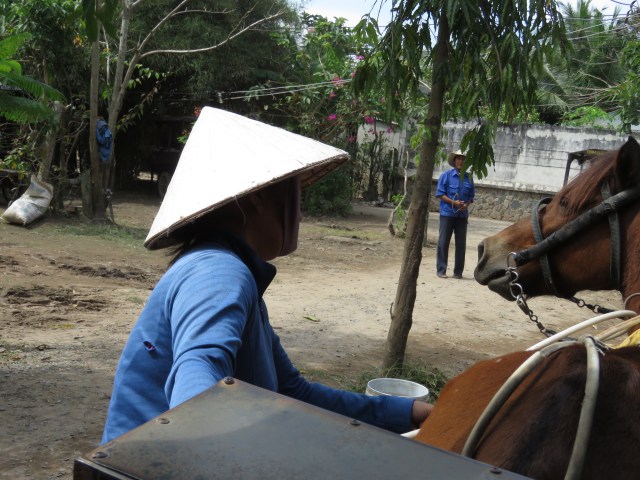
At the archaeological site I left the taxi and went looking for a tuk tuk. Got one after a stressful deal and agreed upon for an all day ride. Exploring the site on foot is impossible. Tuktuk owner would take me in , leave me at a location and collect me from another landmark. Had to write down his number plate or else there is a chance of losing him in crowd. For late arrival, I missed the million dollar sunrise. But sunset had washed all the regrets of a missed sunrise! It was plainly amazing. The sandstone structures shone bright golden in the backdrop of a setting sun.
Angkor Wat has a Great Lake Tonle Sap close by. Supply of water and fish formed the backbone of a thriving economy. The fertile terrain supported agricultural abundance. Human settlement in this region had been since Neolithic age as evident from stone tools and potteries restored from archaeological digs.
Inviting Prosperity:
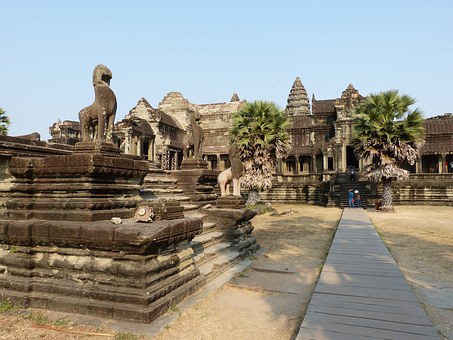
Gods and deities that trading Indians had brought with them in South East Asia had a strong appeal for local populace. India was a picture of affluence. Prosperity and secrets of their wealth was imputed to divine protection ensured by religious belief system.
This left Khmers and Chams enticed. They started erecting temples and sheltered idols and images of avatars imported from India. Vishnu, Shiva , Garuda , Krishna, Rama and Makara are household names in Khmer culture. Discrete devoutness was shown towards Lord Shiva, Vishnu and Buddha. Shiva was the dominant power and considered saviour of the Khmer empire. Gradually emphasis on religious sway shifted from Hinduism towards Buddhism.
Khmer edifices were built from laterite, brick and sand stone ground in a mix. Timber too was in fashion but wooden structures failed to survive through time and eroding effects of sun , rain and termite assault.


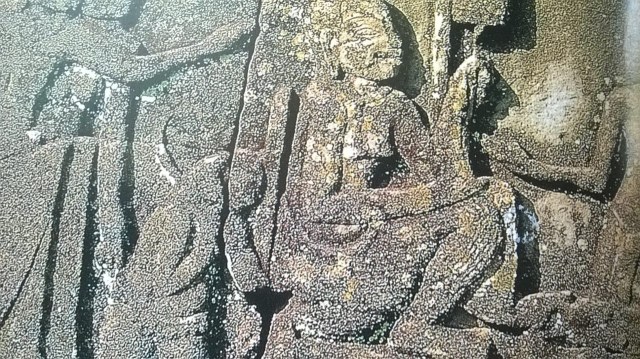
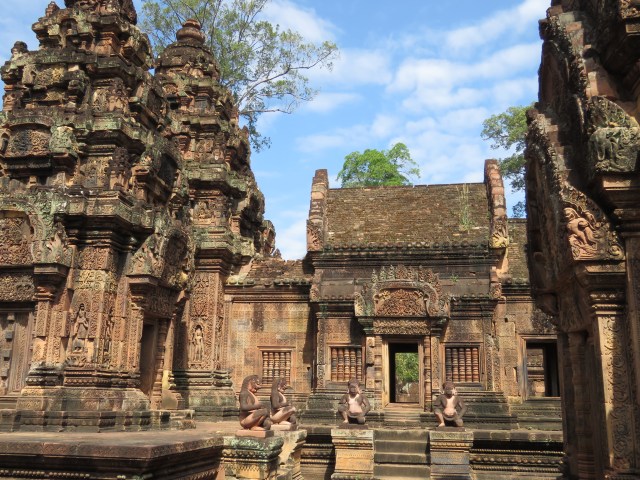
Sandstone offered a perfect canvas for chipping fine details. Running anecdotes from epics and mythologies, from Ramayana and Mahabharata, from heroic feats of lord Krishna to tug of war between Devas and Asuras in quest for Amrita ( the elixir of life) from ocean floor are brilliantly displayed in murals and bas reliefs. What fascinated me was the wonderful combination of painstaking labour and artistic vividness. They gave an immortal dimension to work of art in Angkor premises.
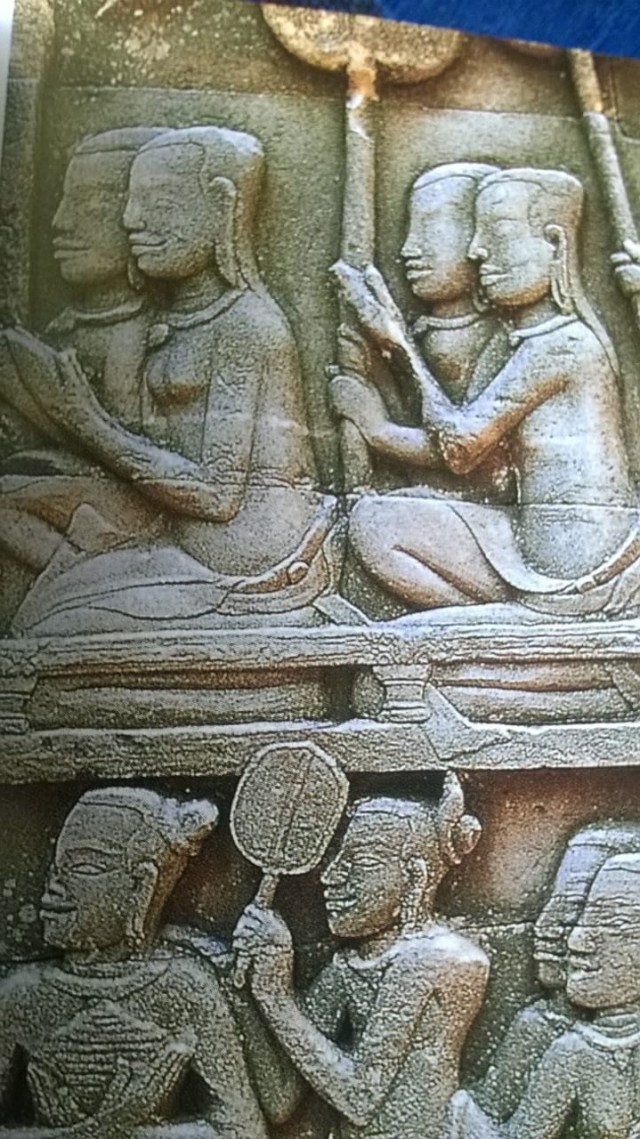
The day was sultry. Tourists gathered and shutterbugs had a great time before sandstone carvings. Portraits of daily life was beautifully delivered with a focus on custom and culture. It was women who controlled trade in local market. More information came from visuals cut in rock. They ate sticky rice with fingers rinsing from water filled bowl as was illustrated in embossment.
Side by side with incomparable artistry, specimen of crude vandalism show their ugly faces here and there. Heads hacked off and chipped off faces of brilliantly done figurines exist, exposing our sadistic side.Drawing pleasure knocking down cherubic sculptures was a shocking contrast to beauties in stone that were left untouched.Was it a vent for releasing fury directed at someone ?
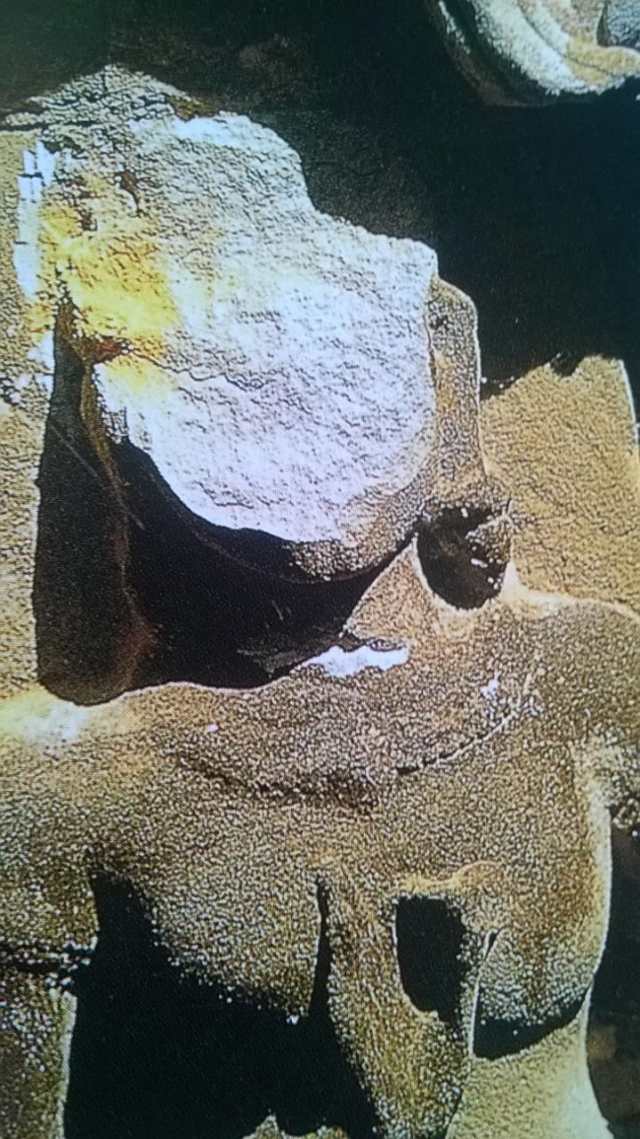
Sometimes it is driven by criminally gainful motive. Entire statues weigh too much to be carried away by plunderers. Heads are broken off instead and sold fetching a handsome price. Headless busts stare in mute protest with a ghost like look. Theft of artefacts are not uncommon and crackdown effort on art nappers is rather slow.
Rigorous punishments should be imposed when caught. But damage caused to sacred sites during civil war under Pol Pot regime were minimal . The armed troops must have revered the holy Angkor temples! The fringes of Angkor Wat is marked by a wide trench paved with laterite and sandstone. I feel the plan of site was modeled on Vaastu.
Subtle hints at every detail of exterior and interior decor is a study of imagery giving full expression to religious beliefs held.
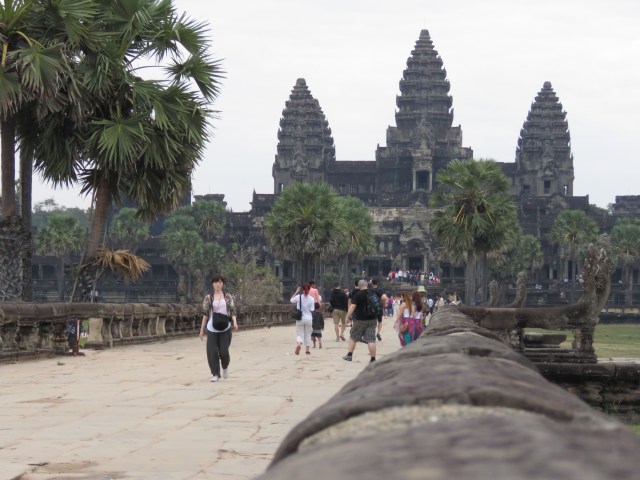
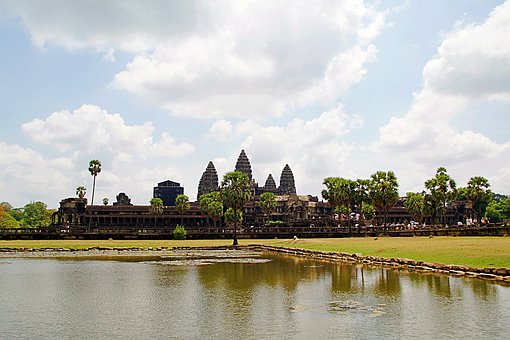
I entered Angkor Wat city from West crossing the causeway over moat. The chief temple and the causeway were not from the same period. The latter was built more than a century later. Entrances are large enough to accommodate passage of elephants and chariots that had once crossed the moat over wooden bridges. Structures were robust enough to take on heavy traffic.
Towers of the temples offered majestic view. At sun set they glowed a fiery red.
The handrails of the sidetrack were in the shape of Naga serpents. Lions and Nagas skirt the steps down from the sidetrack. These creatures must have been drawn from Hindu myths. Myths or no myths it is evident that forests close to Angkor sheltered large snakes as does the Lake Tonle Sap, a home to water snakes.


Primitive Cambodia must have been heavily forested even in the vicinity of temple premises. Encounter with monster snakes is quite likely. Fear has generated reverence. Reverence had beaten a cult to laud and worship the snake god. The bas reliefs are debatably one of the most popular products of Khmer art.
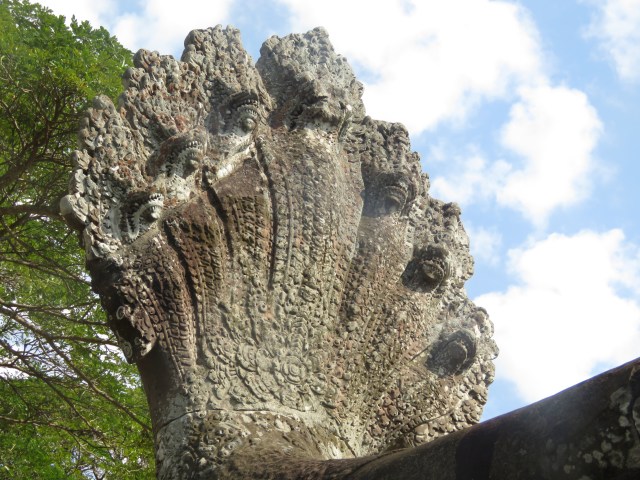
It was a long walk along the ruins and I came upon a large carved area that featured a plethora of artwork. The subject again was drawn from Hindu sources, the grand fables of Ramayana and Mahabharata. A section of the Western Gallery depicts the battle of Kurukhetra in Northern India, describing in detail the violent and climatic clash between nemesis clans of Pandavas and Kauravas as was told in Mahabharata.
It is dynamic and lively displaying marching troop leaders, horse drawn chariots and elephants, bands and cavalrymen all set toward some kind of finality. At the hub of the battle up close hand to hand fight is set in a portrait of random bloodshed. Reading the description in book is one thing and exploring it live is entirely a different experience. Bas reliefs successfully presented the theme set in a grisly tableau.
All you need is travel in time machine and the picture in front comes live in flesh and blood. Silent scream from wounded soldiers strike a chord deep inside .You hear it and here lies the mastery of the bas relief artist. It is not the tools and gear that is important. The keen inner sense and driving creativity is what made the work classic.
Scenes from the creation myth, Bhagavata – Purana, the churning of the sea of milk where Gods and Asuras battle it out pulling by turns the body of Vasuki , the sea serpent was slightly defaced. Nevertheless it was riveting. Multiheaded Ravana holding in grip five heads of the giant serpent Vasuki heightened its oomph. A horde of Asuras struggled in a row with horses and elephants just prior to churning starts.
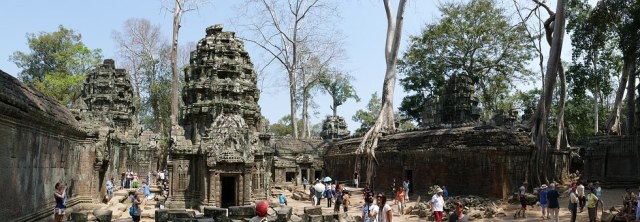
As I walked along the ruins, statues of a multitude of wild life, some real and some mythical came into view. It included a variety of aquatic creatures. Tourists busy spotting prized statuettes and monks in robes feeding pigeons echoed peace. Interesting moments awaited us. Solitary alms man holding out charity bowl is a regular sight. How about a cobra coiled round his neck as well to complete the dramatic effect ? It brought mixed feelings.
The final bas relief is a sensationally compelling portrayal of the epic Ramayana, the battle of Lanka. Scenes displayed strike a lively semblance with all what we had read in text. Lord Rama shooting demon Maricha disguised as fake deer opening up chance of Ravana’s abduction of Sita. Standard of sculpting is splendid and in Lanka battle details of hand to hand combat is closely laid out.
Bow wielding Rama stands on the shoulder of mighty Hanuman. Next to Hanuman stands Rama’s brother Lakhsmana. Together with the trio stands demon Vibhisana, brother to Ravana. The story of Vibhisana’s desertion of Ravana’s camp resonates with treason. Defection to lineage of demons and teaming up with Rama and his allies doesn’t sketch a very favourable image of the turn coat.
Series of depictions of Lanka battle and its fate throw a spellbinding montage! The carvings look real as if cluster of statues would spring back to life any moment. The spectacle is rip roaring and carvings in stone throbbing.
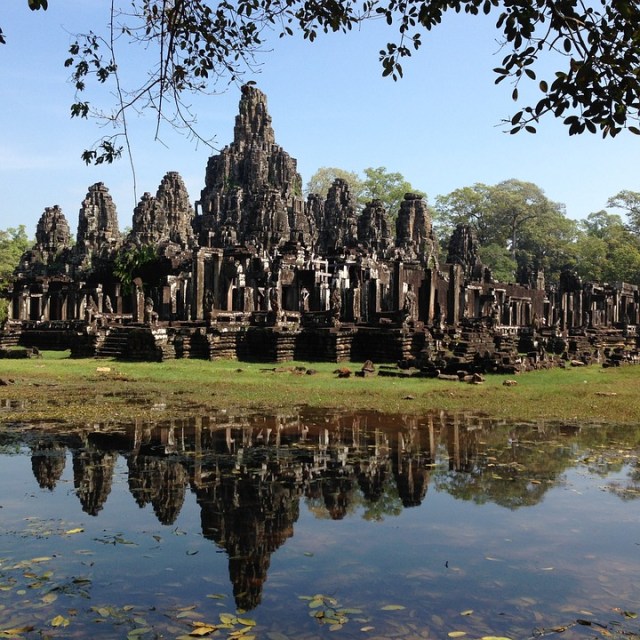
After Angkor Wat, I moved to Bayon temple or the temple of Buddha’s face. Temple architecture is complex and carvings on walls spectacular. Buddhist motifs featuring reclining Lord is terrific. From Bayon went on foot to elephant terrace, taking leisurely stroll among trees planted along the bank of lake. Melodic twitter of birds and a mild breeze worked wonders to relax the mind. Except for a few aggressive monkeys busy with their business as usual, the place was otherwise restful.
Lake Tonlesap seemed a coveted trip option. Took a cruise across the lake, sailing past the floating village of Chong Kneas. This was a novel experience that ensures you can survive even without putting your foot on terra firma. A complete water world featuring everything from floating markets to floating gas stations. Vendors approached with boatload of retail. Cigarettes,chocolates and flower bouquets all aligned in a neat stockpile.
Floating schools and paddocks from where fattened pigs peeped through a padding of blubber. Animals stared with a stoic indifference despite the irony that they would be served for dinner sooner or later. Floating bars , snack shops and memento corners organized around a revenue earning drive. It was pure fun and the shinny spring sky added to the resplendence of the mood.
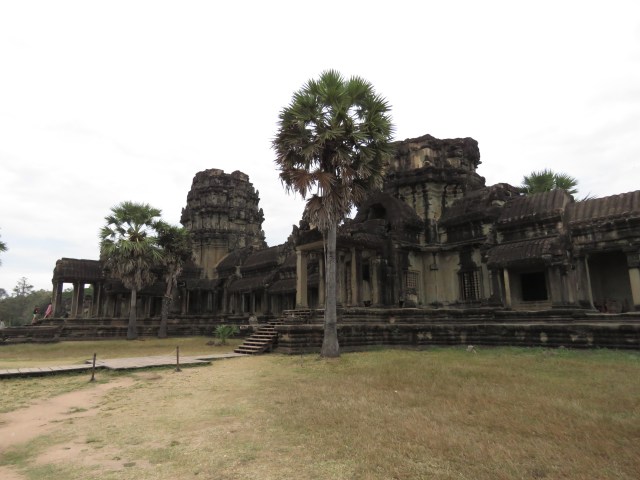
Angkor Wat is a revelation. It is a perpetual study in marvel, something to ponder and much to wonder. It will take days and even months trying to understand the intricate designs and sculptures. And yet you feel you are back to square one. The shroud of enigma is too opaque to decode the secrets held.
The last bus to Siem Reap was scheduled to leave in an hour. The spires of the temple stood stark against a starry night sky. I bade farewell to this time honoured Hindu temple of UNESCO world heritage fame and occupied a window seat.
 simplyroam
Reblogged this on Creativekart.
LikeLike